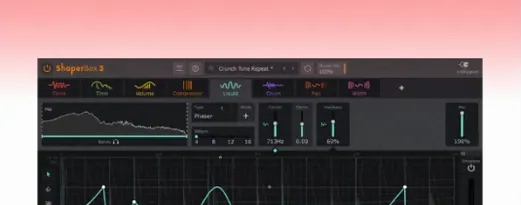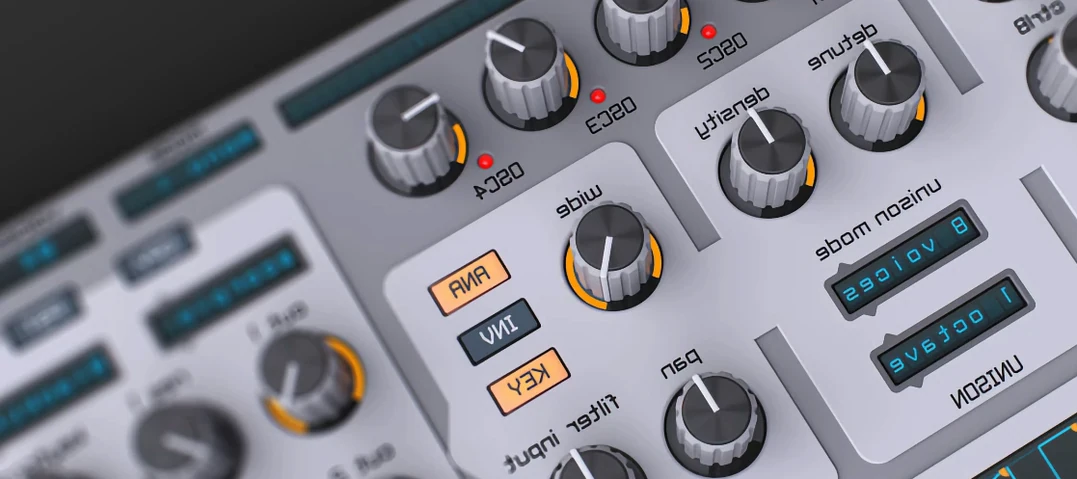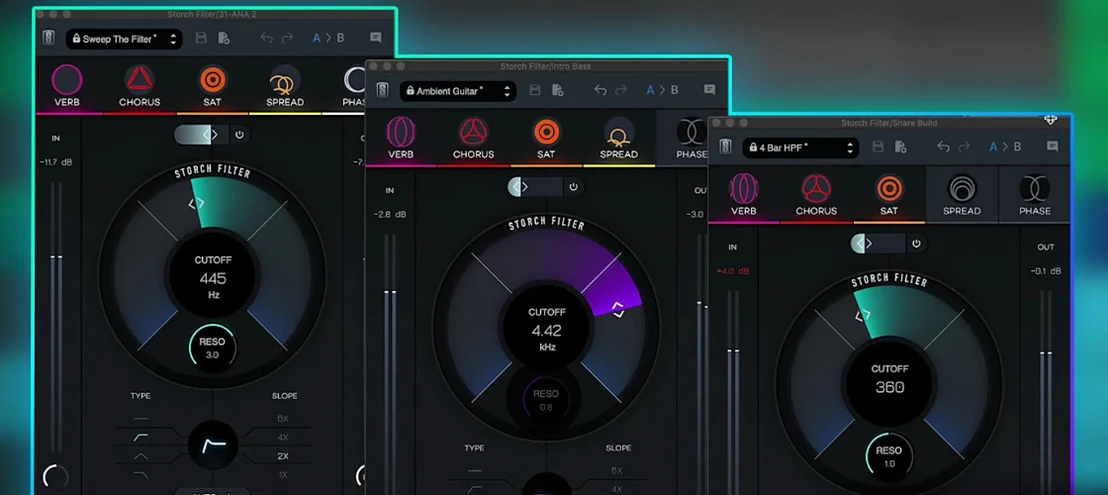
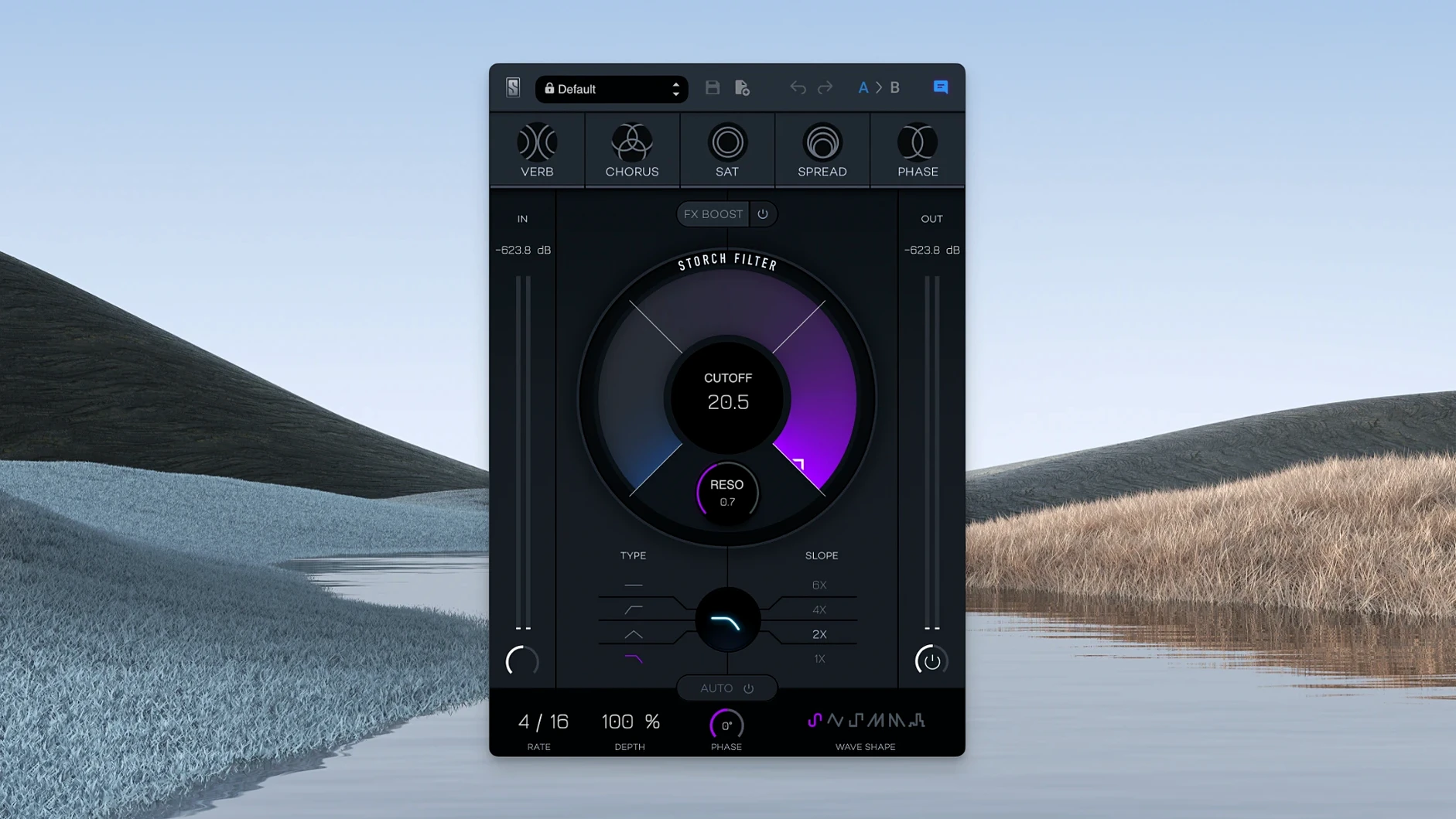
You drop the Storch Filter on a synth pad that needs motion, or a vocal that wants grit without a full effects chain. The filter sweep does the heavy lifting, and the five built-in effects—reverb, chorus, saturation, stereo widening, phaser—layer in without extra inserts.
Where does it sit in a session?
On individual tracks: lead vocals, synths, or drum loops. It works as a creative insert, not a corrective tool. The FX Boost slider pushes the whole thing harder, so you can go from subtle to aggressive without stacking plugins.
Filter and modulation affect summed signals on a bus
Yes. On a drum bus or group of pads, the filter and modulation affect the summed signal. The stereo widener and reverb are useful for glueing elements, but watch the phase on the phaser if you have multiple sources.
What are typical jobs for it?
Filter sweeps into choruses, adding movement to static parts, or creating transitional risers. The presets from Scott Storch give you a starting point for hip-hop and pop production. The cutoff and resonance controls are tied to the effects, so the filter shape changes the texture of the reverb or saturation.
Cutoff and resonance shape how all five effects behave
The most common one: treating the filter and the five effects as separate sections. They aren't. The cutoff and resonance directly change how the reverb, chorus, saturation, stereo widener, and phaser behave. Dialing in a filter sweep without listening to what it does to the reverb tail or the phaser's phase means you lose half the plugin's character. Start with the filter closed and open it slowly while the effect is engaged—you will hear the texture shift.
Another mistake: overloading the FX Boost slider early. It works like a master push, not a make-up gain. Cranking it to maximum before you set the filter curve or the effect blend gives you a saturated mess that is hard to undo. Leave FX Boost at its default position, tune the filter and the effect you want, then bring the boost up last if the part still needs aggression.
Beginners also forget that the autofilter's LFO shapes do not all behave the same way. The sine and triangle waves produce predictable sweeps, but the square and sample-and-hold shapes create abrupt jumps. On a sustained pad, square-wave modulation sounds like a stutter, not a filter sweep. Pick the wave shape to match the rhythm of the part, not just the one that looks interesting.
Using the stereo widener on mono sources is another dead end. It expands the stereo field, but if the source has no stereo information to begin with, the effect is subtle at best and phasey at worst. Put it on a stereo synth or a drum loop with panning already in place.
Building a transitional riser from a synth loop before a drop
This covers building a transitional effect from an existing synth loop, start to finish.
- Place the Storch Filter as an insert on a synth loop that plays through the last four bars before a drop. The loop should have some harmonic content, not just a single note.
- Listen to the effect on the loop—it should sound muffled but not completely inaudible.
- Engage the reverb effect. The reverb adds a tail that extends beyond the loop, so the rise feels longer than four bars.
- Arm the autofilter. Choose the sawtooth LFO shape. Set the rate to one full cycle over four bars (match the tempo in your DAW or tap it in). The sawtooth will sweep the cutoff upward gradually.
- Automate the cutoff manually to open further in the last bar. The combination of the LFO sweep and the manual automation creates a dual rise that feels wider than either method alone.
- At the drop, bypass the plugin. The sudden removal of the filter and reverb leaves the full loop exposed, which creates the contrast a riser is supposed to produce.
If the riser sounds too thin, add a small amount of saturation from the effects section before step 2. The saturation adds harmonics that the filter can emphasize as it opens.
Loads as AU, VST3, or AAX and runs ARM-native on macOS 11+
The Storch Filter loads as an AU, VST3, or AAX plugin, so it works inside Logic Pro, Ableton Live, Pro Tools, and any DAW that supports those formats. On macOS 11 or later, the ARM-native build runs without Rosetta translation, which keeps plugin latency low when you stack multiple instances.
You can combine it with macOS Audio Unit hosting features. For example, use the built-in AU Lab utility to route a microphone through the Storch Filter while you record voiceovers or sound design clips. The filter and effects apply in real time, so you monitor the processed signal directly.
For producers who use Slate Digital's Virtual Mix Rack, the Storch Filter slots into a channel strip alongside compressors and EQs. The filter sits before or after the dynamics processing depending on the routing inside the rack. A typical setup: Virtual Mix Rack compression first, then Storch Filter for the creative sweep, then the rack's own output limiter. This is a common configuration for Slate Digital Mac torrent users who build hybrid chains from the Complete Access catalog.
If you work with adjustable low-pass filters elsewhere in the session, the Storch Filter replaces them when you need modulation built in. A standard low-pass filter from the DAW does not include reverb or phaser linked to the cutoff. Dropping the Storch Filter gives you that connection without extra routing.
A mix engineer uses the filter to build pre-chorus vocal energy
A mix engineer working on a pop track gets a vocal take that sits flat across the verse. The client wants the pre-chorus to build energy without adding more layers. The engineer inserts the Storch Filter on the vocal track, sets the cutoff to about 500 Hz, engages the chorus effect at a moderate mix, and arms the autofilter with a sine wave LFO at a half-bar rate. As the pre-chorus approaches, the filter opens and the chorus adds width. The vocal goes from dry and centered to slightly wide and moving in two bars. No extra automation, no additional effects sends. The engineer bypasses the plugin at the chorus downbeat, and the vocal returns to its original state for the hook. The client hears a lift without a new part being added.
- Build updated to version 1.0.6.
- macOS 11 or later
- Apple Silicon (ARM) processor
- Interface language: English
Questions from the notes
What effects are built into the Storch Filter?
It includes reverb, chorus, saturation, stereo widening, and phaser, all linked to the cutoff and resonance controls.
Is it compatible with Intel Macs?
No. The listed architecture is ARM, so it requires Apple Silicon. Minimum macOS is 11.
Install procedure
- Run the installer package.
- Follow the on-screen prompts.
- Restart your DAW to scan the new plugin.
Reports from players
Sign in or create a tester account to file a report.
No reports filed yet.