If you already work with Xfer Records' VST suite, Serum for macOS fits right in. It's a wavetable synthesizer that runs on both ARM and x86 64-bit Macs, as long as you're on macOS 10.13 or later. The plugin's build label reads Xfer Records Serum 2.0.24 (Team V.R, Update only), so you're getting the latest iteration of the instrument.
Compatibility comes first for me. You can host Serum in any DAW that supports VST plugins on Mac, and the dual-architecture support means it works on both Intel Macs and Apple Silicon without extra translation layers. The plugin interface is in English, and installation is straightforward — standard procedure, then a patch, with instructions included.
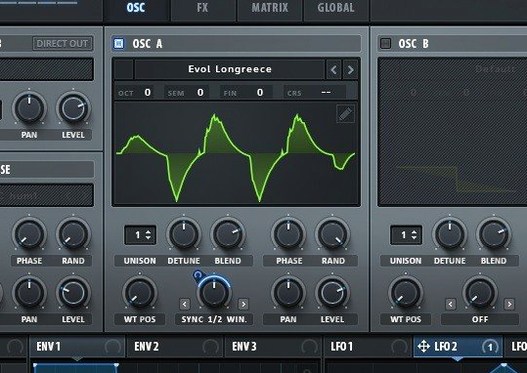
Once it's running, the sound design tools are deep. Serum combines multiple sound generation methods with a powerful modulation system. The flangers, phasers, and comb filters can track the note you play, which makes them feel musical rather than static. Unison WT Pos lets you assign a different waveform to each unison voice, and Unison Warp sets the voices differently — both are useful for building thick, moving textures. Sample-rate reduction is available as a filter process, adding another way to shape the tone.
Serum on Mac is a solid choice if you want a wavetable synth that covers both classic and experimental ground, and the architecture support means it should run on whatever Mac you currently have.
First days with Serum 2 on a Mac can feel a bit like exploring an unfamiliar city — the landmarks are obvious, but the shortcuts and side streets take a few sessions to discover. Here are some practical tips for getting oriented after the install finishes.
Where to find the presets and wavetables
After applying the patch and following the included installation instructions, Serum loads its factory content automatically. If you open the plugin and see an empty wavetable display, check that the Serum data folder is in the correct location — the activation instructions file usually notes the expected path. The browser tab at the top of the interface lists categories on the left and individual presets on the right. Drag or double-click to load.
Starting with a clean slate
The default init patch is a basic sawtooth wave with one oscillator and no effects. Before you start designing, click the Init button (usually under the menu section at the top) to clear any residual modulation routing from a previous session. This makes it easier to build a sound from scratch rather than accidentally inheriting someone else's filter envelope.
Tab to jump between oscillators
Serum 2.1.5 has a few workflow details that aren't obvious from the main panel:
- Tab to jump between oscillators. No need to reach for the mouse — pressing Tab moves focus from one oscillator section to the next. This works inside the wavetable editor too, letting you page through parameter fields quickly.
- Right-click on any modulation destination. You can assign or drag a modulation source directly onto a knob or slider. The visual feedback shows the modulation depth as a colored ring around the control.
- The matrix view is searchable. The modulation matrix lists all active routings. Typing in the search field filters by source or destination name. Helpful when a patch has a dozen routings and you need to find the one controlling filter cutoff.
- Drag wavetables from the browser into the oscillator display. You can also drag from Finder — if you have custom wavetables saved as .wav files, they import directly onto the oscillator waveform area.
Serum vs. Massive X on macOS
Serum sits in a specific part of the synth landscape. Here is how it compares to two other wavetable-capable plugins that run on macOS 10.13 and later:
Native Instruments Massive X. Both synthesizers use wavetables as a core building block. Massive X has a distinct character baked into its filters and routing — its sound leans aggressive and electronic. Serum is more neutral and transparent out of the box, which makes it a flexible starting point for any genre. Massive X also requires the Native Access application for installation and activation, whereas Serum follows a simpler copy-and-patch procedure. On the modulation side, Serum's matrix is more visual and easier to edit on a single screen, while Massive X spreads its modulation across several sub-panels.
Arturia Pigments. Pigments combines wavetable and additive synthesis with a built-in effects chain. Its interface uses a colorful, tabbed layout that separates sound sources, filters, effects, and modulation. Serum keeps everything visible on one window — you see oscillators, filters, envelopes, and the modulation matrix simultaneously. Pigments includes a sequencer and arpeggiator as standard features; Serum does not include a built-in sequencer. For pure wavetable editing, Serum's real-time waveform drawing and transform tools give you more direct control than Pigments' wavetable engine.
None of these is better across the board — the choice depends on whether you prefer Serum's single-window density or the more compartmentalized layouts of its competitors.
A workflow for building a layered pad from scratch
This sequence takes you through creating a thick, evolving pad using only Serum's oscillators and modulation. It works as a starting point for your own patches.
- Select a wavetable. In Oscillator A, browse to the Smooth or Spectral category and pick a wavetable with slow harmonic movement — something like "Spectral" or "Saw Pad." These tables morph as you play across the keyboard.
- Add unison voices. Raise the Unison count on Oscillator A to 8. Increase the Detune knob slightly (about one-third of the range) so the voices spread in pitch. The WT Pos parameter lets each unison voice sample a different position in the wavetable, which adds motion even without modulation.
- Layer a second oscillator. Turn on Oscillator B and set it one octave below Oscillator A. Choose a simple saw wave or a bright wavetable. Lower its volume so it sits behind Oscillator A. Stack settings allow you to layer octaves — use the Stack controls to assign an octave offset to Oscillator B's voices for additional depth.
- Route the filter. Serum's dual filters let you switch between types or blend them. Set Filter 2 to Notch or Phaser — these filters can track the played note, so the notch position follows the keyboard. Blend between the two filters using the Morph control.
- Set the envelope. Map Envelope 1 to the filter cutoff. This opens the filter gradually, giving the pad a slow swell.
- Add modulation. Drag LFO 1 onto the wavetable position of Oscillator A. Set the LFO rate to a slow tempo, about one cycle per four bars. This makes the wavetable drift through its frames over time. For extra movement, add a second LFO at a faster rate mapped to Oscillator B's unison detune.
- Apply effects. Turn on the flanger or phaser in the effects section. Set the feedback low and let the effect track the musical note you play — this keeps the comb filtering musical rather than random. A touch of reverb at the end of the chain spreads the pad across the stereo field.
The result is a layered sound that opens, moves, and shifts in timbre without any additional external effects or MIDI automation.
Building a cutting techno bass without samples
Consider a producer working on a techno track who needs a bass sound with enough harmonic content to cut through a dense mix, but without using samples. They open Serum, set Oscillator A to a basic sawtooth, and use the Unison WT Pos feature to assign a different waveform to each of the 16 stacked voices — this gives the bass a slightly different tonal character on every note, even though the pitch stays the same. They apply the sample-rate reduction filter to add grit, then route the comb filter to track the played note, which reinforces the fundamental frequency without boosting the bass EQ in the mix. The result is a bass patch that sounds wide and aggressive but stays controlled in the low end. No external saturation or compression needed.
This producer finds that Serum's real-time wavetable editing means they can adjust the waveform mid-project without bouncing audio — they draw a new shape directly in the oscillator display, and the sound updates instantly. That immediacy keeps the creative flow intact.
- macOS 10.13 or later
- Intel or Apple Silicon (ARM) Mac
- VST-compatible host
Questions from the notes
Does Serum run on Apple Silicon Macs?
Yes, Serum supports both ARM and x86 64-bit Macs, so it runs natively on Apple Silicon and on Intel Macs.
What macOS version do I need?
Serum requires macOS 10.13 or later.
Install procedure
- Run the standard installation procedure.
- Apply the patch.
- Use the included installation and activation instructions file.
- Open the included VR.nfo file for instructions.
Reports from players
Sign in or create a tester account to file a report.
No reports filed yet.