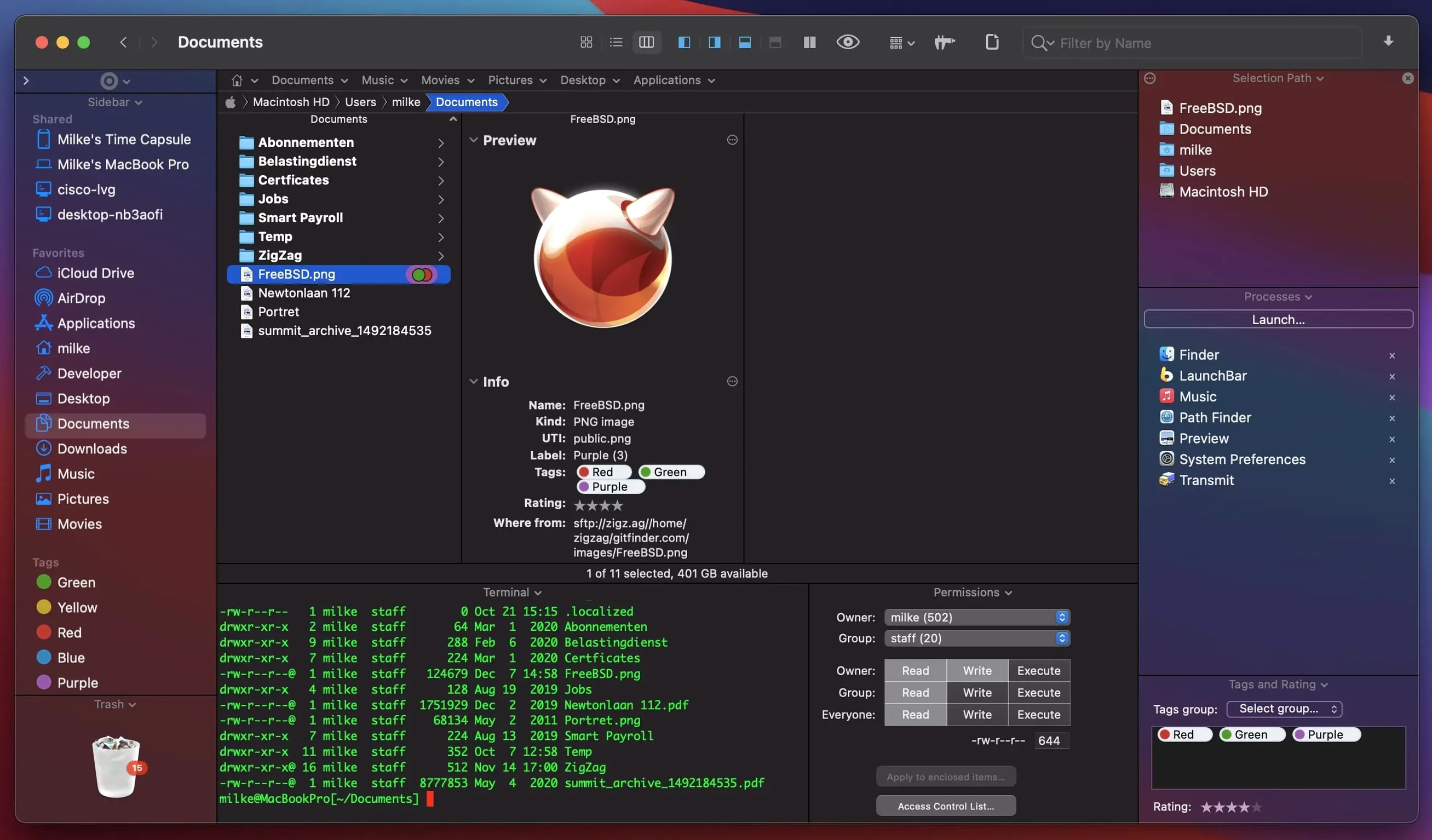
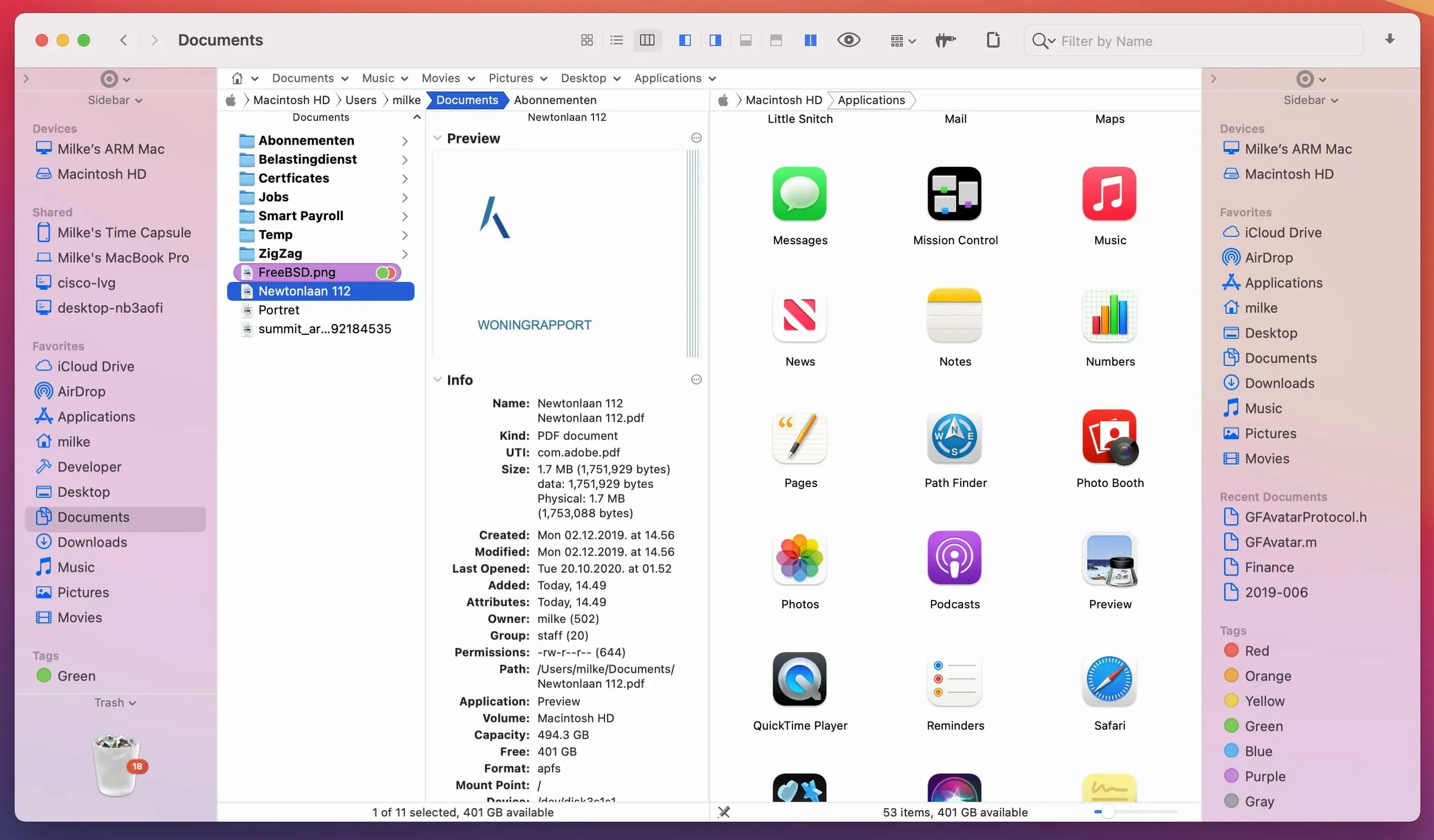
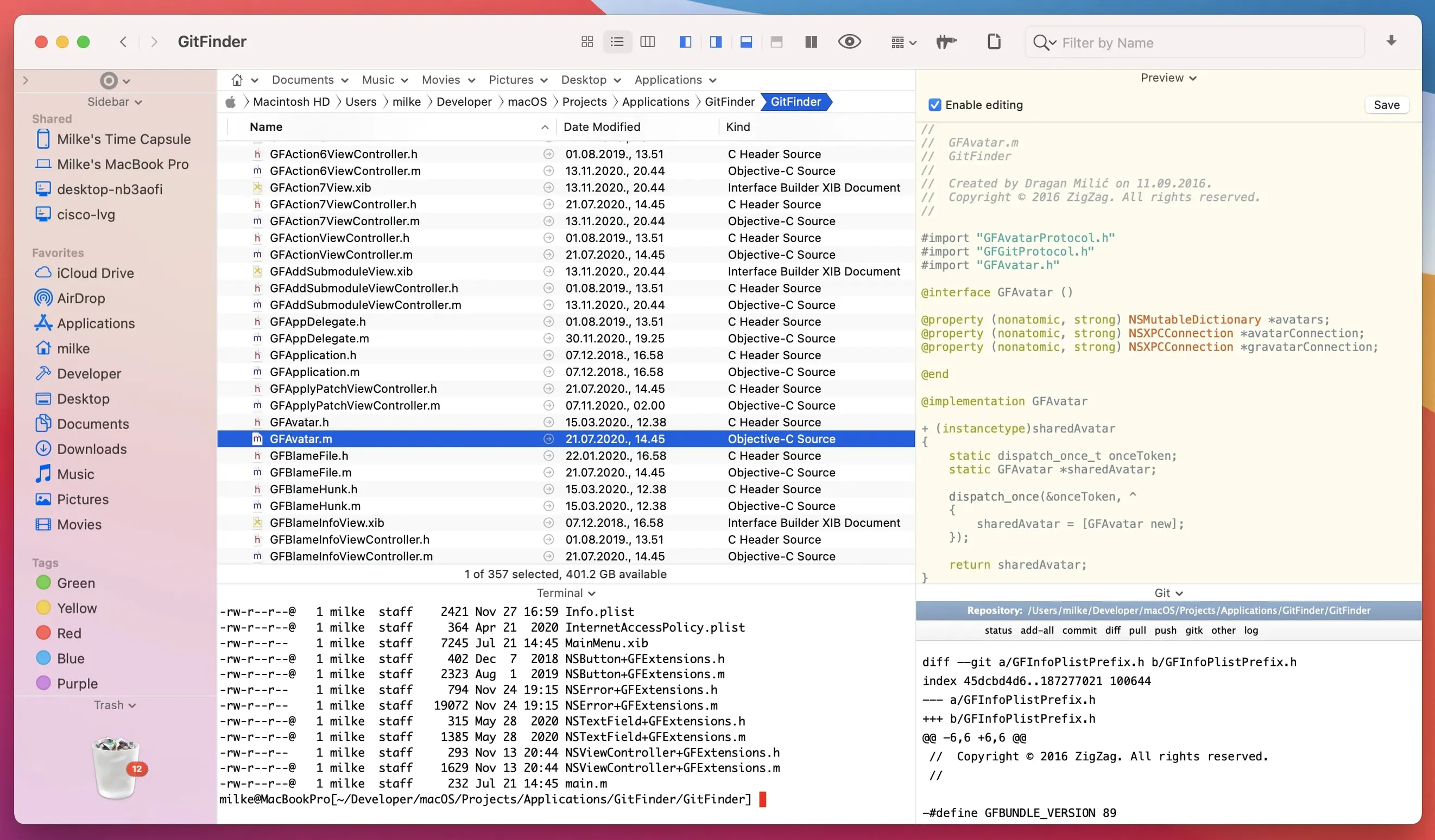
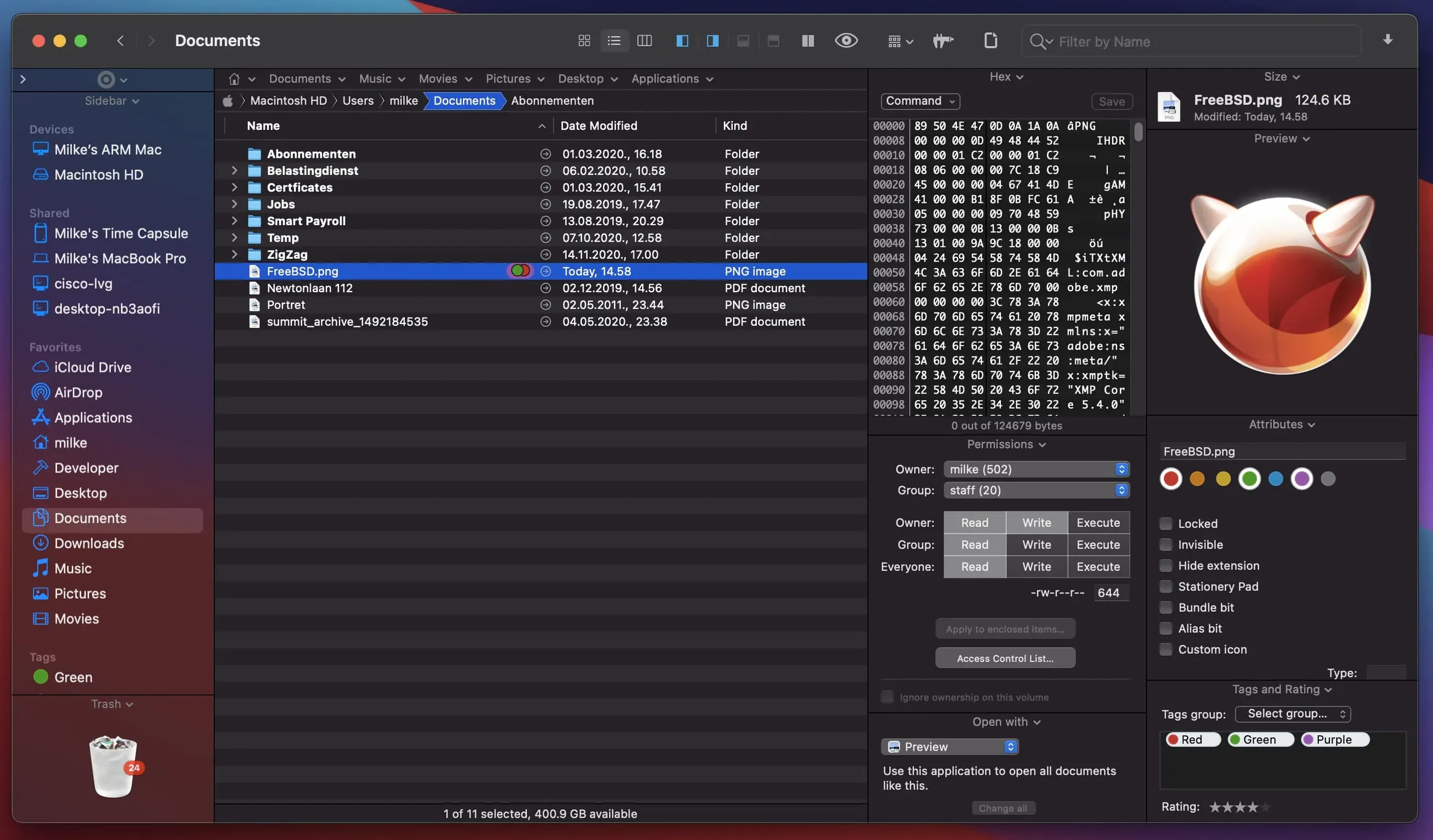
At its core, Path Finder 26 is a file manager with tabs, a dual-pane view, and modules that go beyond Finder. Twenty-six major versions in, it still does the basics well. Here’s what to try first.
- Open a second pane. Press
Cmd+Shift+Dto split the window. Drag files between panes, or use the built-in comparison tool to sync folders. - Use tabs like a browser. Each tab remembers its own view settings and location. Middle-click a folder to open it in a new tab.
- Launch the FTP client. From the toolbar, choose Connect to Server. It handles standard FTP and SFTP connections without leaving the app.
- Edit a file in place. Select any text or image file and press
Cmd+Yto open the module editor. No need to launch a separate app. - Change a hotkey. Go to Preferences → Hot Keys. You can remap almost any command to a system-wide shortcut.
Beyond those, the archive tool handles common formats, and the app launcher works as a quick switcher. For a newcomer, the dual-pane view is the fastest way to feel the difference from Finder.
Moving files between two projects with the dual-pane view
Say you have a design project folder on your desktop and a work-in-progress folder in Documents. Open Path Finder, press Cmd+Shift+D to split the window. Set the left pane to the desktop folder, the right pane to the Documents folder. Select the files you need in the left pane — cmd-click for non-contiguous, shift-click for a range — then drag them to the right pane. Path Finder copies them by default; hold Cmd while dragging to move instead. The transfer progress shows in a small overlay at the bottom of the pane, and you can queue multiple batches without the window blocking you.
Sits between Finder and heavy dual-pane managers like ForkLift
Path Finder sits between Finder and heavier dual-pane managers like ForkLift and Commander One. ForkLift leans into server connections — FTP, SFTP, Amazon S3, WebDAV — and has a clean interface, but its preview module is limited to basic file info. Commander One packs more archive formats (RAR5, 7z, ZIP) and a built-in terminal emulator, but its dual-pane workflow feels less polished than Path Finder's on macOS 13 Ventura. Path Finder's advantage is the module system: the text and image editors open quickly without launching separate apps, and the process manager is a genuine Finder addition — ForkLift and Commander One don't offer one. For someone who just wants tabs and a second pane, Path Finder is lighter than Commander One and more integrated than ForkLift. It does not try to be a terminal replacement or a cloud sync client; it handles file management with fewer dependencies.
Set list view and hot keys before first use
- View default. In Preferences → General, set the default view to List or Columns if you prefer. The default Icons view can feel cluttered on a large folder.
- Hot keys. Open Preferences → Hot Keys. The default
Cmd+Shift+Dfor dual-pane is fine, but you can assign a single key to toggle the second pane if you use it often. - File preview. In Preferences → Preview, enable Audio/Video preview to play media files directly in the preview panel. This is off by default.
- Archive handling. In Preferences → Archives, check Open archives in place so a double-click on a ZIP or DMG shows its contents without extracting first.
Sends files to Mail, Notes, and system services via share menu
Path Finder integrates with macOS services through the share menu and Quick Actions. Select a file, right-click, and you can send it to Mail, Notes, or any app registered in the system services. The FTP client works with credentials saved in the macOS keychain, so connecting to a server you use regularly is a single click. The process manager pulls data from the system's activity log — you can kill stuck processes without opening Activity Monitor, though Path Finder lists only user-level processes, not system daemons. For file searches, Path Finder uses its own index (not Spotlight) by default, which means it can find files by type, extension, or custom keyword combinations that Spotlight might miss. You can also switch to Spotlight search in Preferences → Search if you prefer one index. The archive tool handles standard ZIP, DMG, and ISO files without extra software, though it does not compress to RAR or 7z natively. For path finder 2197 or path finder torrent searches, the built-in filter works across volumes — just type a date or partial name and Path Finder narrows the list in real time.
- Fixed double-click behavior when clicking an icon in List View.
- Fixed a batch rename limitation affecting 31 renamed files.
- Fixed multiple-item selection in List View.
- Fixed label/tag color badges and iCloud status/icons in Icons, List, and Columns views.
- Fixed drag-and-drop selection drawing in Icons View.
- Fixed drag-and-drop cancellation slide-back animation in all view types.
- Fixed menu item icons on macOS 27 Golden Gate.
- Fixed minor UI and compatibility issues on macOS 27 Golden Gate.
- macOS 13 Ventura or later
- Intel or Apple Silicon
Questions from the notes
Does Path Finder support both Intel and Apple Silicon Macs?
Yes, the current version runs on both architectures. It requires macOS 13 Ventura or later.
Can Path Finder replace Finder completely?
It can handle most file management tasks, including browsing, previewing, and organizing. Some system integrations still rely on Finder, so it works alongside it rather than fully replacing it.
Install procedure
- Mount the disk image and run Open Gatekeeper friendly.
- Press Enter in Terminal to bypass Gatekeeper.
- Drag the app to the Applications folder.
- Open the app when installation is complete.
Reports from players
Sign in or create a tester account to file a report.
No reports filed yet.