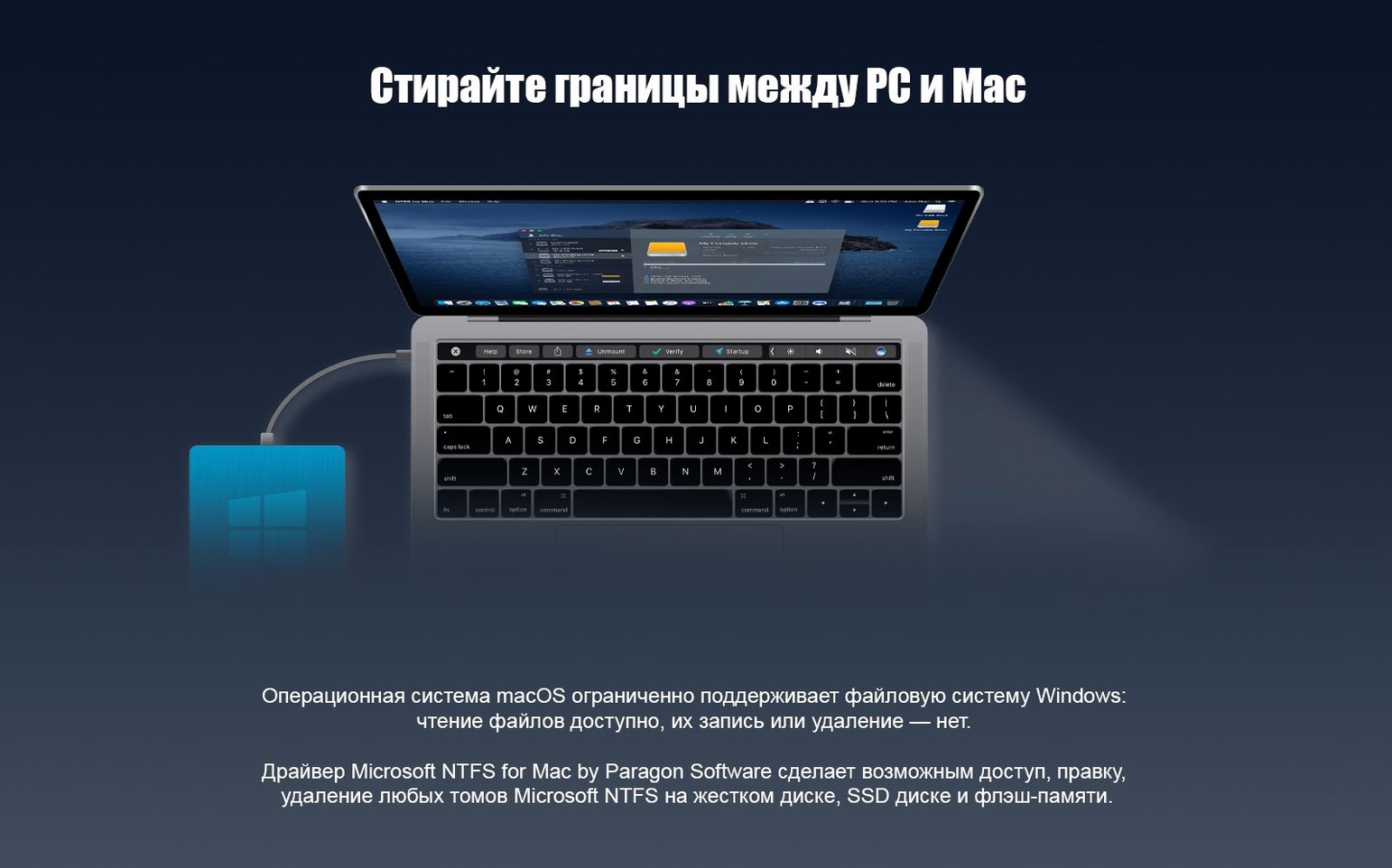
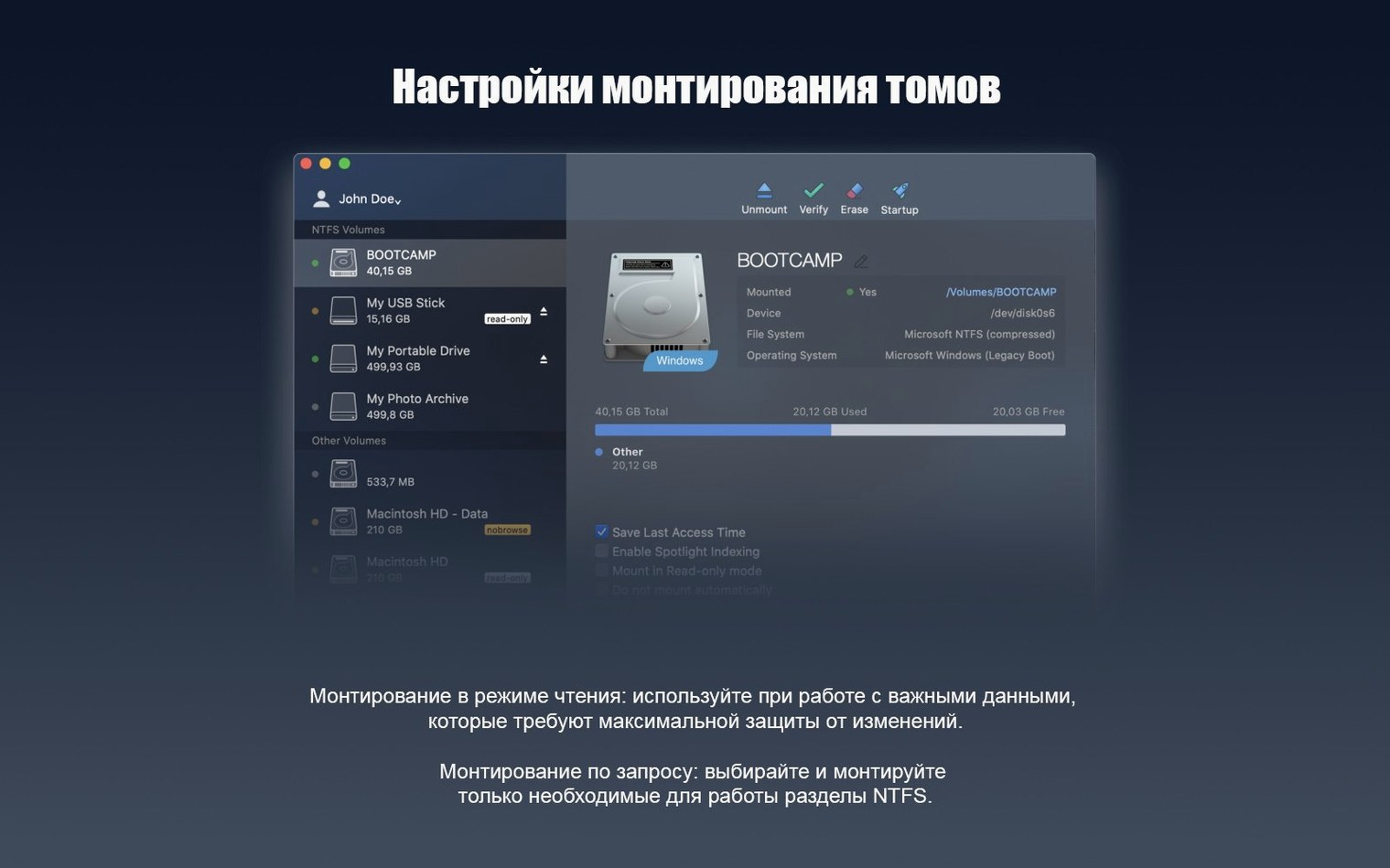
You plug a Windows-formatted USB drive into your Mac. Finder shows the files, but you cannot copy anything to it. macOS handles NTFS volumes as read-only by default. Paragon NTFS fixes that: it installs a driver that gives full read and write access to NTFS drives, so you can edit, move, and delete files as if the drive were formatted for macOS.
Getting started with version 15
- Download the disk image and run the installer.
- Connect an NTFS volume. It appears in Finder with full read/write access.
Version 15, released in June 2017, introduced a new driver core for faster and more reliable handling of NTFS volumes. It also added support for Windows 10 system compression. The multilingual utility runs on both Intel and Apple Silicon Macs, supporting macOS 10.12 and later.
Issues that crop up with Paragon NTFS
Most people install Paragon NTFS and never think about it again. The drive mounts, you copy files, it works. But a few issues crop up regularly enough that they are worth knowing about before they happen.
Volume shows up but only lets you read
The driver is either not loaded or the system is falling back to macOS native NTFS support. Open System Preferences (or System Settings on newer macOS versions) and look for the Paragon NTFS pane. If it is missing, the driver did not install correctly. Re-run the installer, restart, and check again. If the pane is there but the drive is still read-only, disconnect the drive, wait a few seconds, and reconnect it.
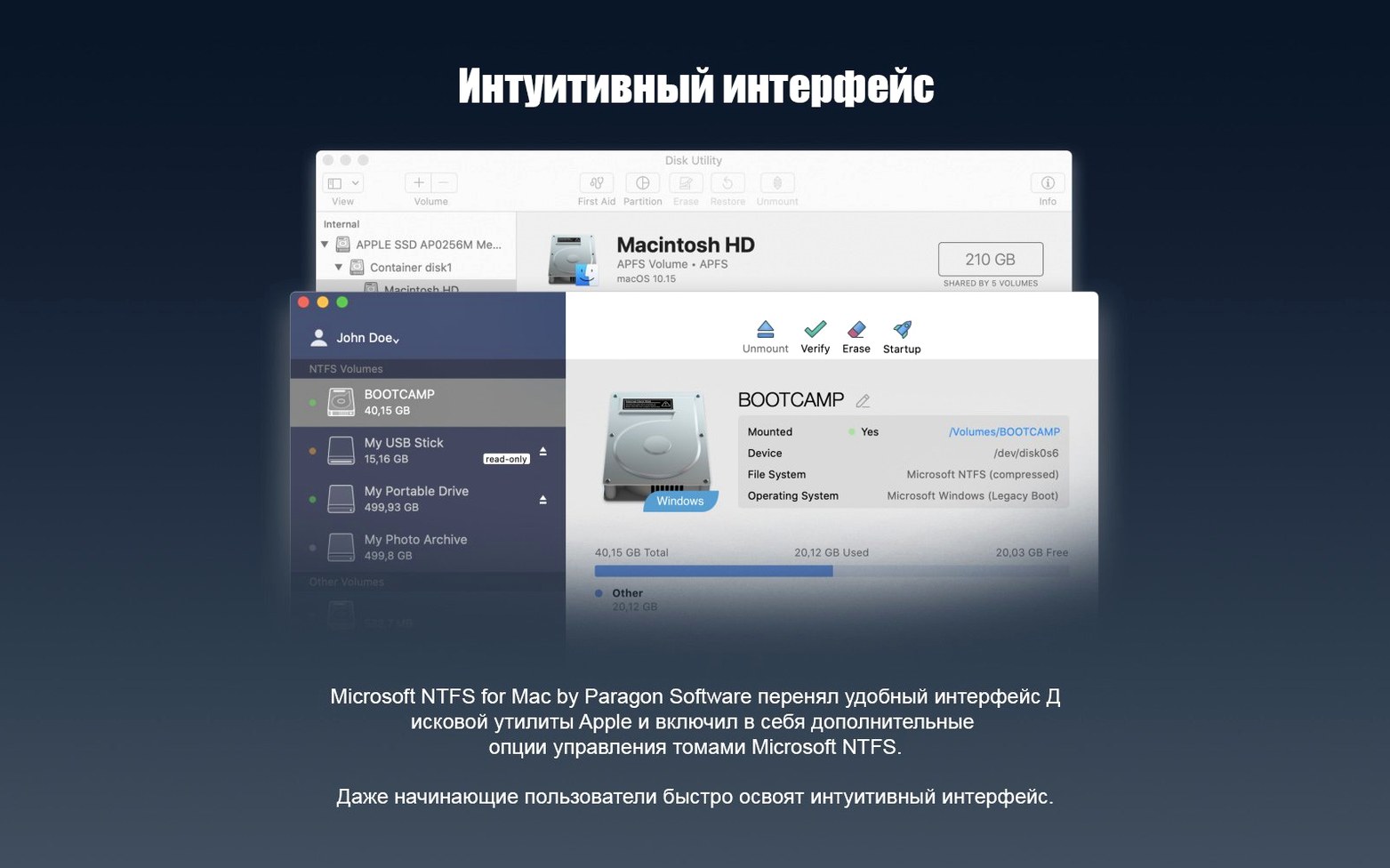
Run the reset tool from the Applications folder while the driver is still active. Restarting after the reset is not always required, but it does not hurt.
Drive does not mount at all
Check if the drive mounts on a Windows machine. If it does, the issue is likely the NTFS volume is flagged as dirty. Connect the drive to a Windows PC and run chkdsk /f on it. If you do not have a Windows machine handy, you can try a third-party NTFS repair tool, but that is outside what Paragon NTFS covers. If the drive mounts on Windows fine, reinstall the Paragon driver and restart.
Plugging a 2 TB NTFS drive into a Mac via USB-C
You have a 2 TB external hard drive that was formatted on a Windows 10 laptop. It has project files, reference photos, and a few large video clips. You plug it into your Mac via USB-C.
The drive icon appears on the desktop within a few seconds. You open it in Finder and see the same folder structure you left on Windows. No extra steps, no pop-ups asking what to do. You drag a folder of edited photos from your Mac's desktop onto the drive. The copy progress bar shows up, and the files land on the drive normally.
Later, you need to rename a few files that have Windows-unfriendly characters. You do that in Finder, same as any other drive. At the end of the session, you eject the drive through Finder and disconnect it. The next time you plug it into a Windows PC, everything is where you left it, named correctly, readable.
Compatibility with Intel and Apple Silicon Macs
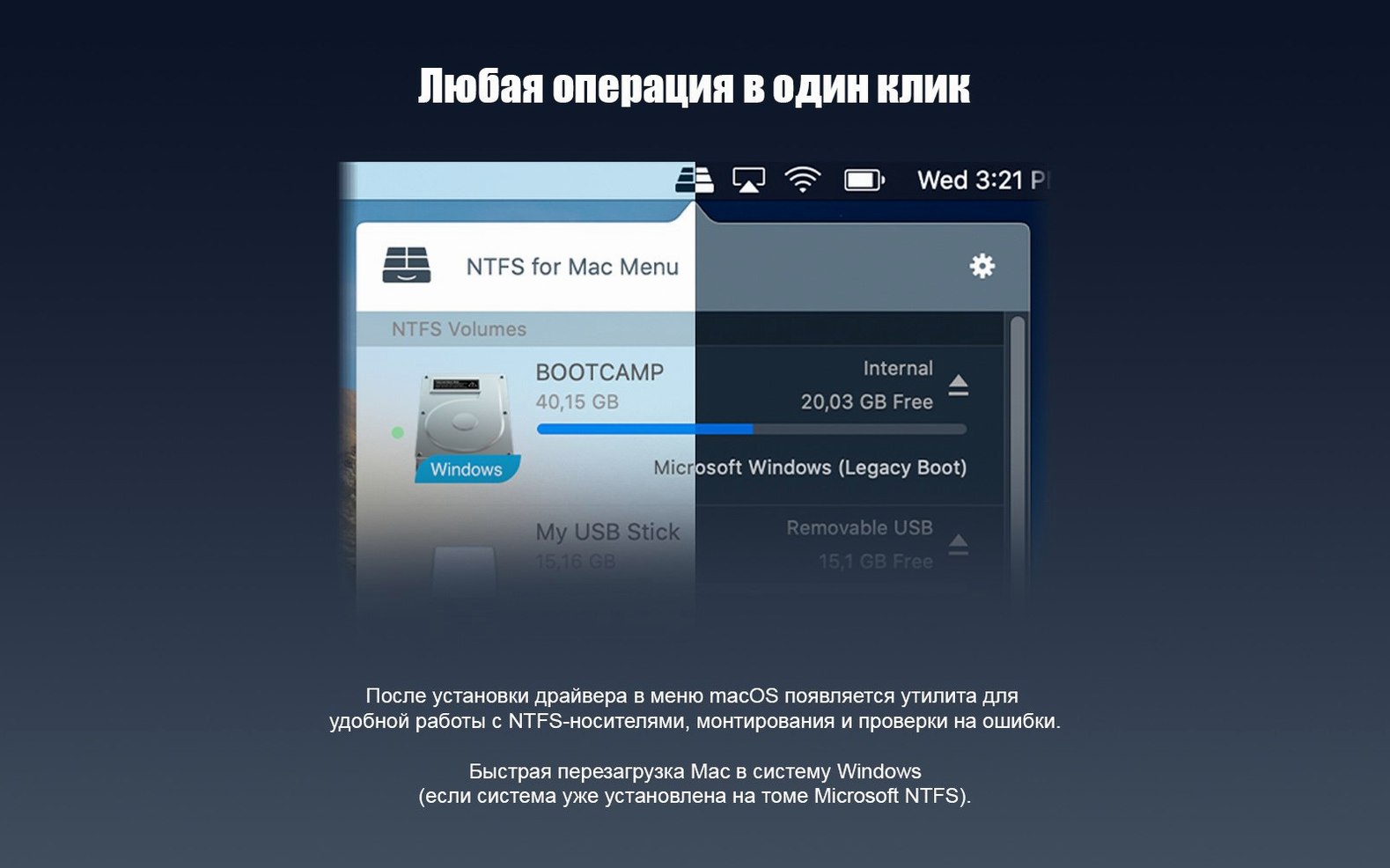
Paragon NTFS version 15 runs on any Mac with macOS 10.12 or later. That covers machines from 2016 onward, including both Intel models and Apple Silicon. The driver works in the background. You do not see a separate application running, and there is no icon in the menu bar by default. The only visible effect is that NTFS drives behave like any other formatted drive.
The installer takes up a moderate amount of space on your boot drive. Once installed, the driver loads at startup. It does not slow down system boot time noticeably, and it does not interfere with other disk utilities. If you use disk utility to repair or erase drives, the Paragon driver stays out of the way.
One thing to note: the driver supports Windows 10 system compression. That means if you have a drive with compressed files from a Windows 10 machine, the Mac reads and writes them without extra steps. Earlier versions of Paragon NTFS did not handle that format, so version 15 is a clear upgrade for anyone dealing with newer Windows systems.
Who benefits from cross-platform drive access
People who work across both platforms are the obvious candidates. If you keep a Windows desktop at work and a Mac at home, or if you share an external drive between a MacBook and a gaming PC, Paragon NTFS removes the friction of reformatting or using slow workarounds.
Video editors and photographers who swap hard drives between systems benefit especially. An NTFS drive formatted on Windows can contain hundreds of gigabytes of footage. Without a driver, you can only copy files off it, not add new ones. With Paragon NTFS, you can edit files directly on the drive and save changes without moving data around.
Anyone who uses Boot Camp on an Intel Mac also gets value. The Windows partition is formatted as NTFS. Paragon NTFS lets macOS read and write to that partition while you are booted into macOS, so you can access Windows files without restarting.
People who do not need the driver can skip it. If all your drives are formatted as exFAT or APFS, and you never touch a Windows machine, there is no reason to install it.
Transferring a project folder from Windows to Mac
This is the most common scenario, so it is worth walking through from start to finish.
- On the Windows machine, connect an external drive that is formatted as NTFS. Copy the project folder (assets, audio files, scripts, exported video) onto the drive. Eject it properly from Windows.
- Connect the drive to your Mac. If Paragon NTFS is installed, the drive mounts normally. If you installed it recently and this is the first time, the drive appears in Finder without any prompts.
- Open the drive in Finder. Browse the folder structure. Copy files from the drive to your Mac, or work directly from the drive if the files are not too large. You can also edit files in place — rename folders, delete old drafts, add new assets — and the changes persist when you plug the drive back into Windows.
- When you finish, eject the drive from Finder. Do not just unplug it. Ejecting ensures the driver flushes any cached writes to the drive. This matters more for NTFS than for APFS because macOS does not manage NTFS caches by default.
- Reconnect the drive to the Windows machine. Open the folder. The files you added from the Mac are right there, with the same names and folder structure. No conversion, no compatibility issues.
The whole workflow takes about the same time as working with a macOS-native drive. The only difference is that you need to eject properly on both systems before disconnecting.
- Introduced a new driver core for faster and more reliable NTFS volume handling.
- Added support for Windows 10 system compression.
- macOS 10.12 or later
- Intel or Apple Silicon (ARM) processor
Questions from the notes
Does Paragon NTFS work on Apple Silicon Macs?
Yes, the driver supports both ARM and 64-bit x86 architectures, including Apple Silicon Macs.
What macOS versions does Paragon NTFS 15 support?
It supports macOS 10.12 and later.
Why can't I write to an NTFS drive without Paragon NTFS?
macOS has built-in read-only support for NTFS volumes. Paragon NTFS adds a driver that enables full read and write access.
Install procedure
- Open the downloaded disk image and run the standard installer.
- Start the trial period if needed.
- Reset the trial period every 10 days using Trial Reset.
Reports from players
Sign in or create a tester account to file a report.
No reports filed yet.