
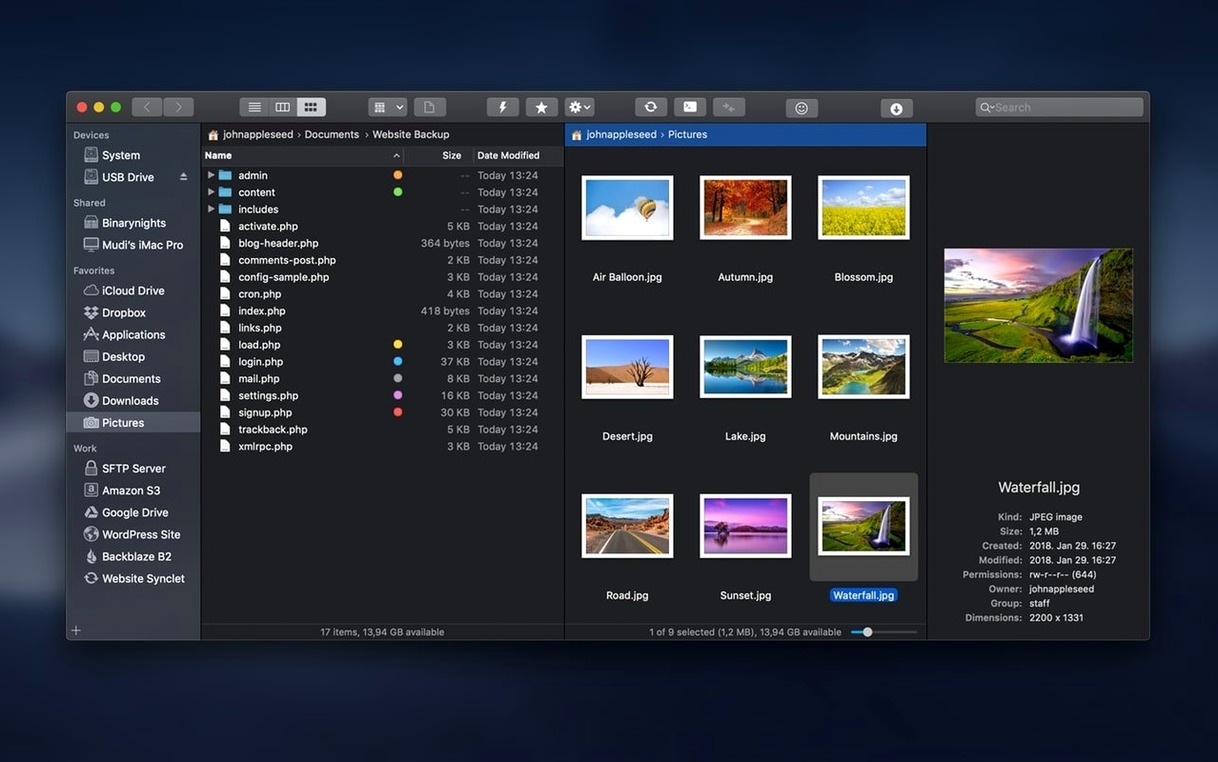
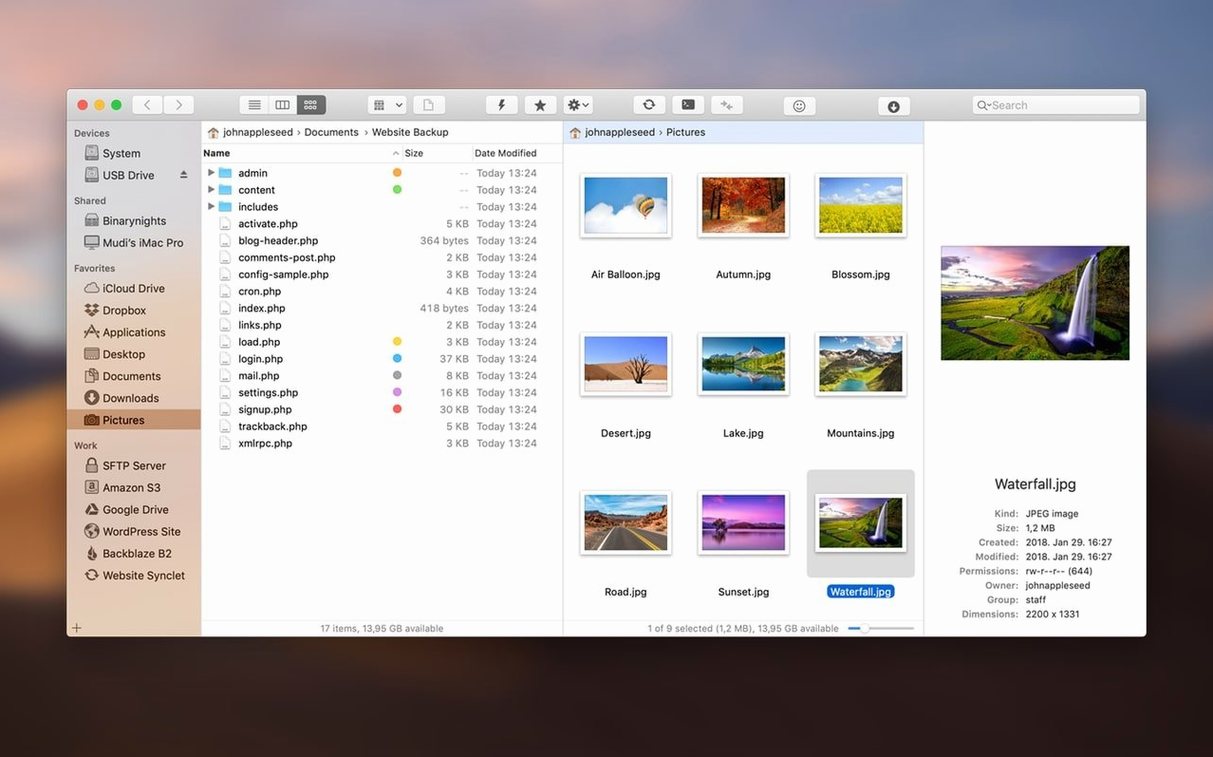
ForkLift runs on Intel Macs with macOS 12 or later. It’s a dual-pane file manager and FTP client that works as a Finder replacement for local and remote file operations.
Browse local and remote folders side by side
- Connecting to multiple servers at once and browsing them side by side.
- Comparing local and remote folders, then syncing one-way or two-way.
- Searching files on local or remote sources by name, extension, text, or tags.
- Previewing photos, PDFs, and other file types without opening separate apps.
- Opening archives as folders and browsing their contents directly.
- Launching Terminal, iTerm, or Hyper from the current folder.
A full file manager that replaces Finder
- It’s a full file manager, not just an FTP client—so it replaces Finder for many tasks.
- You can use it for simple file transfers or more structured sync jobs.
- ForkLift 4.7.6 fixes two issues on macOS 27 Golden Gate and improves file interaction.
Adjust panel layout and other defaults first
Before you start moving files around, a few settings save time. ForkLift's defaults work, but these are the ones I adjust immediately on a fresh install.
- Panel layout – ForkLift starts with two panels side by side. If you prefer a single panel or want them stacked vertically, go to the View menu and pick the arrangement that matches how you work. I keep two panels horizontal for local and remote side-by-side work.
- Default transfer mode – ForkLift can queue transfers or start them immediately. If you regularly move large batches of files, set it to queue mode so you can review the list before the transfer starts. This is under the Transfer menu.
- Show hidden files – Hidden files are invisible by default. If you manage server configurations or sync dotfiles, turn this on in the View menu. It saves hunting for hidden folders later.
- Tab behavior – Each panel can have multiple tabs. I assign a tab per server or per local folder. ForkLift remembers open tabs between sessions if you leave them open when quitting. No setting to toggle for that, but it's worth knowing.
- Editor for text files – ForkLift can edit text files on local and remote servers. The default editor is the system text editor. If you prefer a specific app, set it in Preferences under the Editor section.
Compatibility answers before installing
Some things come up often enough that they're worth answering in advance.
Will ForkLift work alongside Finder?
Yes. ForkLift does not replace Finder by default. It installs as a separate application. You can use it for specific tasks and keep Finder for everything else. ForkLift is a supplement, not a replacement that takes over your system.
Does it support drag-and-drop between local and remote panels?
Yes. Dragging files between panels triggers a transfer. ForkLift handles FTP, SFTP, and the other remote protocols the same way. You can also copy and paste, or use the transfer buttons in the toolbar.
Can I sync two remote servers directly?
ForkLift supports one-way and two-way synchronization between any two sources it can connect to. That includes local folders, FTP servers, SFTP servers, Amazon S3, WebDAV, and the other volume types. You set up a sync job, choose the direction, and ForkLift compares the contents before executing.
How does the archive browsing work?
ForkLift treats archives like folders. Double-click a ZIP or tar file in the file list, and its contents appear in the panel as if it were a directory. You can copy files in and out without extracting the whole archive. Works for common archive formats.
Does it support macOS 27 Golden Gate?
Yes. Version 4.7.6 specifically fixes two issues that occurred on macOS 27 Golden Gate. If you are on that version, this release is the one to use.
A workflow for syncing a local project folder to a remote server
This is the task I use ForkLift for most often. It covers the core features without any extra steps.
- Open ForkLift. The default view shows two panels side by side.
- In the left panel, navigate to your local project folder.
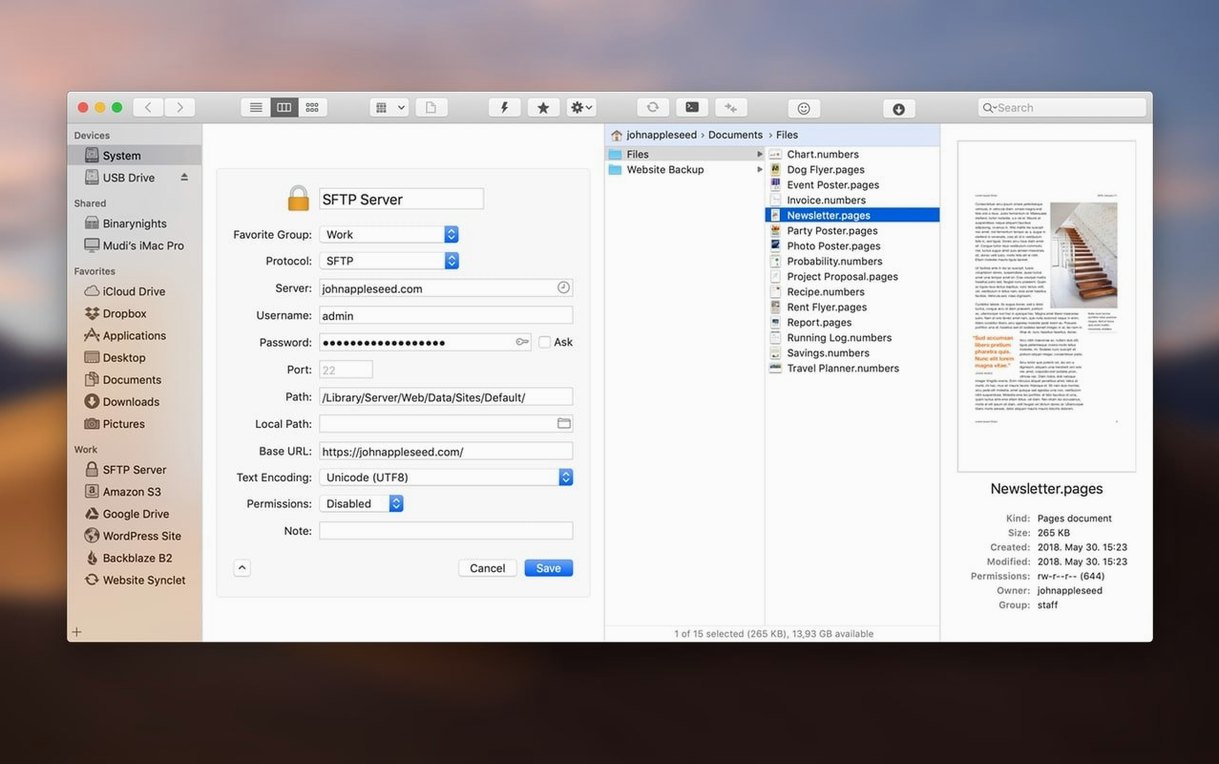
- In the right panel, connect to your remote server. Use the connection manager to enter the server address, protocol (SFTP or FTP), username, and password. ForkLift remembers the connection for next time.
- Once connected, navigate the right panel to the target remote directory.
- Select the local folder you want to sync. Right-click and choose Sync from the context menu.
- In the sync dialog, select the remote folder (it should already be selected in the other panel). Choose one-way synchronization if you want local changes pushed to the server, or two-way if changes on either side should merge.
- Click Compare. ForkLift scans both folders and shows a list of differences: new files, modified files, deleted files.
- Review the list. You can uncheck individual files if you do not want them included.
- Click Sync. ForkLift executes the transfer. The progress appears in the transfer queue.
- When done, disconnect the server or leave the connection open for the next sync. ForkLift keeps the tabs intact.
System requirements for Intel Macs on macOS 12 or later
ForkLift 4.7.6 is built for Intel Macs running macOS 12 or later. It is a 64-bit application. The installer comes as a disk image. You mount it, run the Open Gatekeeper friendly step, press Enter in Terminal to bypass Gatekeeper, then drag the app to your Applications folder. If required, you disable SIP before starting the app for the first time. After that, it launches like any other Mac application. The interface is a standard Mac window with menus, toolbars, and two file panels. It uses the system font and language you set, with English, German, and Hungarian available. The app connects to FTP, SFTP, Amazon S3, AFP, WebDAV, SMB, and NFS servers using the credentials you provide. No additional background services or daemons are installed. The app runs on its own and closes cleanly when you quit.
- Fixes for two issues on macOS 27 Golden Gate.
- User experience improvements when interacting with files.
- macOS 12 or later
- Intel architecture
Questions from the notes
Does ForkLift support Apple Silicon Macs?
ForkLift 4.7.6 runs on Intel Macs with macOS 12 or later. The brief doesn’t specify native Apple Silicon support.
Install procedure
- Mount the disk image.
- Run Open Gatekeeper friendly.
- Press Enter in Terminal to bypass Gatekeeper.
- Drag the app to the Applications folder.
- Disable SIP if required.
Reports from players
Sign in or create a tester account to file a report.
No reports filed yet.