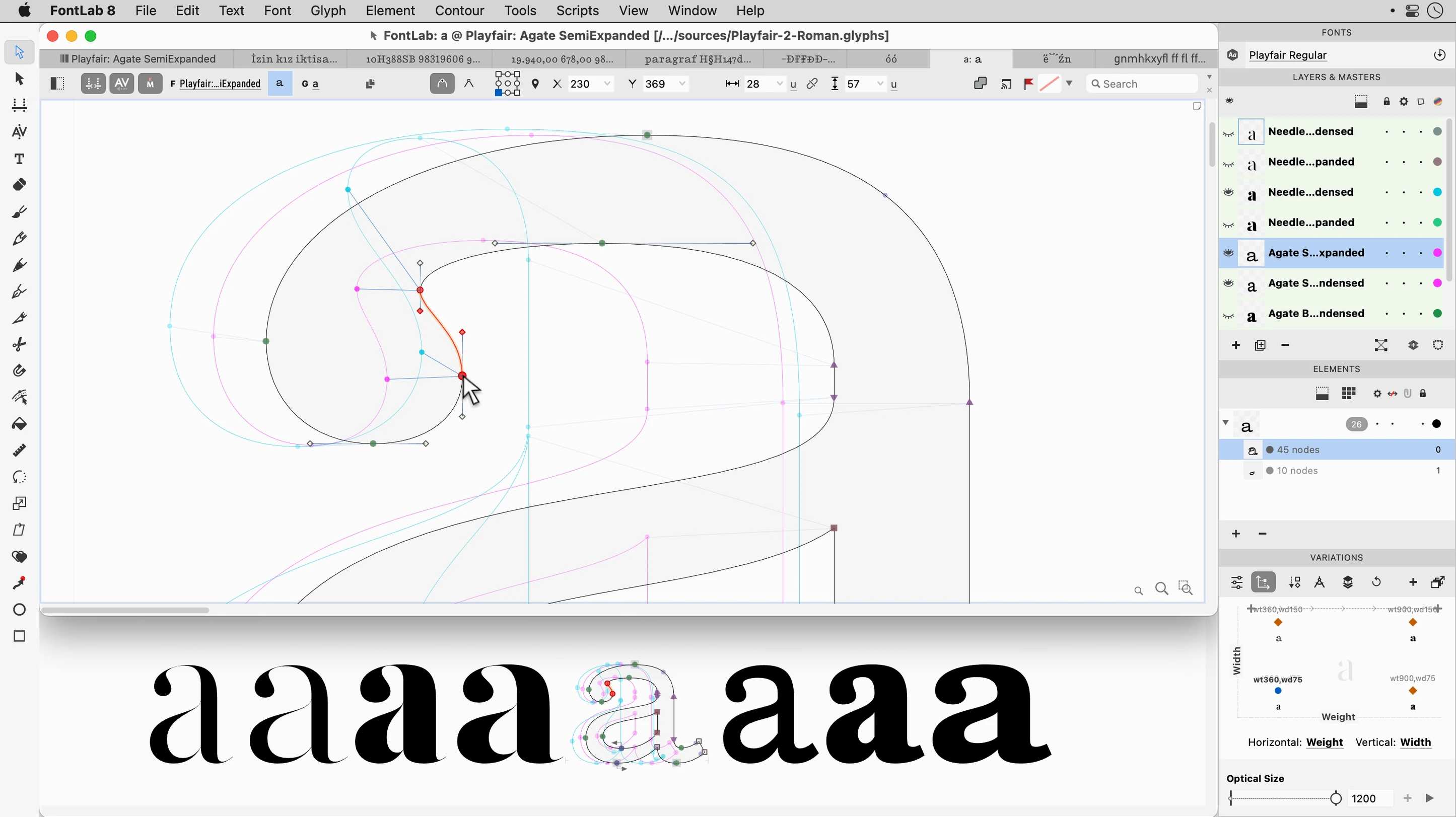
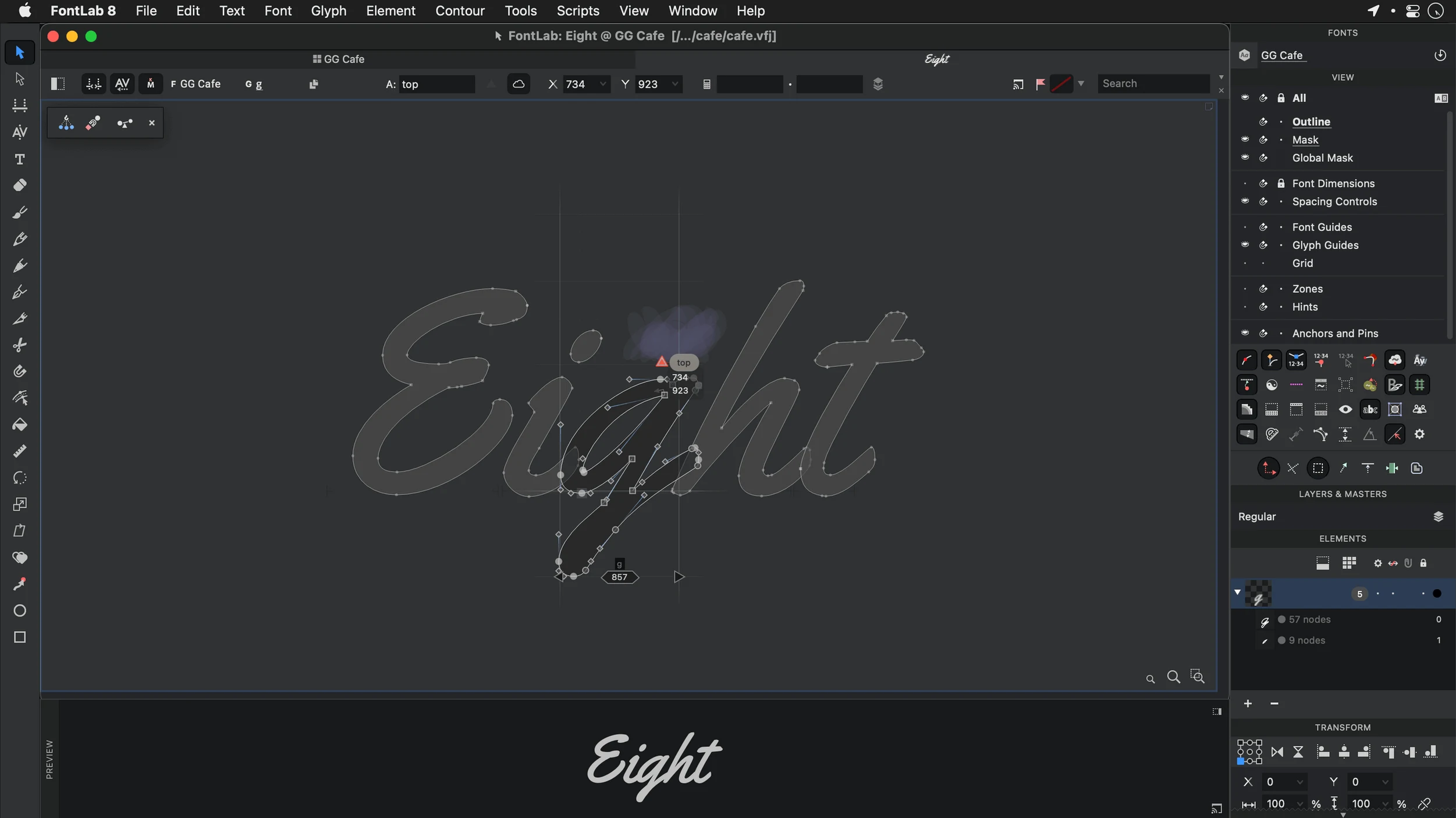
You open FontLab 8 and drag a glyph onto the canvas. That simple action is the core of the editor: drag-and-drop placement works across the entire font, so you can rearrange letters, swap components, or test alternate shapes without digging through menus. For a newcomer, this is the first thing to try.
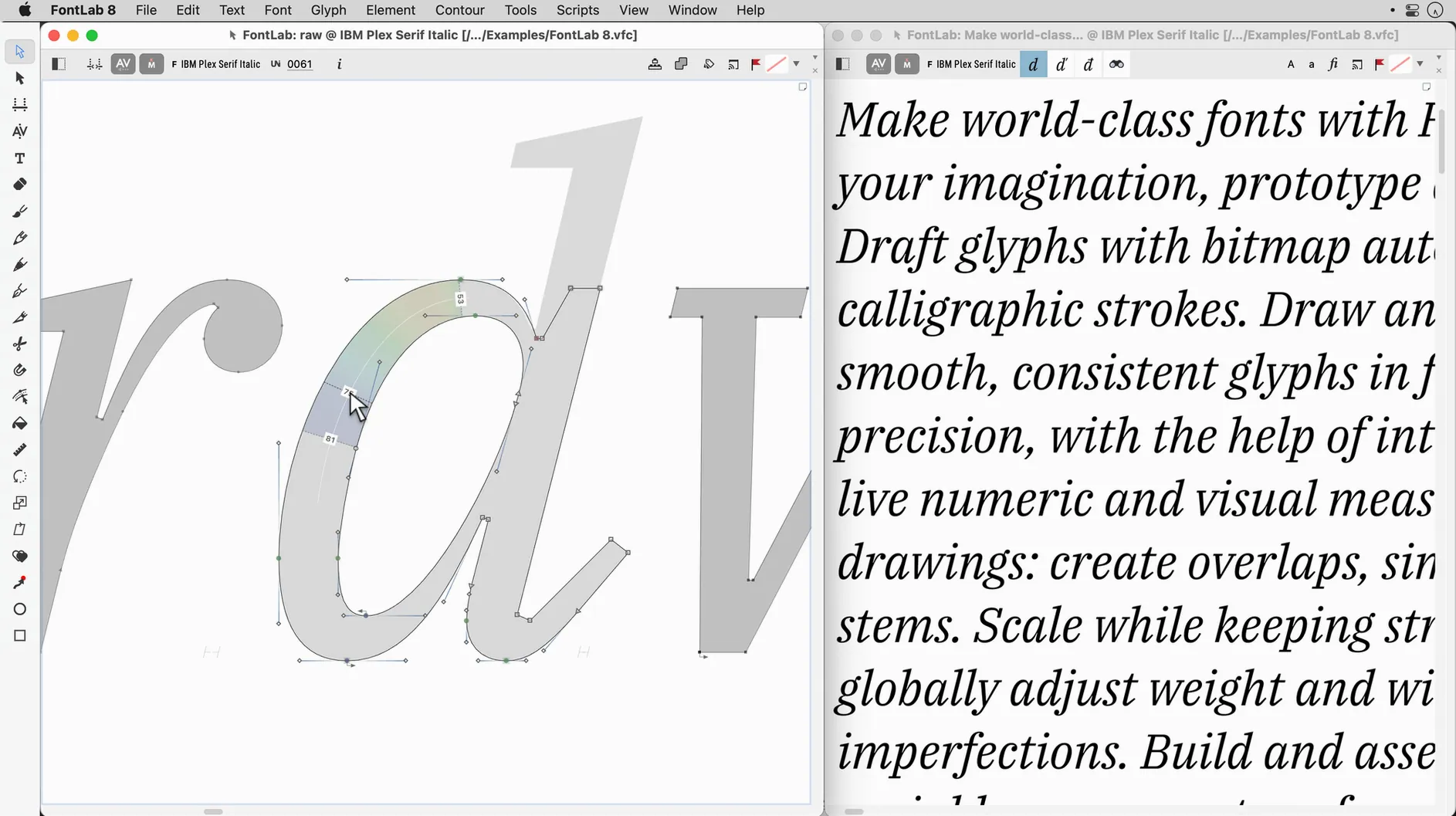
FontLab 8 is an integrated font editor for macOS and Windows, the successor to FontLab Studio 5. It handles OpenType, TrueType, and even TrueType AAT fonts, plus ASCII/Unix Type 1. The built-in font viewer and editor let you inspect and modify glyphs side by side, which helps when you are learning how outlines and metrics interact.
Batch transformation is another good starting point. Select a range of glyphs, apply a transformation, and FontLab repeats it across the selection. If you make a mistake, the more than 200 undo and redo levels give you room to experiment without fear. Programmable transformations go further, letting you script repetitive edits once you are comfortable with the basics.
Unicode support means you can work with non-Latin scripts directly, and the editor keeps everything in one workspace. Start with the basics, then move to batch operations and scripting as you get a feel for the tools.
Predictable issues that save time to know about
Most issues people run into with FontLab 8 come down to a few predictable things. Knowing them saves time.
Glyphs don't appear in the viewer
If you import a font and the viewer shows blank cells, check the encoding table. FontLab 8 uses editable code pages and encodings, but a font saved with a non-standard mapping won't display glyphs until you assign the correct encoding. Open the encoding panel and match it to the original font's spec.
Batch transformations don't apply to the right glyphs
Batch operations apply to whatever glyphs you have selected. If you select the entire font by mistake, the transformation hits everything. Select only the glyphs you intend to edit — use the font window's selection tools to narrow it down by range or category.
Undo stops working after a long session
FontLab 8 supports more than 200 undo levels, but that limit is per session, not per font. If you run heavy operations across thousands of glyphs, the undo history fills up. Plan major edits in stages, save between them, and you keep the undo buffer fresh for each stage.
Arabic or Hebrew text renders incorrectly
FontLab 8 supports Arabic and Hebrew scripts, but the font must include the proper shaping tables. If you are editing an existing font that lacks those tables, the viewer shows characters in isolation. Add the required OpenType features (init, medi, fina for Arabic) through the OpenType panel before you expect correct shaping in previews.
Dragging glyphs between fonts doesn't carry metrics
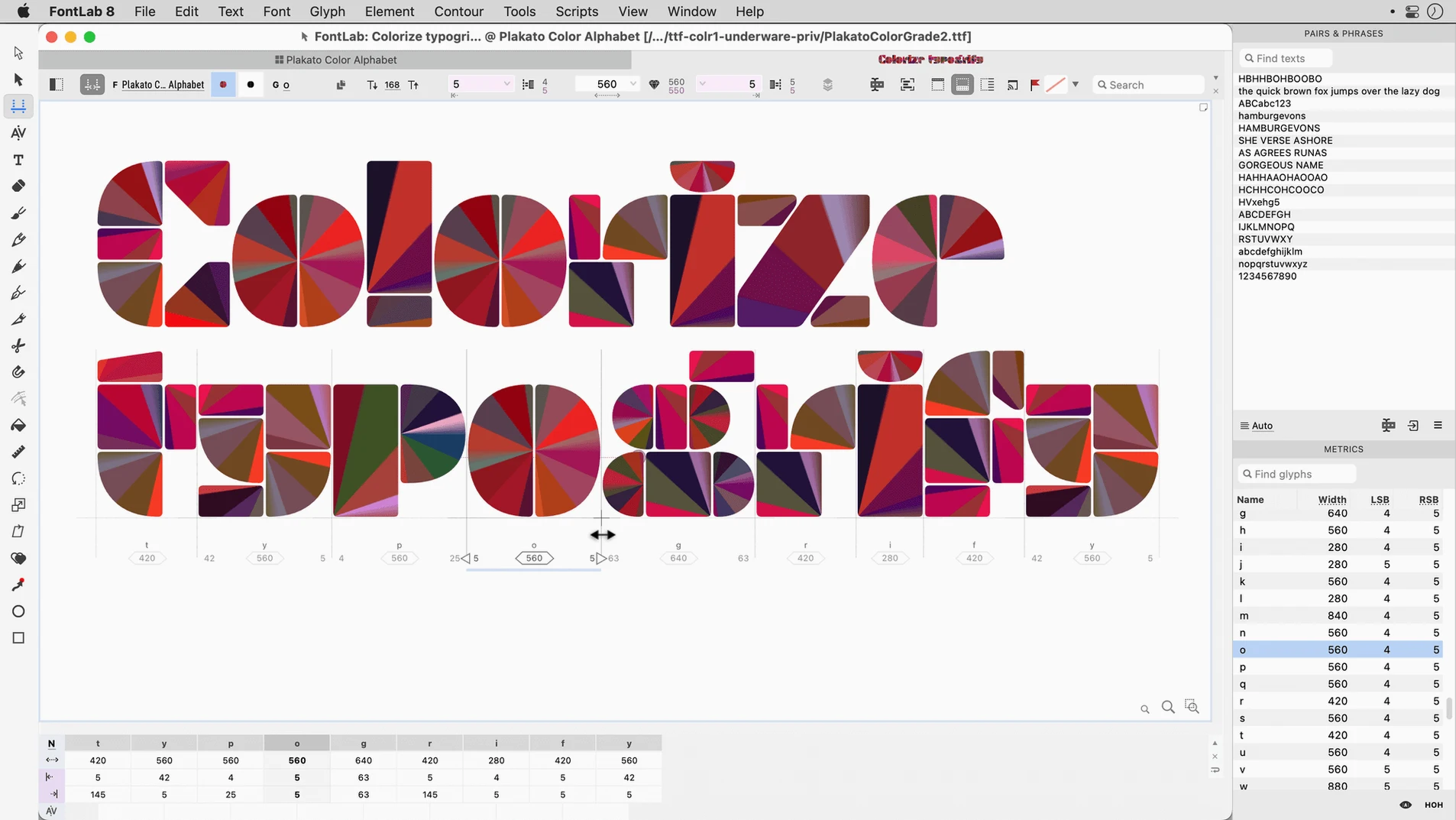
Drag-and-drop glyph placement moves the outline but leaves the sidebearings and width at default values. After dragging, open the metrics window and adjust the bearings. The visual offset between what you see and what typesets correctly is rarely obvious until you test.
Batch and scripting tools for large typeface families
Typeface designers working on large families get the most from the batch and scripting tools. If you are producing a 12-weight family with italics and small caps, programmable transformations cut the repetition. Apply one script to all upright weights, a second to italics, and the batch processing handles the rest.
Graphic studios that maintain an in-house font library benefit from the import pipeline. AI, EPS, TIFF, and BMP files come in directly, so artwork from designers who work in Illustrator or Photoshop moves into a font project without conversion steps. The drag-and-drop placement lets the team assemble glyphs quickly from existing logo files.
Font production teams that do quality assurance on third-party fonts also get value from the built-in viewer. Load a font, check encoding, inspect glyphs side by side, and export fixes — all in one app. No need to switch between a validator, an editor, and a separate preview tool.
Real-world scenario: a graphic designer converting a logotype
A designer at a small branding studio gets a request: turn a client's logotype into a working web font. The logotype exists as an Illustrator file with 26 custom letterforms. The designer imports the AI file into FontLab 8, then uses the vector drawing tools to clean up the outlines that arrived with extra nodes from the conversion. After cleanup, she drags each letterform onto its corresponding glyph cell. The drag-and-drop placement lets her spot which letters need width adjustments right away — the wide "W" and narrow "i" don't match the rhythm of the rest. She opens the metrics panel, sets the sidebearings, and tests the font in the viewer. Twenty minutes later, she exports an OpenType font, emails it to the client, and moves on to the next project.
- FontLab 8.4 includes 500 improvements over version 8.
- It also includes 900 improvements over FontLab 7.
- macOS 10.14
- Intel architecture
Questions from the notes
What file formats does FontLab 8 support?
FontLab 8 supports OpenType, TrueType, TrueType AAT, and ASCII/Unix Type 1 fonts, along with Unicode.
Can I undo mistakes in FontLab 8?
Yes, FontLab 8 includes more than 200 undo and redo levels.
Does FontLab 8 work on Intel Macs?
FontLab 8 requires macOS 10.14 and runs on Intel architecture.
Install procedure
- Open the downloaded disk image.
- Drag the app into the Applications folder alias.
- After copying finishes, open the app from Launchpad.
Reports from players
Sign in or create a tester account to file a report.
No reports filed yet.