
The latest version, 13.4.0, brings minor bug fixes. Nothing flashy — just the usual polish a professional screenwriting tool gets between drafts. For anyone working on a film, television episode, or stage play, the tool itself stays the same: a focused environment for formatting and structuring scripts that adhere to industry standards.
Start a real draft without the distractions
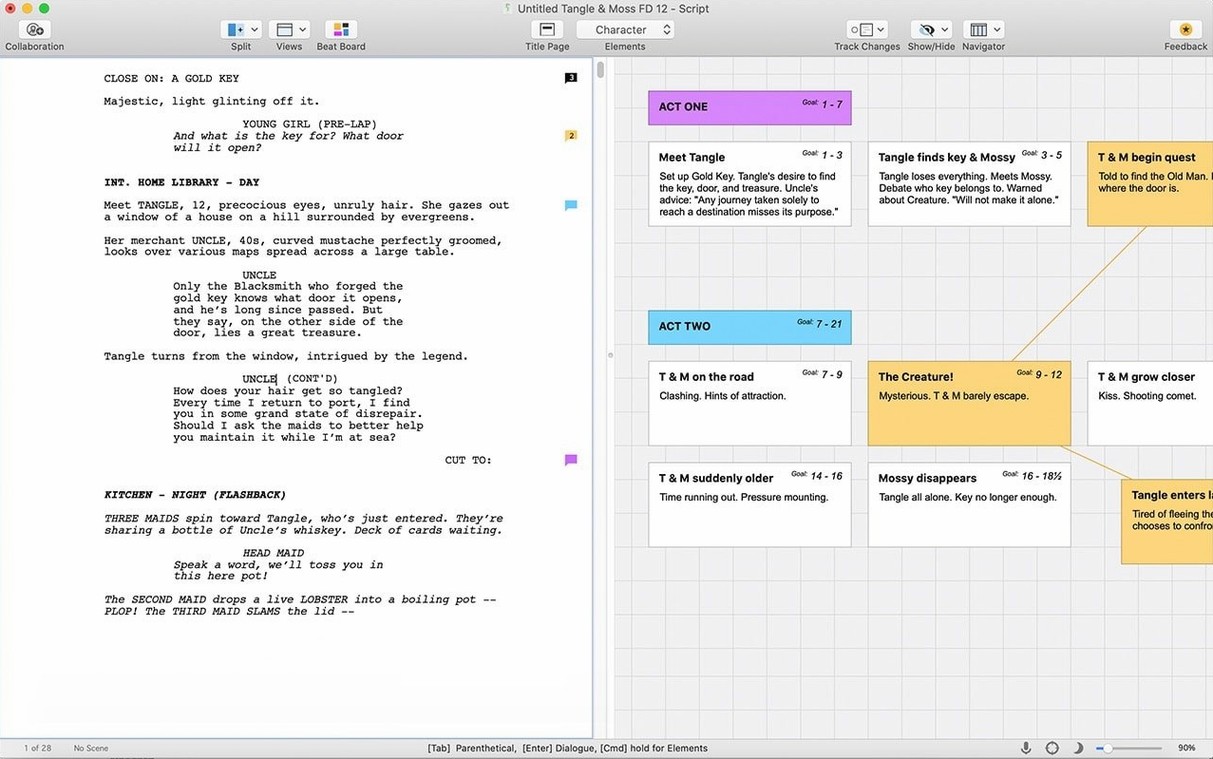
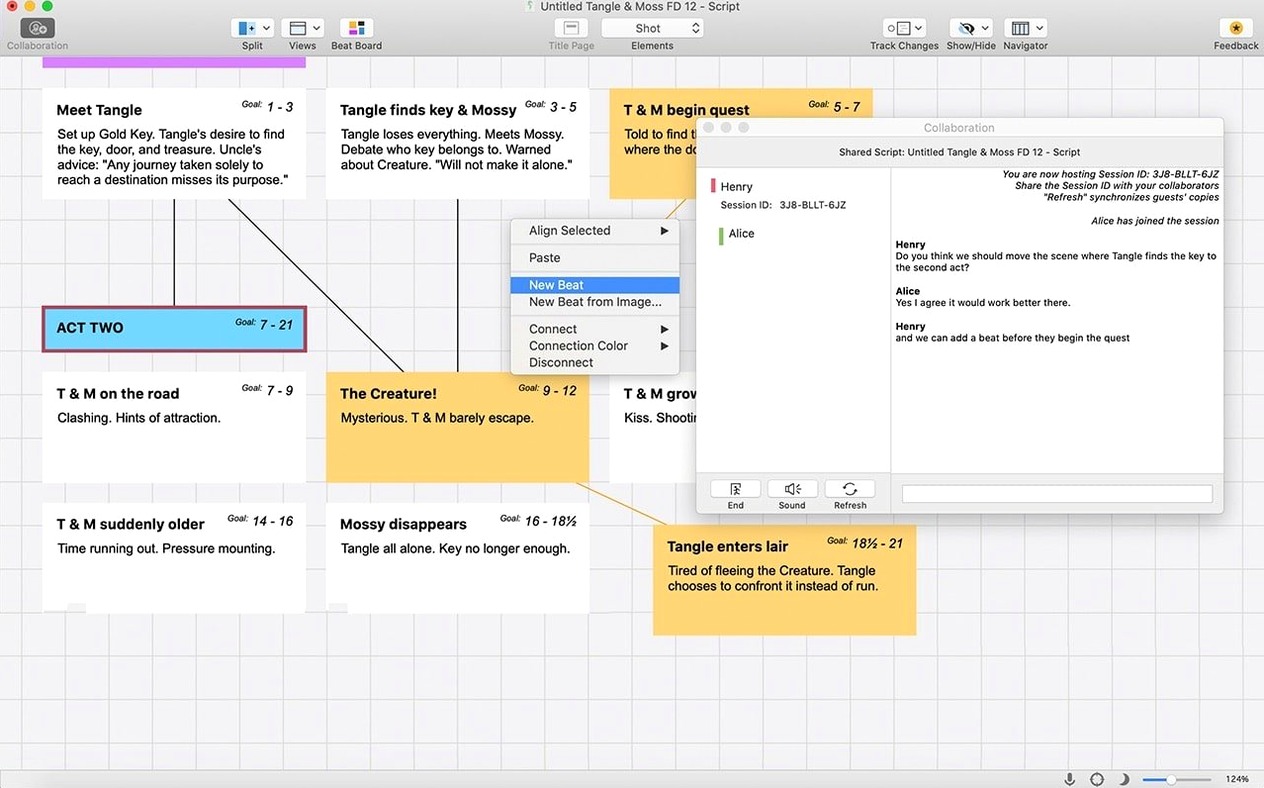
Open Final Draft, create a new file, and pick a template for your format — feature film, TV episode, or stage play. The app handles margin rules, character cues, and scene headings automatically as you type. You don't need to memorize formatting specs; just write the dialogue and action. The Beat Board on the side lets you outline scenes before you flesh them out. When you finish a draft, you can export a PDF that matches what a production office expects.
Requires macOS 12 Monterey and a one-time internet sign-in
Final Draft runs on Intel Macs with macOS 12 Monterey or later. The first launch requires an internet connection for a one-time sign-in. After that, it works offline. If you are looking to download final draft 11 or final draft 12, note that the current version 13.4.0 includes those same core features plus the recent fixes. The app uses x86 64-bit architecture, so it runs natively on Intel hardware. On Apple Silicon Macs, it runs via Rosetta 2, though performance is fine for a writing tool.
Don't treat it like a word processor
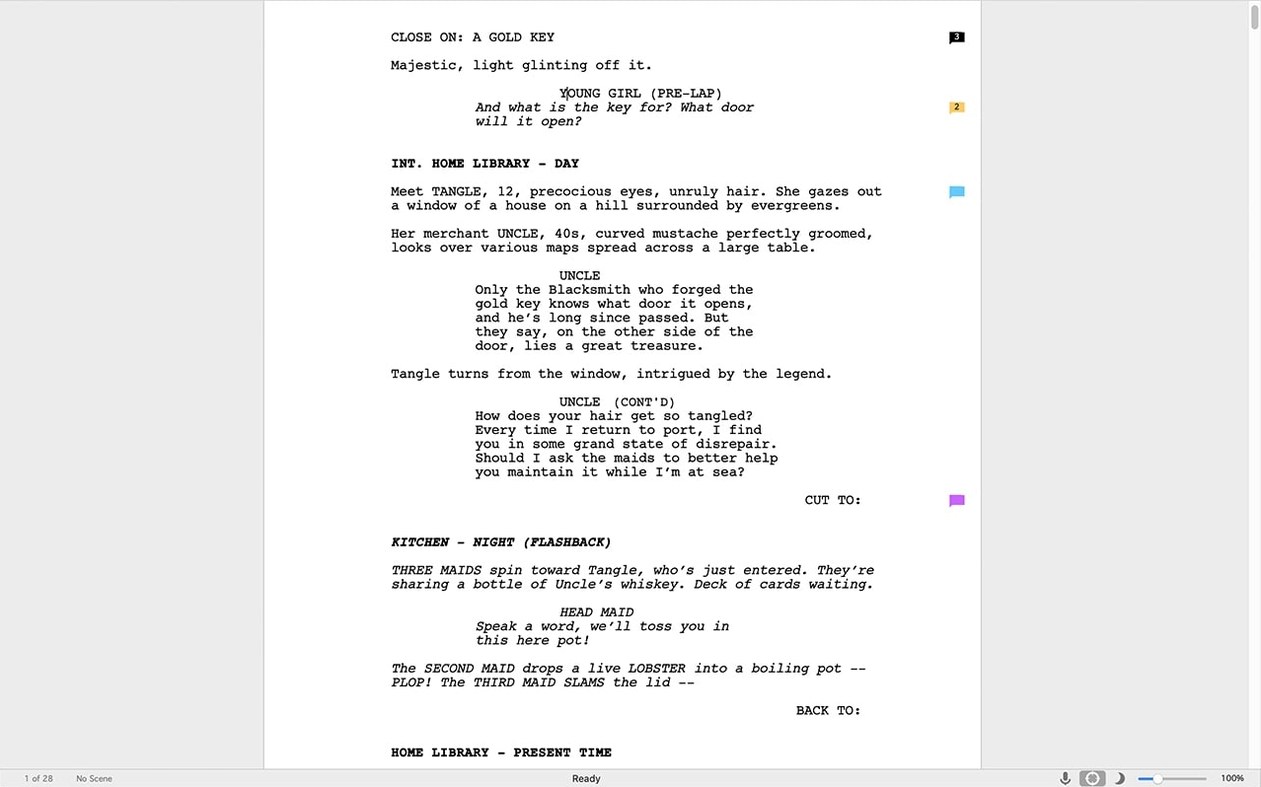
The most common error is treating Final Draft like a word processor. People hit Tab or Enter expecting the next line to behave like a document, then wonder why a character name appears in the action block. The app follows industry formatting rules, which means every line type — scene heading, action, character, dialogue, parenthetical — has a specific keyboard behavior. New users often type a scene heading in all caps manually instead of letting the software apply the style through the Elements menu. That works, but it defeats the purpose of automatic formatting and makes later revisions harder to track.
Another recurring mistake is ignoring the Beat Board entirely. Beginners see it as an extra panel and close it. Later they end up with scenes that lack structure or pacing, and they have to reorganize a full draft rather than a simple outline. The Beat Board exists to prevent that. A third slip: writing dialogue without using the Return key to create a new character cue. Users press Enter and get confused when the next line stays in dialogue mode. The rule is simple — Tab moves you to the next logical element, Return creates a new line within the same element. Committing that to muscle memory saves frustration.
Finally, beginners frequently save only the native Final Draft file format (.fdx) and forget to export a PDF or a Fountain file for collaborators who do not own the software. A locked PDF is the industry standard for sharing drafts, and it avoids formatting shifts when the recipient opens it in another app.
What to do in the first days after installing
First, run through the built-in tutorial. It takes about twenty minutes and covers the main elements, the Tab and Return behavior, and the Beat Board. Skipping it is the fastest route to the mistakes listed above.
Second, set up your script template before you type a word. Final Draft ships with templates for feature film, TV drama, TV sitcom, and stage play. Pick the one that matches your project. Changing the template midway through a draft can shift margins and spacing, which means you may need to re-format entire pages.
Third, configure the autosave interval. Go to the preferences and set it to every five minutes. A crash after two hours of unsaved dialogue is a pain you do not need. The app autosaves to a backup folder by default, but checking the interval takes ten seconds.
Fourth, learn the Navigator panel. It shows your script as a card view, a scene list, or a mini-draft. Beginners who rely only on the main text view miss the structural overview that the Navigator gives. Use it to jump between acts or to reorder scenes by dragging them.
Fifth, export a PDF of the first ten pages and open it in Preview or Adobe Reader. Check that margins, page numbers, and scene headings look correct. If they do, your template and settings are right. If they do not, adjust the template now rather than later when you are on page ninety.
Cutting a B-story and extending the cold open by Friday
A writer on a mid-season cable drama receives notes from the showrunner on Tuesday and needs to submit a revised draft by Friday. The notes are specific: cut a B-story scene from act two, extend the cold open by three pages, and replace a dialogue-heavy sequence with a montage that uses visual beats only.
In Final Draft, the writer opens the existing .fdx file and goes to the Beat Board. They see the scene cards for act two and drag the B-story card into a new row labeled "Cut Scenes." That removes the scene from the script order without deleting it — useful if the showrunner changes their mind later. Then they double-click the cold open card, add a note that says "+3 pages: establish location tension, insert new character intro," and start writing in the script view. The formatting stays consistent because the element styles were set from the beginning.
For the montage sequence, the writer uses the Scene Properties panel to mark the segment as a montage rather than standard scenes. The pagination adjusts automatically. By Thursday evening, the draft is ready. They export a PDF, name it with the episode number and draft date, and send it. The showrunner opens it in PDF form and sees exactly what the writer intended — no margin shifts, no missing character cues, no dialogue running off the page.
App won't launch? Check it's in Applications, not the disk image
Snag: The app will not launch or hangs on the splash screen.
This usually happens after an incomplete install or a permissions conflict. The workaround is to verify that the app is in the Applications folder, not the disk image. If it still hangs, remove the app, re-mount the disk image, run the Gatekeeper bypass again, and drag it fresh into Applications. Restart the Mac before opening it.
Snag: Dialogue lines spill into the right margin.
Check that you selected the correct template at project creation. Switching from a feature film template to a TV template mid-draft can cause width mismatches. If the template is correct, go to Format > Elements and verify the dialogue margin settings. Resetting them to the default for your script type usually fixes the overflow.
Snag: The Beat Board shows no cards after importing an old .fdx file.
The Beat Board stores its own data separate from the script text. If you import a version created before Final Draft 11, the board may be empty. You can rebuild it manually by creating scene cards from the existing scene headings — the app offers a "Generate from Script" option in the Beat Board menu. It is not automatic, but it takes less time than typing each card by hand.
Snag: Page count does not match what the production office expects.
Industry-standard screenplay pages average about fifty-five lines per page with specific margins. If your count is off, check that you are not using extra line breaks between scenes or manual page breaks. Final Draft handles pagination automatically — inserting a manual page break only for intentional act breaks or title pages. Remove any stray breaks and let the app recalculate.
Snag: The app prompts for internet connection every time you open it.
This should not happen after the initial sign-in. If it does, the activation file may be missing or corrupted. Re-run the install steps: mount the disk image, run the Gatekeeper bypass, and drag the app back into Applications. The prompt appears only once after a clean install. If it persists, check that your Mac's date and time are set correctly — an incorrect system clock can trip the sign-in check.
A maintenance release with PDF export fixes only
The 13.4.0 update is a maintenance release. There are no new features, no interface changes, and no workflow adjustments. The "Minor bug fixes" description is accurate — it resolves a few issues that some users encountered when exporting to PDF with custom headers and when switching between scripts via the Navigator. If you were on 13.3.x and did not experience those bugs, you will not notice a difference. If you did, the update removes the annoyance without introducing anything new to learn.
For someone downloading final draft 11 or final draft 12, the jump to 13.4.0 means you get a more stable version of the same core software. The features that matter — the Beat Board, the Navigator, automatic formatting, template support, PDF export — have all been present since version 11. The later versions refined them and fixed edge cases. Version 13.4.0 is simply the most polished version of that same tool.
- Minor bug fixes.
- macOS 12 Monterey or later
- Intel processor
- An active internet connection is required during the initial sign-in process.
Questions from the notes
Does Final Draft work on Apple Silicon Macs?
Yes, but it runs through Rosetta 2 since it uses x86 64-bit architecture. Performance is adequate for screenwriting.
Can I use Final Draft without an internet connection?
Yes, after the initial sign-in. An active internet connection is only required during that first setup.
Install procedure
- Mount the disk image and run the Open Gatekeeper friendly tool.
- Press Enter in Terminal to bypass Gatekeeper.
- Drag the app into the Applications folder.
- Open the app after installation.
Reports from players
Sign in or create a tester account to file a report.
No reports filed yet.