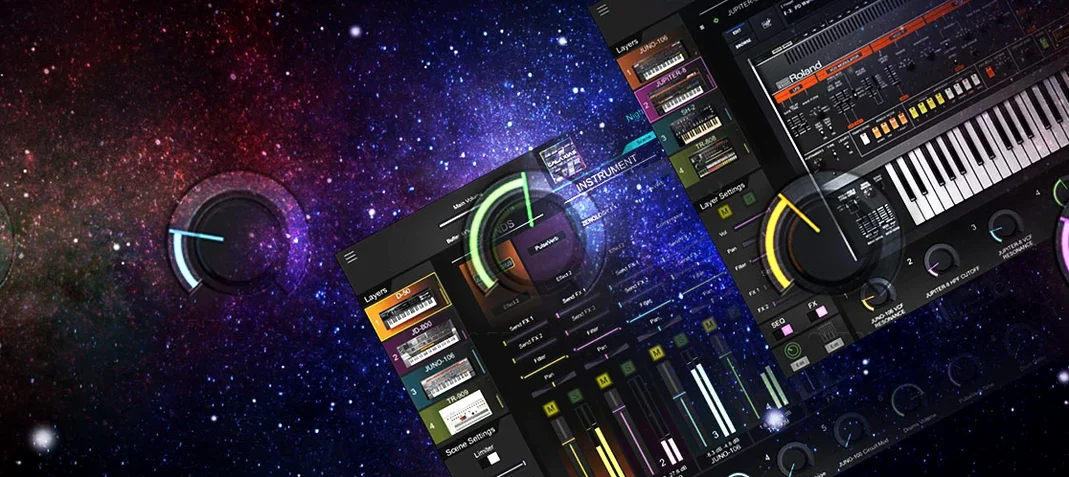
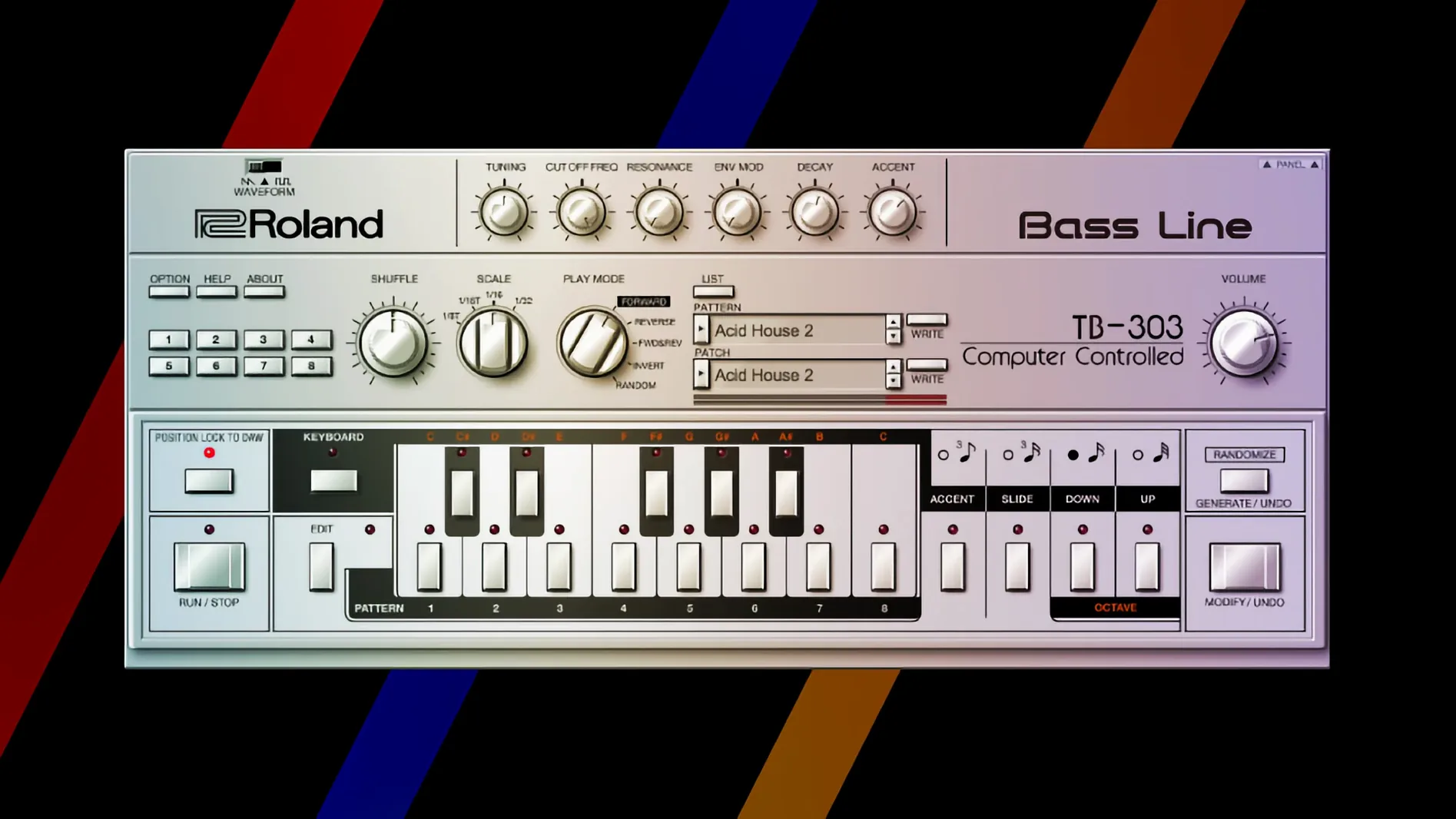
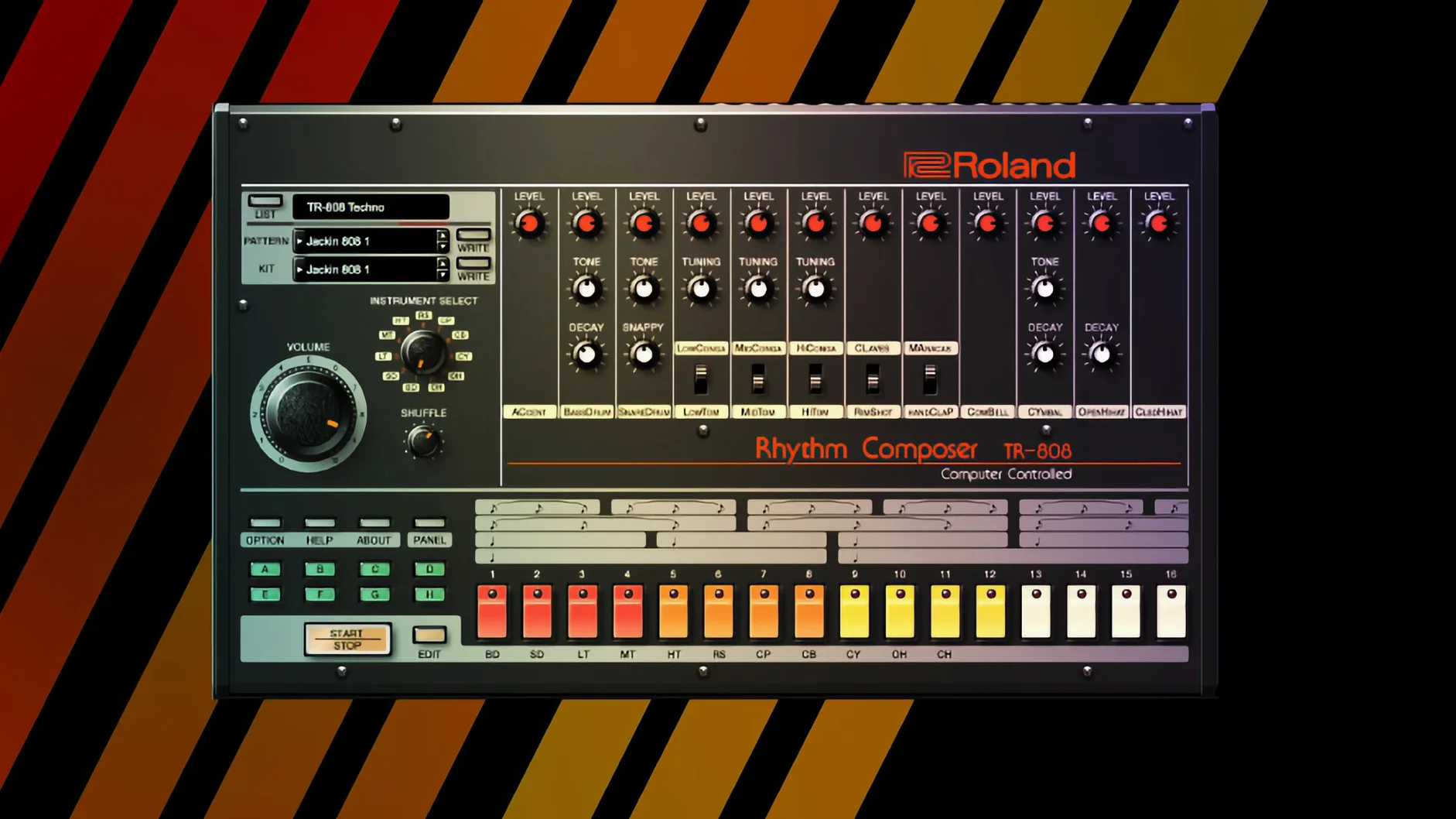
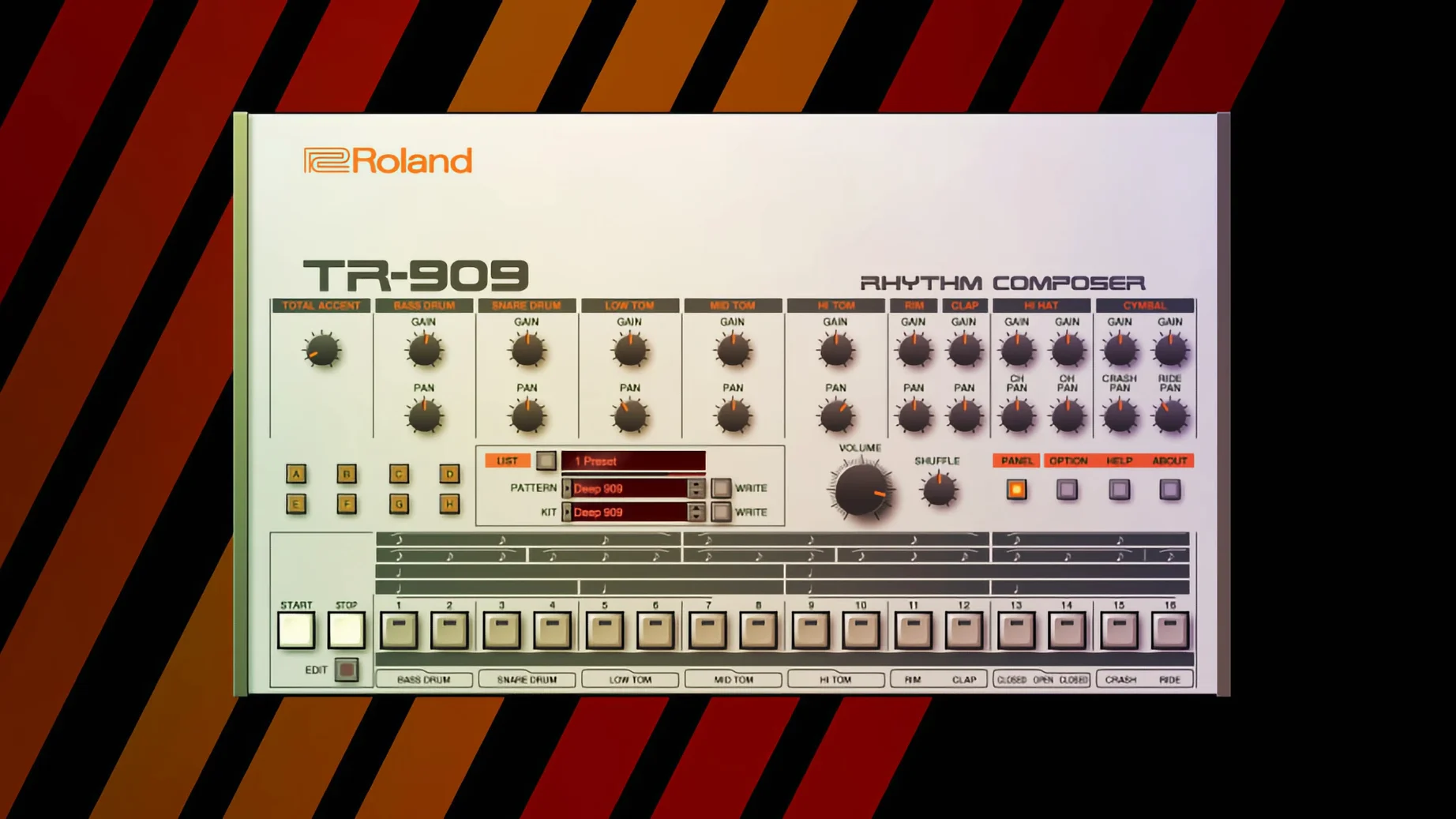
For a track that needs a pad that sits wide or a kick that cuts without extra EQ, the roland legendary series has the right tool. Each instrument in this collection recreates a classic Roland synth or drum machine using Analog Circuit Behavior technology, so the controls behave like the hardware. Here is what each one does to a mix.
D-50 — Linear Arithmetic pad machine
Its partials and attack transients build evolving pads that fill space without muddying the low end.
JUNO-60 — Chorus-soaked analog
The built-in chorus thickens basses and leads, adding width before you touch a stereo imager.
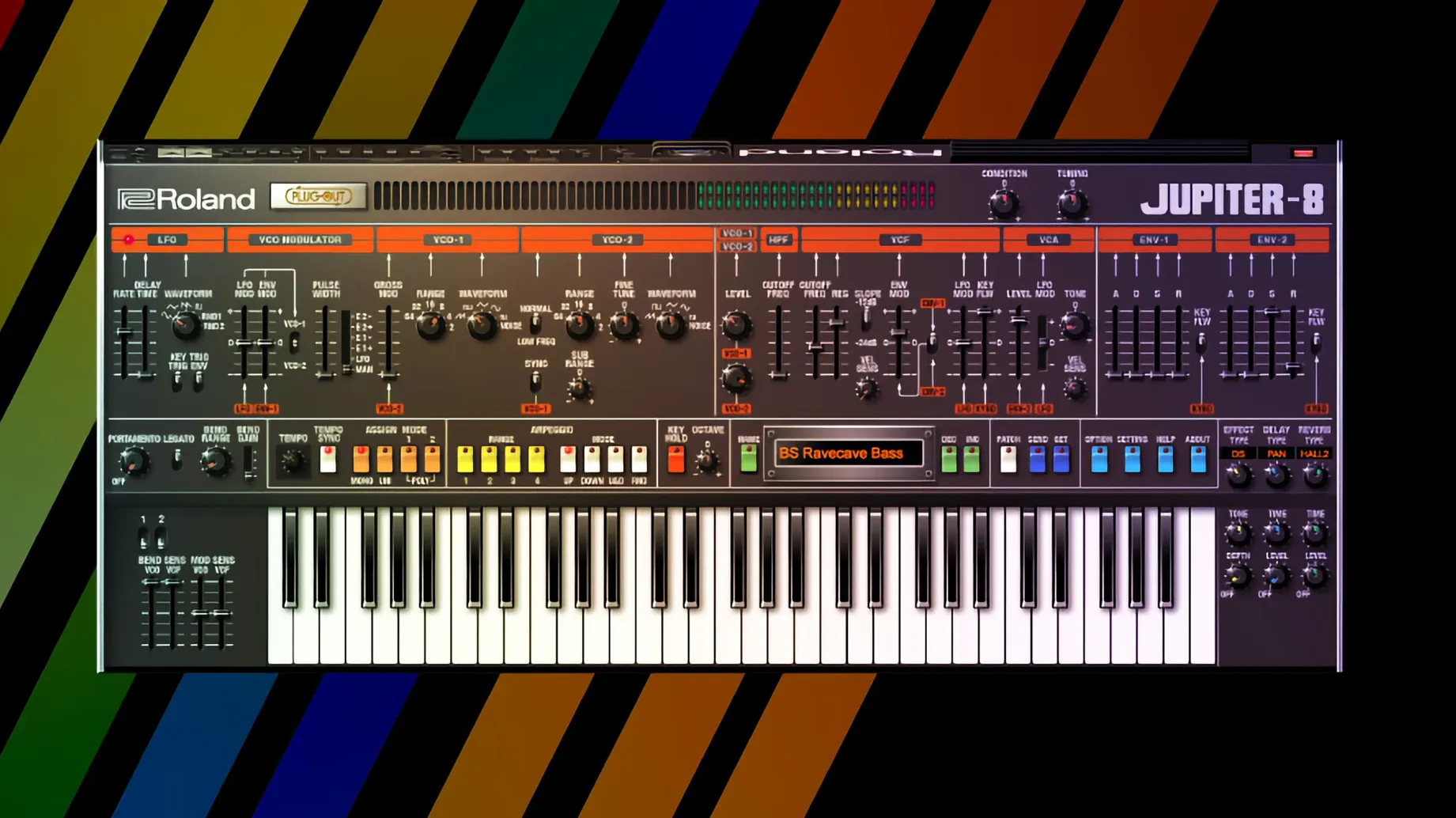
JUPITER-8 — Dual-oscillator workhorse
Two oscillators per voice and a 24 dB filter deliver basses and leads that hold their place in a dense mix.
TR-808 — Deep drum machine
The sine-wave kick and offbeat hi-hats give rhythmic parts a round, punchy character that sits under everything else.
TR-909 — Punchy drum machine
The kick's longer decay and the metallic snare cut through, useful for house and techno grooves.
Fits electronic producers, film composers, and game audio designers
Music producers working in electronic genres are an obvious fit, but the roland legendary series also appeals to film and game composers who build textures from layered pads and percussive hits. Keyboard players who grew up with the originals will find the controls familiar; sound designers can push each instrument's parameters for transitional risers or ambient beds. Because the instruments cover both melodic and rhythmic parts, a single session can stay inside the collection without reaching for other sources.
DAW users who prefer to keep their plugin count low benefit from the built-in effects. The delay and reverb on each instrument mean you can commit to a wet sound during writing rather than leaving it for a mix stage. Producers who work in stereo from the start—especially those using the JUNO-60 chorus or the TR-808's panning—get results that need little post-processing.
Missing plugins in your DAW after installation
New users sometimes find that a Legendary instrument does not appear in their DAW's plugin list after installation. This usually happens when the installer places the component files in a location the DAW does not scan. Rescanning plugins or pointing the DAW to /Library/Audio/Plug-Ins/Components for Audio Units or the VST equivalent folder typically resolves it.
Another frequent issue: the instrument loads but produces no sound. Check that the DAW track is receiving MIDI and that the instrument's volume or output level is not turned down. Some instruments default to a low initial volume, especially the TR-808 and TR-909, which may need the individual voice levels raised.
Users on Apple Silicon Macs running macOS 14 or later have reported that certain older DAWs require the Rosetta flag to be set on the DAW itself, not on the plugins. If an instrument fails to validate or crashes on load, running the DAW in Rosetta mode once can complete a validation pass; afterward the DAW can often be switched back to native mode.
If the high-resolution interface looks too small or too large on your display, check your DAW's zoom or scaling settings. The interface scales with the system's display preferences on macOS 11 and later.
High-resolution interfaces in the Legendary v2 instruments
The version 2025.06.29 update introduced the Legendary v2 instruments, which include JUPITER-4, JUPITER-8, and JUNO-106. These newer versions have a high-resolution interface designed for modern DAWs and large displays. The interface elements are sharper and the controls are spaced more generously, which makes them easier to use on a 27-inch monitor or a laptop screen at native resolution.
Behind the scenes, the Analog Circuit Behavior models in the v2 instruments were refined to better match the hardware's behavior at extreme settings. Users who dial in high resonance or filter sweeps will notice less aliasing in the upper frequencies. The update also improved compatibility with ARM-based DAWs running natively on Apple Silicon, reducing the need for Rosetta wrappers.
For existing users, the version 2025.06.29 release included fixes for MIDI learn assignment not saving between sessions. Assignments now persist across project reloads, which matters for live setups and template-based workflows.
Works as AU, VST, and AAX across all major Mac DAWs
The instruments work as Audio Units, VST, and AAX plugins, so they integrate with Logic Pro, Ableton Live, FL Studio, Pro Tools, and most other Mac DAWs. On macOS, you can route multiple instances of the same instrument through the Audio MIDI Setup utility to create multi-timbral patches, though that requires separate MIDI channels per instance.
Because the collection uses standard plugin formats, you can use macOS Quick Actions or Automator workflows to batch-export MIDI patterns and load them into a Legendary instrument. For sound design sessions, the macOS VoiceOver utility can read out plugin parameter names, though it will not read the graphical interface elements.
The built-in effects are designed to sit inside the plugin's signal chain before any DAW channel-strip plugins. This means you can use the instrument's delay and reverb as send effects within the plugin itself, then add DAW compression or EQ afterward. The TR-909's drum voices can also be routed to individual outputs in DAWs that support multi-output plugins, giving you separate channel control over kick, snare, and hi-hats.
Loads the last-used preset automatically between sessions
The roland legendary series instruments remember their last-used preset between sessions without saving a project. Open a fresh instance and it loads the last patch you selected, which speeds up writing when you are auditioning sounds across tracks.
Each instrument includes a dedicated output level knob in addition to the main volume. This lets you balance individual layers inside the same plugin instance without touching your DAW's mixer faders. The TR-808 and TR-909 also have accent controls per voice, so you can shape the dynamic range of a pattern without external compression.
For users who want to match the tone of a specific hardware unit, the JUPITER-8 and JUNO-60 instruments include a calibration parameter that adjusts the overall brightness and filter response. This is not a simple EQ curve; it models the component tolerances of individual hardware revisions. The effect is subtle but noticeable when layering multiple instances.
All instruments output at unity gain by default, meaning they do not clip the DAW's master bus when played at maximum velocity. This is a deliberate design choice that keeps the focus on the instrument's character rather than requiring gain staging. If you need more level, the output knob goes to +12 dB.
The roland legendary series instruments also accept MIDI velocity to control the filter cutoff on the TR-808 and TR-909, which is not obvious from the interface. Sending higher velocities opens the filter, giving you dynamic changes across a pattern without automating the filter knob.
Each instrument includes contemporary effects like delay and reverb, so you can shape the sound without extra plugins.
- macOS 11 or later
- Apple Silicon or Intel processor
- Interface language: English
Questions from the notes
Does the Roland Legendary Series work on Apple Silicon Macs?
Yes, the series supports both ARM (Apple Silicon) and x86 64-bit architectures, so it runs natively on M-series and Intel Macs.
Install procedure
- Run the standard installer for the Roland Legendary Series.
Reports from players
Sign in or create a tester account to file a report.
No reports filed yet.