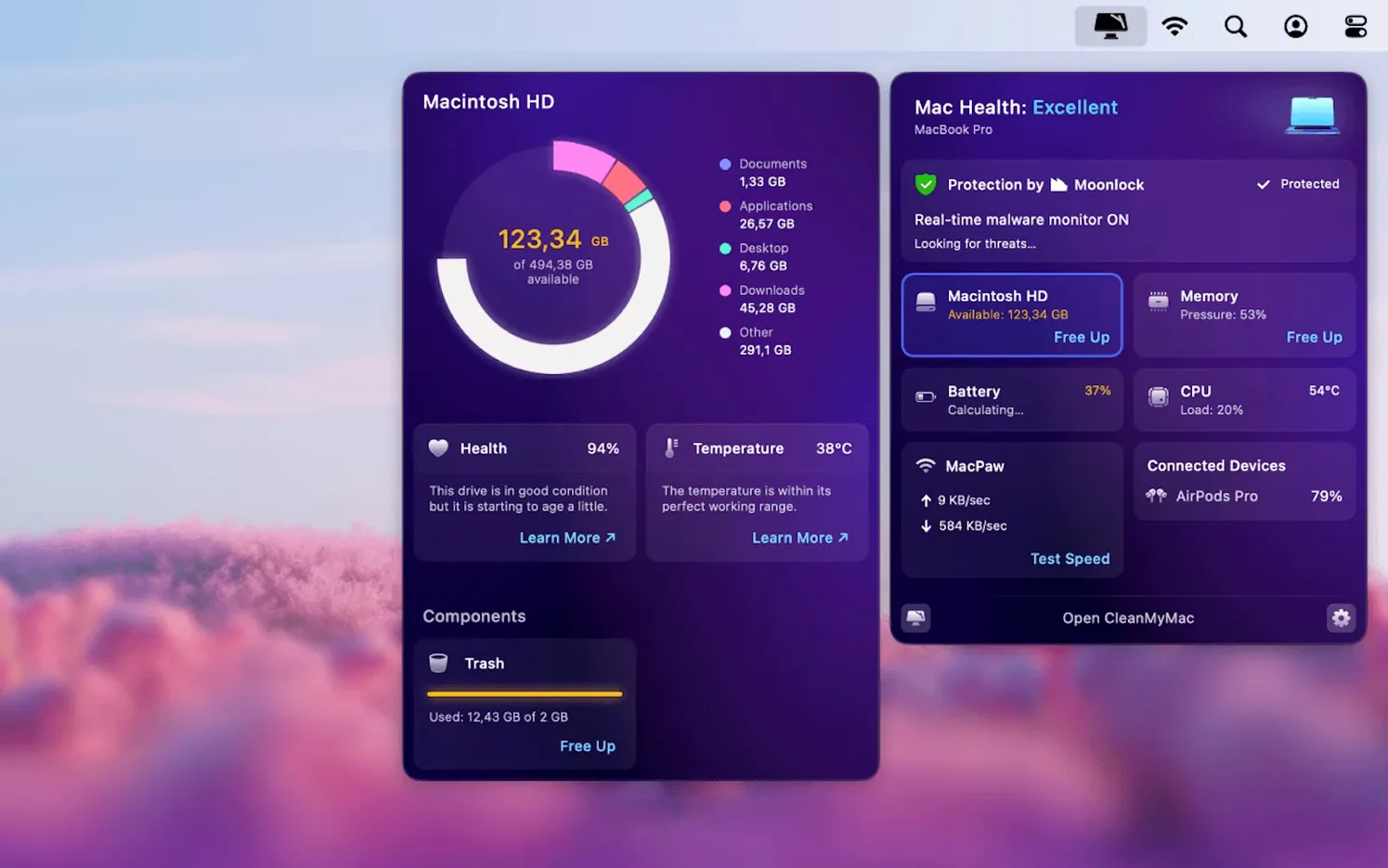
CleanMyMac is a Mac utility that handles cleaning, maintenance, and security tasks in one app. Before you grab the cleanmymac 5.2.9 torrent, check compatibility: it runs on macOS 11 or later, supports both Apple Silicon and 64-bit Intel Macs, and the interface is available in twelve languages, including English, German, French, and Japanese.
Once installed, you get instant system cleanup, a tool for finding and removing large files, app removal and updater tools, plus a protection module for malware threats. The email cleanup in the current version extends that to Gmail, letting you manage and clean mail without leaving the app.
MacPaw also makes App Cleaner & Uninstaller for app removal, but CleanMyMac covers that base itself, so you don’t need a second utility for most uninstall tasks. The app can be launched as soon as copying finishes, though on macOS 27 you’ll need to grant full disk access before the first launch.
Scenario: a photographer tidying up before a deadline
A freelance photographer has a few hours before a client review. She opens CleanMyMac, runs the quick scan to clear system caches and browser leftovers, then switches to the large files tool to spot the 4 GB export folders she forgot to archive. She removes two old editing suites with the app removal tool, which catches leftover preference files and background services those suites left behind. The email cleanup module shows her a Gmail account with 2,000 unread newsletters from stock photo sites; she marks them for bulk deletion inside CleanMyMac without opening Gmail at all.
Deciding if CleanMyMac needs full disk access
Does it work differently on Apple Silicon and Intel Macs?
No. Version 5.7.0 runs the same set of tools on both architectures. The interface, the cleanup routines, and the protection module behave identically. The only difference is the macOS 27 disk-access prompt, which appears regardless of processor type if you are on that system version.
Can the email cleanup access personal mail?
It connects to your Gmail account through standard OAuth, the same method used by mail clients and other trusted apps. CleanMyMac does not store messages locally or send anything to MacPaw. You grant permission once and choose what to clean: categories like unread, promotional, or old messages. Nothing happens until you confirm the action.
Is the protection module a replacement for antivirus software?
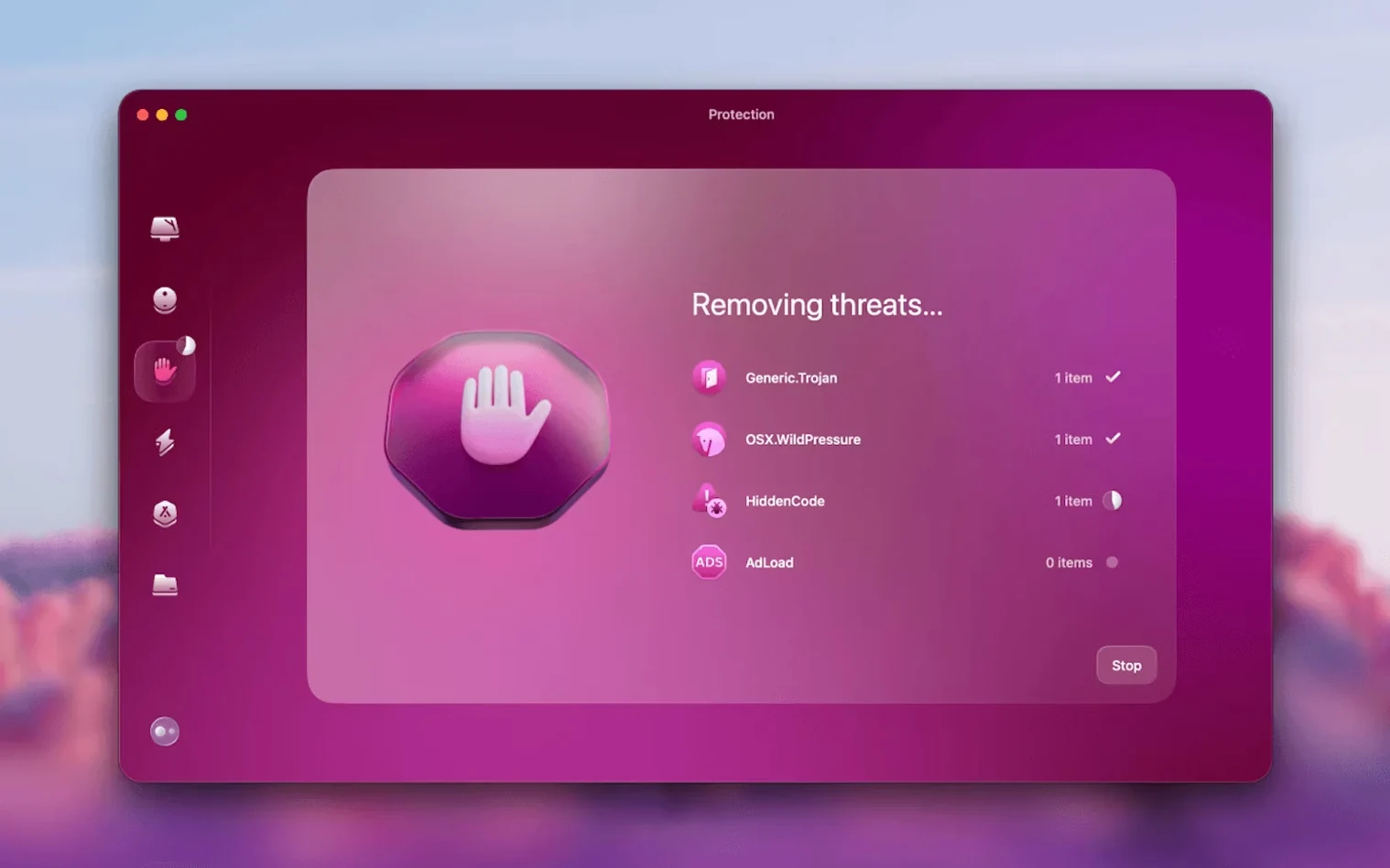
It targets malware threats common on macOS — adware, unwanted system modifications, and potentially unwanted applications. It is not a real-time scanner that runs in the background. Think of it as a periodic check you run alongside your existing security habits, not a replacement for a dedicated security suite.
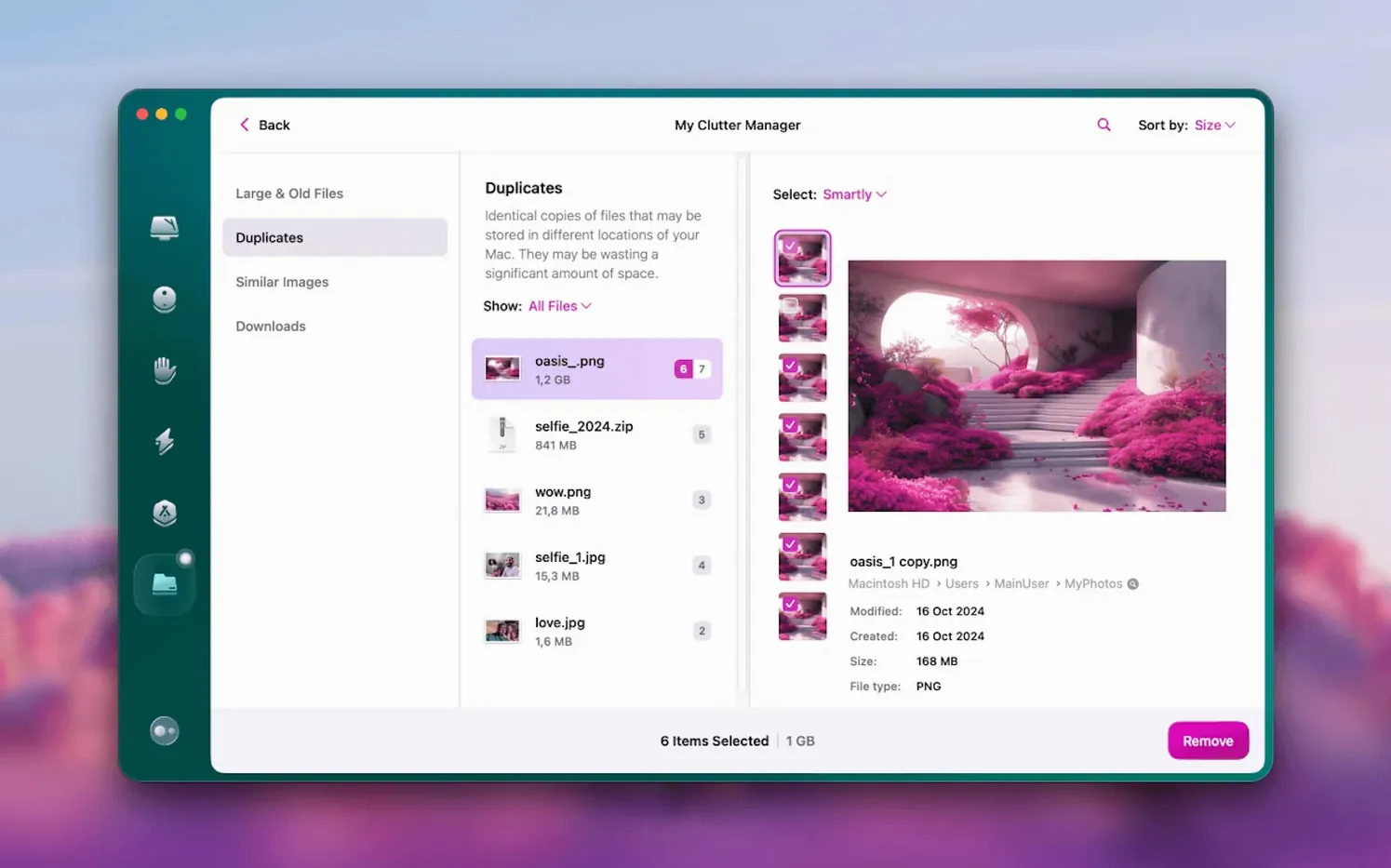
What happens to large files I find with the large file tool?
The tool shows you a list sorted by size. You preview each file and decide whether to send it to Trash or skip it. CleanMyMac does not delete anything automatically. Files are moved to Trash, so you can recover them until you empty it.
How CleanMyMac fills gaps Disk Utility and Finder leave
CleanMyMac works alongside macOS Disk Utility, not instead of it. Disk Utility handles partitioning and disk repair; CleanMyMac handles everyday file cleanup and app management. The large file tool and the permanent deletion tool fill gaps that Finder does not cover well — Finder shows file sizes, but it does not surface orphaned app data or cache files from uninstalled applications.
The protection module complements macOS's built-in XProtect and Gatekeeper. MacPaw's malware definitions update separately via the app, so you get a second set of signatures without disabling Apple's own checks. The email cleanup connects to Gmail through macOS's credential store, meaning you do not type your password into CleanMyMac — the system handles authentication.
If you use App Cleaner & Uninstaller for app removal, CleanMyMac duplicates that function. You can use either, but running both on the same app may cause uninstall records to become out of sync. Stick with one for removals.
Downloading and installing CleanMyMac on macOS 27
You download the disk image, open it, and drag the app icon into the Applications folder alias shown on the disk image. The copy takes a few seconds. On macOS 27, a prompt asks for full disk access before the app launches for the first time — you click Grant. On earlier macOS versions, the app launches without that step.
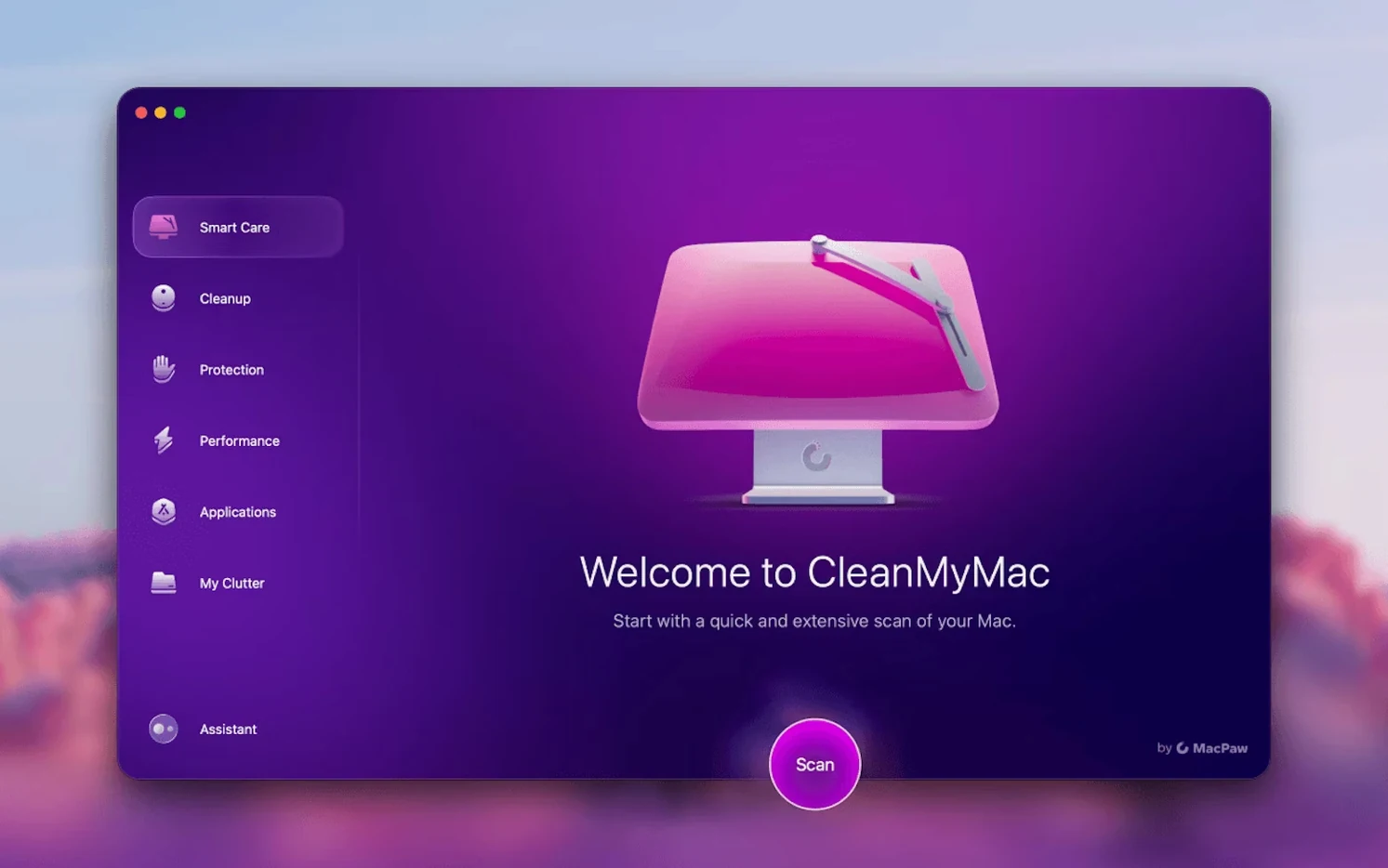
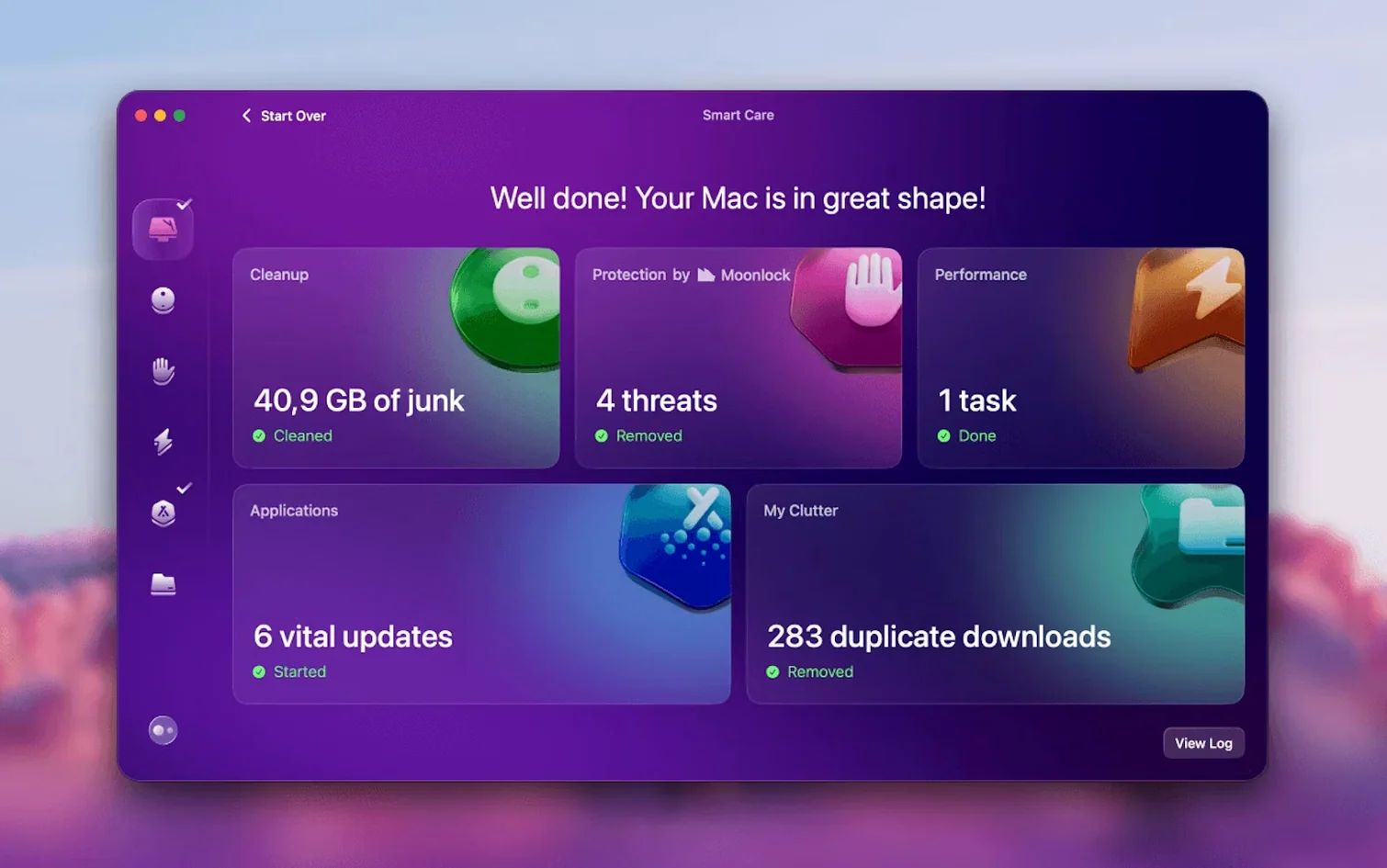
The main window opens to the cleanup module. A Quick Scan button starts a scan of system caches, browser caches, trash, and log files. The scan finishes in a minute or two and shows a breakdown of what it found. You review the list and click Clean if you agree with the selections.
Next, you open the large files tool from the sidebar. It scans your user folder and shows files larger than a threshold you set, sorted by size. You see a 6 GB Premiere Pro scratch disk folder from an old project. You select it and click Remove to File Scope, which moves it to a special area where you can review the file before permanently deleting it. The File Scope view lets you confirm the file's path and size before you commit to permanent deletion.
After that, you open the app removal tool. It lists every application on the system, including leftover entries from apps you thought you removed. CleanMyMac runs the uninstaller built into each app and also removes orphaned preference panes, background services, and leftover folders in ~/Library.
You check the protection module and run a scan. It finishes quickly and reports one adware entry in a browser extension you installed two weeks ago. You remove it from within the module.
Finally, you open the email cleanup module. You authorize Gmail access through the system dialog. CleanMyMac shows counts of messages by category: unread, read older than a year, and promotional. You select "older than a year" and "promotional," then click Clean. The app deletes them in batches through Gmail's API. When you open Gmail in a browser later, those messages are gone.
The session finishes. You saw no dialogs, no activation prompts, and no requests for payment. The app closes cleanly and leaves the system a few gigabytes lighter.
- Adds tools for cleaning and managing mail in Gmail.
- Includes new email cleanup functionality.
- macOS 11 or later
- Apple Silicon or 64-bit Intel
Questions from the notes
Does CleanMyMac run on Apple Silicon Macs?
Yes, CleanMyMac supports both Apple Silicon and 64-bit Intel Macs.
What macOS version do I need for CleanMyMac?
You need macOS 11 or later.
Install procedure
- Remove any older version of CleanMyMac before installing or updating.
- Open the downloaded disk image.
- Drag the app to the Applications folder alias.
- After copying finishes, open the app from Launchpad.
- On macOS 27, grant full disk access before launching.
Reports from players
Sign in or create a tester account to file a report.
No reports filed yet.