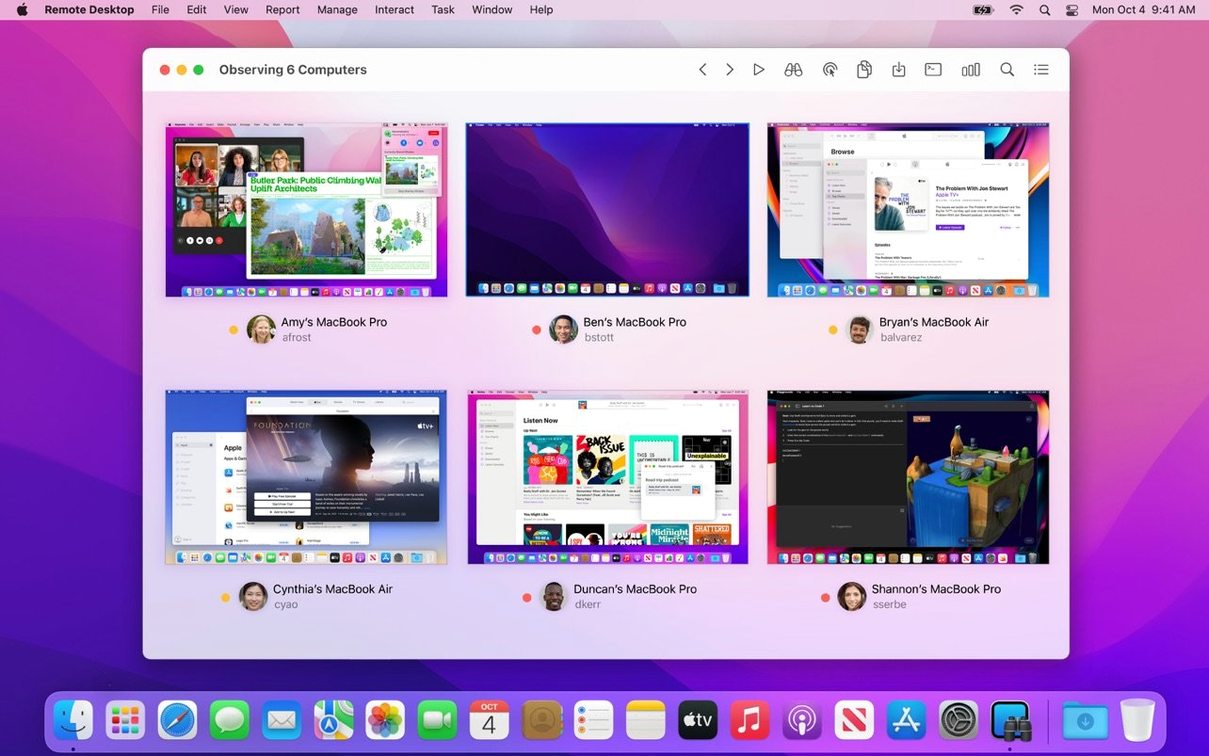
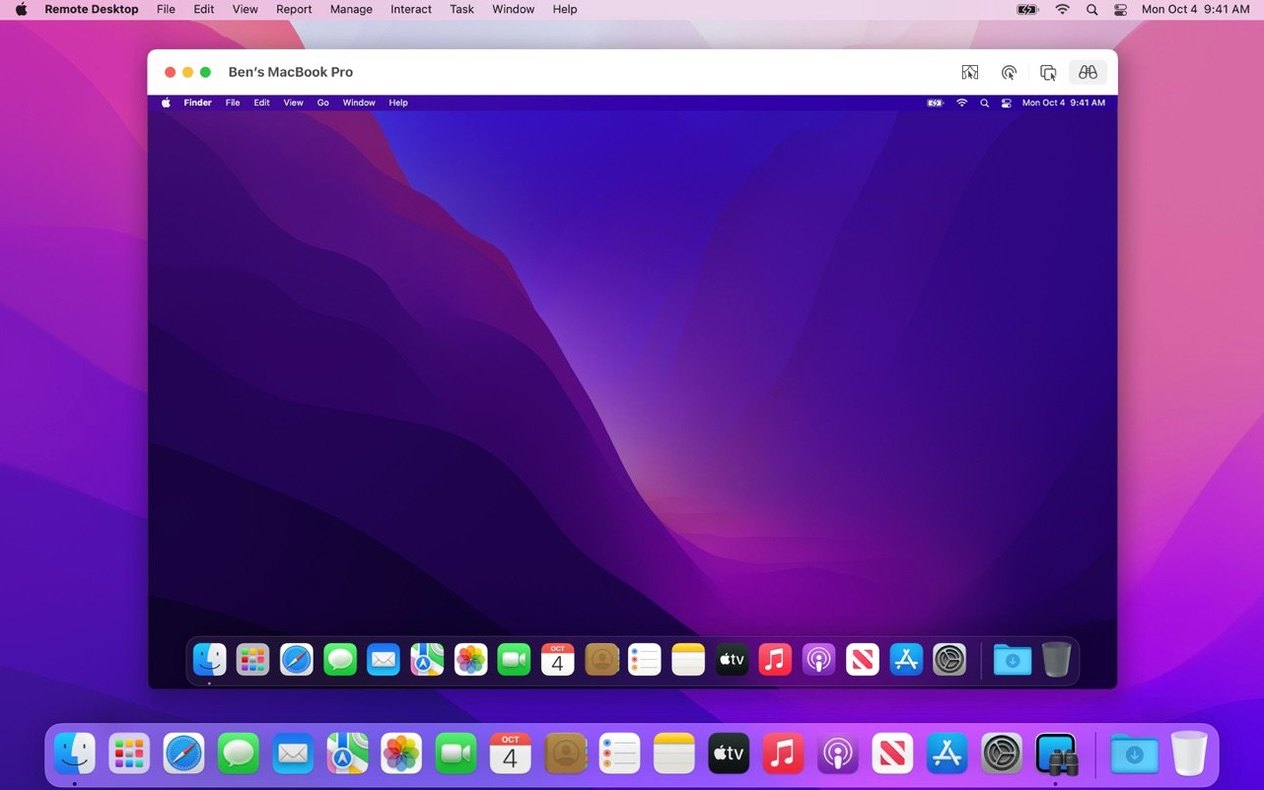
Curtain Mode is the feature that makes Apple Remote Desktop useful in a testing lab or classroom. It blanks the client screen while you work, so nobody watches your keystrokes or sees the test builds you are pushing. You get full control of the remote Mac — mouse, keyboard, menu bar — without the user knowing exactly what you are clicking.
Copy files both ways inside one remote view
- View the remote screen in a window or full screen.
- Copy text or files from your Mac and paste them directly onto the remote machine, and vice versa.
- Drag a file from Finder into the remote window to transfer it.
- Open the Remote Keyboard menu item on macOS Tahoe 26 and later to send keystrokes without leaving the app.
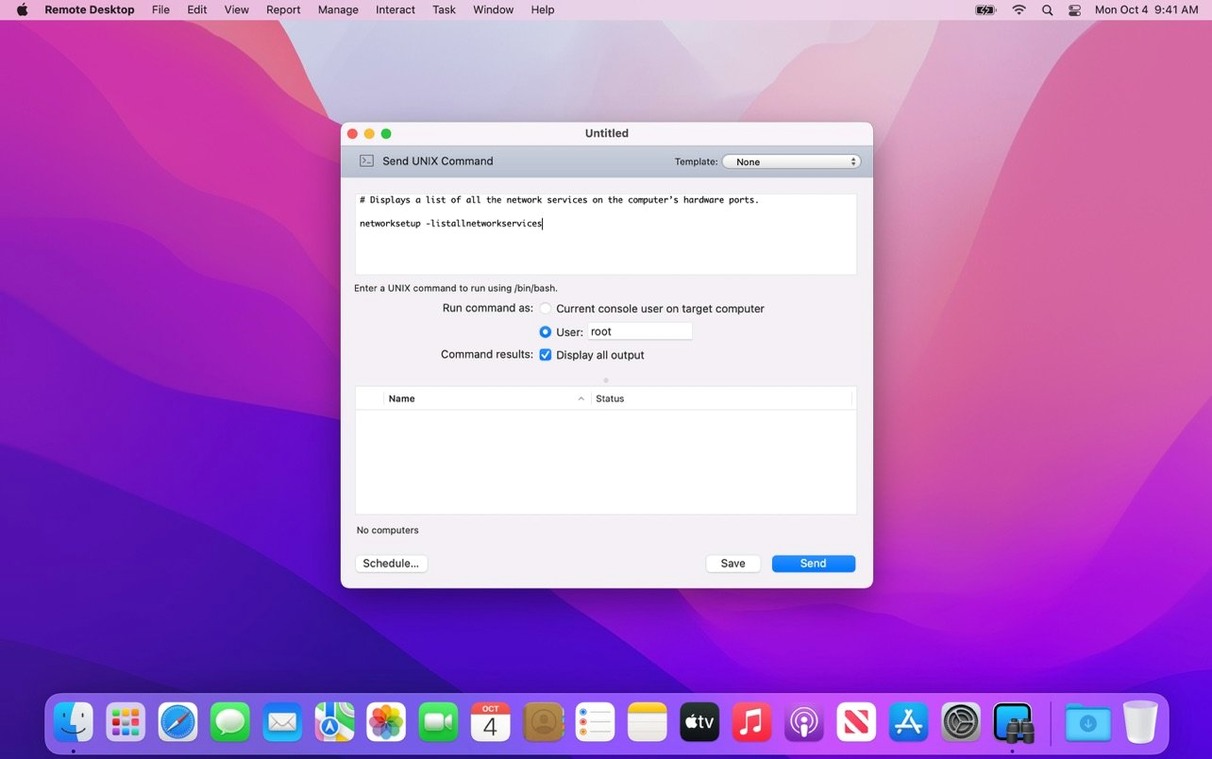
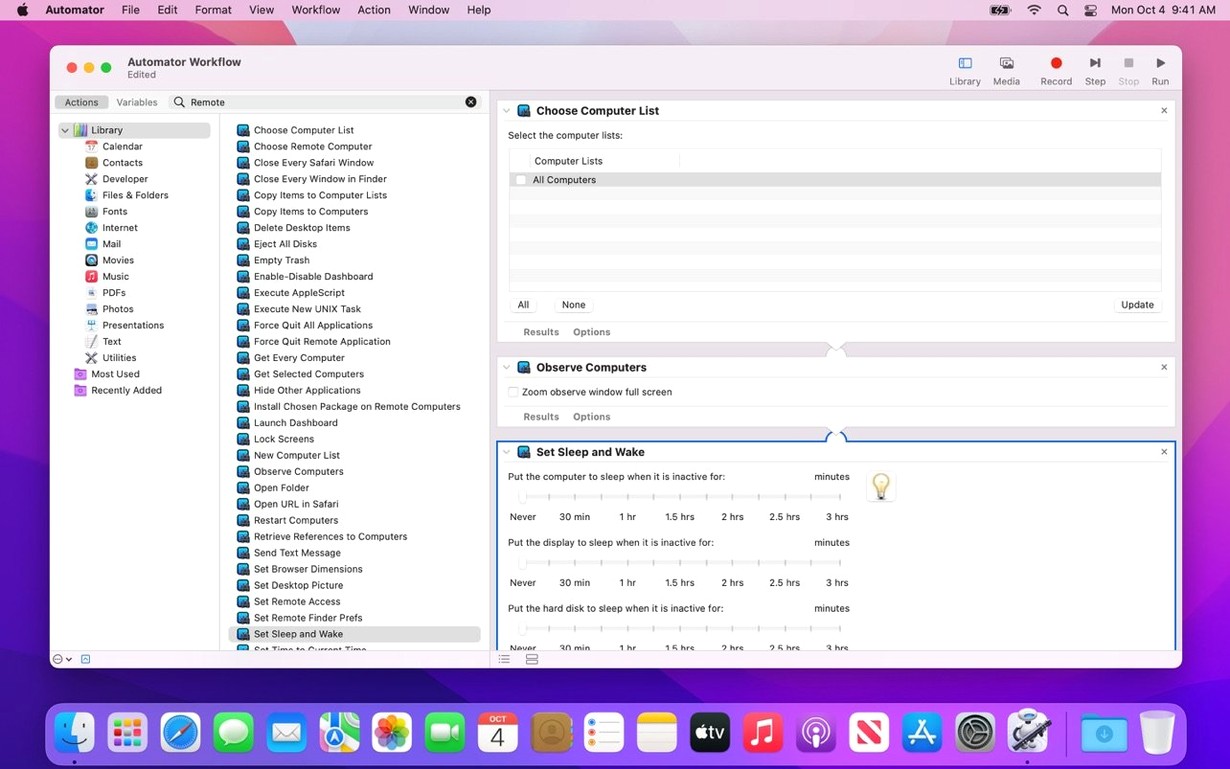
- Run Automator workflows with one of the 40+ built-in actions — restart a machine, install a package, gather system reports.
One realistic start-to-finish task
You are updating a dozen Mac minis in an office. Open Apple Remote Desktop, select the machines from your saved list, and press Command-I to get a system overview of each — current user, free disk space, uptime. You see one machine with a stuck application. Switch to Curtain Mode, force quit the app, drag a new installer from your local Downloads folder onto the remote desktop, run it, then confirm the install log. The whole thing takes under a minute per machine, and the clients never see the screen flicker. That is the workflow Apple Remote Desktop is built for: one seat managing many screens without the theatrics.
Why skipping the client breaks admin tools
The most common error is assuming the Remote Desktop Client is optional. You can view a Mac's screen over standard VNC without installing anything extra, but that gives you none of the admin tools — no software distribution, no reports, no Curtain Mode. If you drag an installer package to a VNC-only machine, nothing happens. The client is a separate download from the Apple website, and it needs to be on every Mac you intend to manage. Skipping that step is the first thing that sends people back to forums.
The second mistake is forgetting to unlock the admin account on the remote machine. Apple Remote Desktop authenticates against a local administrator account, not your Apple ID. If the remote Mac has no active admin user with a password set, the connection fails silently or asks for credentials repeatedly. Create the account first, test it with a direct SSH login, then add the machine to your Remote Desktop list.
Beginners also tend to use the wrong network profile. The app assumes you are on the same subnet by default. If you manage machines across a VPN or a routed network, you need to enter the IP address manually and ensure port 3283 is open for the Remote Desktop protocol and port 5900 for VNC fallback. The app will not scan across subnets automatically, so adding machines one by one is the only reliable method until you set up a directory service.
Black screen fix: check the ARDAgent client
The remote screen stays black after you connect. This usually means the Remote Desktop Client is not running, or the user logged out. Check that the client is present in /System/Library/CoreServices/RemoteManagement/ARDAgent.app. If it is missing, reinstall the client package. If the user is logged out, you cannot view the screen — Apple Remote Desktop requires an active login session for remote control. You can still issue commands like restart or shut down, but you will not see a desktop until someone logs in again.
File transfers stall halfway through. Large packages, especially those with many small files inside a .pkg, can time out on slower networks. The workaround is to use the Encrypted Copy feature in the Manage menu instead of drag-and-drop. Encrypted Copy handles retries automatically and preserves the package structure. If the transfer still stops, split the job into smaller packages or schedule the install for off-hours using the Task Scheduler.
Curtain Mode shows a blank screen on the client, but the remote Mac's mouse pointer is still visible. This happens when the client Mac has multiple displays. Curtain Mode only blanks the main display; secondary monitors keep showing the desktop. Either disconnect the extra displays on the client side, or switch the remote control to Observe mode instead, which does not hide the screen but lets you watch without interference.
The app refuses to connect after a macOS update. Apple changes the authorization database every major release. Re-run the Remote Desktop Client installer on the managed machines — it updates the necessary permissions and re-registers ARDAgent with the system. No reboot required, just a reinstall. This is the single most reliable fix for post-update connection drops.
Force 128-bit encryption before any internet use
- Encryption level — set to "Only with encryption (128-bit)" in the Preferences > Security pane. The default allows fallback to unencrypted VNC, which sends passwords in plain text. If you manage machines over the internet, this is not optional.
- Observe vs. Control — change the default permission from "May control" to "May observe" for machines that do not need remote control. This prevents accidental keystrokes during troubleshooting and reduces the chance of interrupting someone's work.
- Task Server port — if you run the Task Server on a dedicated machine, set the port number explicitly in Preferences > Tasks. The default port can conflict with other services on busy networks. Pick something above 1024 and configure your firewall accordingly.
- Curtain Mode warning — enable the client notification that says "Your screen is being managed" before Curtain Mode activates. It is in Preferences > Security > Show warning before controlling. Some teams disable it for stealth, but for help-desk use it avoids surprising users.
Tahoe 26 support drops old certificate workarounds
Version 3.10 adds macOS Tahoe 26 compatibility, which means it now runs on the latest OS without any of the old certificate or permission workarounds. If you manage machines that are already on Tahoe 26, the app will connect without the usual "update your client" prompt.
The Accessibility and Remote Keyboard menu items are new for Tahoe 26. Instead of sending keystrokes through the virtual keyboard overlay, you can now select Remote Keyboard from the toolbar and type directly into the remote session. It sounds small, but it removes the need to reach for the on-screen keyboard when a client has a non-English layout or you need to send a command that triggers a system shortcut on the remote Mac.
VoiceOver support for the remote screen is new in this version. If you manage a Mac that uses VoiceOver, the remote session now passes accessibility information back to your admin machine. That means you can hear what the remote user hears — menu items, button labels, alerts — without asking them to describe it. For help-desk staff supporting visually impaired users, this is the headline feature.
The rest of the update is bug fixes and performance improvements. The release notes do not list individual fixes, but after applying the update you may notice that package distributions over slow links complete more consistently, and that the Task Scheduler no longer drops tasks scheduled for machines that wake from sleep.
Only the admin Mac needs the full app
Does the managed Mac need the full version installed? No. Only the admin Mac needs the Apple Remote Desktop application. The client machines need the free Remote Desktop Client package, which is a small download and does not require a license. You can push it via ARD itself once you have a few machines configured, or use Munki or a simple script.
Can I manage Windows or Linux machines? Partially. Apple Remote Desktop can connect to any computer running a VNC server, including Windows, Linux, and UNIX systems. You get screen sharing and basic keyboard and mouse control, but none of the Apple-specific features — no reports, no software distribution, no Curtain Mode. For mixed environments, you would run ARD for the Macs and a separate VNC client for the rest.
Will it work if the remote Mac goes to sleep? Not for live viewing. When a Mac sleeps, its network services go down, including the Remote Desktop Client. You can use the Wake for Network Access feature in the Energy Saver preferences, or send a wake-on-LAN packet from another machine first. ARD itself does not include a wake-on-LAN tool, so you need a separate utility or a router that supports it.
How many machines can I manage at once? Apple does not publish a hard limit, but practical experience suggests around 50 concurrent machines in a single task list before the interface becomes sluggish. The Task Server can handle more, but you will want to group machines by location or purpose to keep the list manageable.
Can I run this on an older macOS? Version 3.10 requires macOS 15.5 or later on both the admin and client machines. If you have Macs on older systems, you need to keep an earlier version of ARD for those — the client software is version-specific, and v3.10 does not support clients older than macOS 15.5.
- Adds macOS Tahoe 26 compatibility.
- Adds Accessibility and Remote Keyboard menu and toolbar items on macOS Tahoe 26 or later.
- Adds VoiceOver support for remote Mac on macOS Tahoe 26 or later.
- Includes bug fixes and performance improvements.
- macOS 15.5 or later
Install procedure
- Mount the disk image and run Open Gatekeeper friendly.
- Press Enter in Terminal to bypass Gatekeeper.
- Drag the app to the Applications folder.
- Launch the app.
Reports from players
Sign in or create a tester account to file a report.
No reports filed yet.