
If you already use Keynote for basic slides, version 15.3.1 adds the kind of tools that make a difference in polished presentations. The update focuses on refinement and control rather than a ground-up redesign, which suits the way most people work with this tool. Here is what stands out for someone who has already built a few decks.
- Add video to Keynote presentations directly — insert a video file or use the built-in video broadcast feature. Keynote handles video as an object with its own playback settings, so you can set start and stop points, loop, or trigger it on click. No extra conversion step for most common formats.
- The Magic Move transition creates smooth morphing animations between slides. It works best when you duplicate a slide, move objects around, and let Keynote calculate the in-between motion. Useful for explaining spatial relationships or showing changes over time.
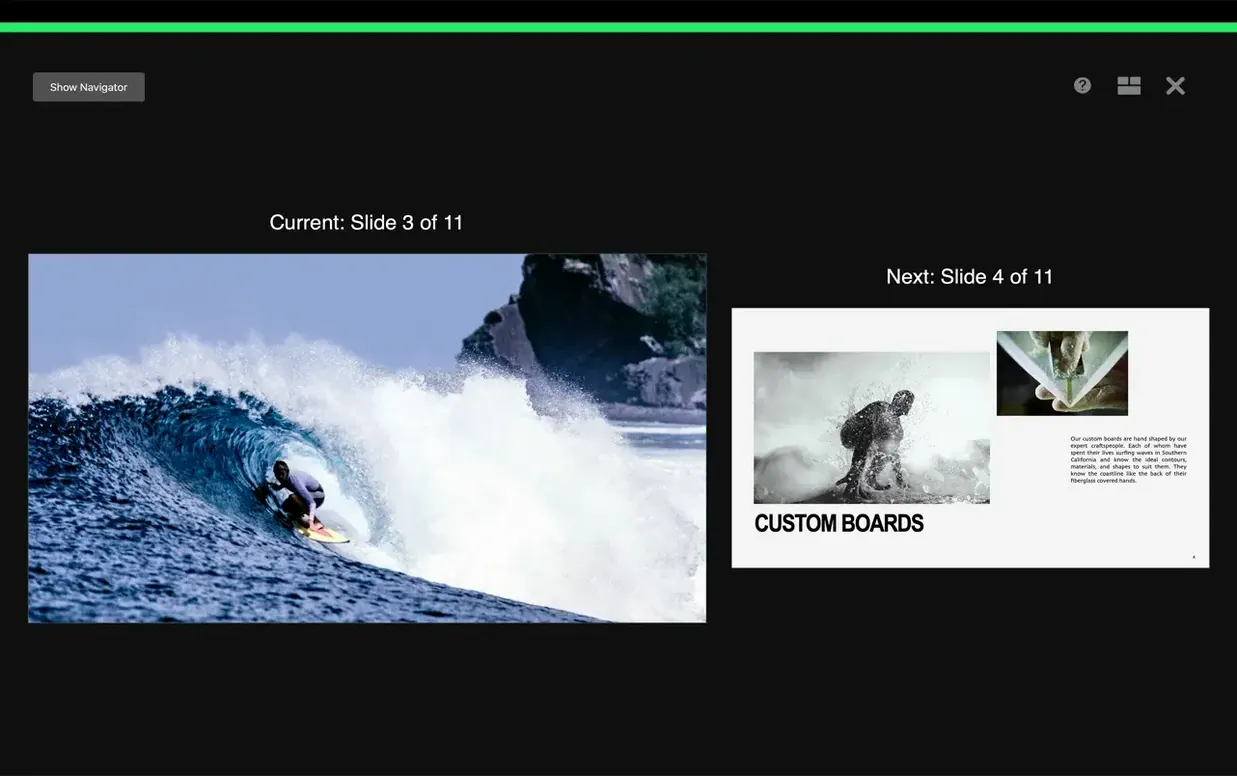
- Customizable presenter display for rehearsals and live shows. You decide what shows on the presenter screen: current slide, next slide, speaker notes, a timer, and a clock. This is not a fixed layout — you can rearrange and resize each element.
- Fresh transitions and builds in 15.3.1 include shift, radial wipe, and character blur. The character blur build works as a text entrance animation, blurring in individual characters rather than whole words or lines.
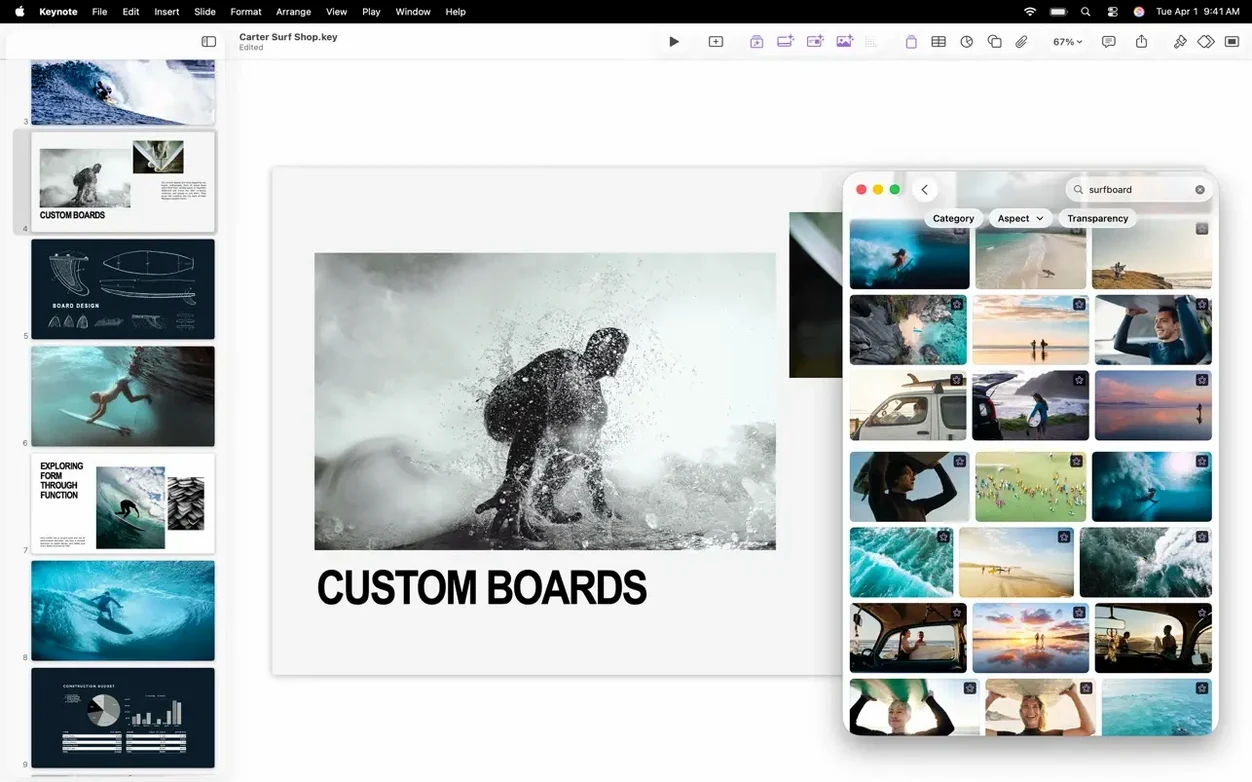
- Replace images from the Content Hub more easily. If you have a placeholder image or want to swap out a photo across several slides, the updated Content Hub lets you pick a new image and apply it without redoing alignment or size.
Most of these features work on both Intel and Apple Silicon Macs, and the iWork suite integration means you can drop in content from Pages or Numbers without exporting. For anyone building presentations that need to hold attention, these are the details that matter.
What a typical working session looks like
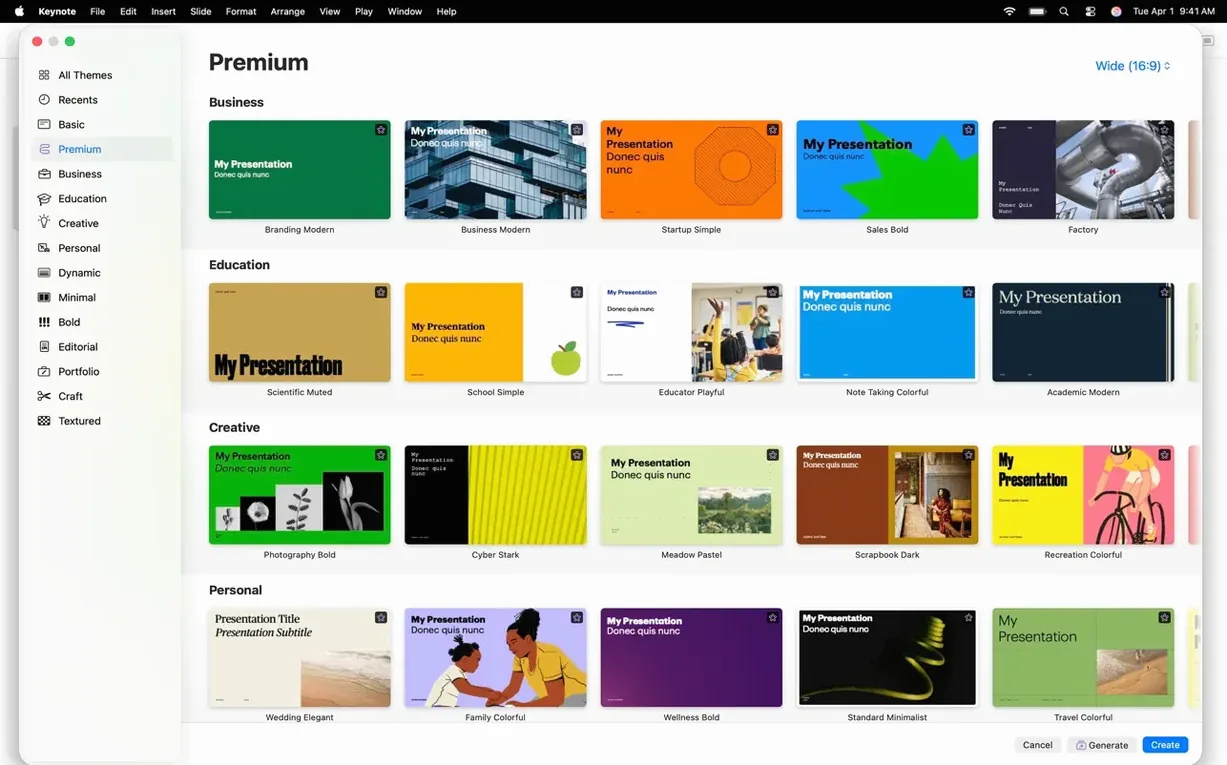
Start by opening a clean presentation or dragging in a PowerPoint file you need to reformat. Keynote reads the layout and most formatting, so the import step is just waiting for the conversion to finish. From there, I usually pick one of the Apple-designed themes as a starting point and then replace every image in one pass from the Content Hub — the improved replacement workflow in 15.3.1 saves time here because you can swap a photo and the crop, mask, and position stay put.
Once the placeholder images are out, I build the slide structure. For a sequence where a product moves from point A to point B, I duplicate the slide, move the object, and apply Magic Move. The transition calculates the path, and I only adjust the timing in the transition inspector. For text-heavy sections, I use the character blur build instead of a standard fade-in — it reveals one character at a time with a blur effect, which works well for bullet points you want to control the pacing on.
After the slides are arranged, I add video. Inserting a video file is a drag-and-drop action, and the object handles playback settings like looping and click-to-trigger. If I want a live element, the video broadcast feature lets me feed a camera or screen capture directly into a slide during the presentation. Both work without transcoding first, which is one less step.
Before a live run, I rehearse with the presenter display. The layout is customizable, so I put speaker notes on the left, current slide center, next slide thumbnail on the right, and a timer in the corner. I resize the elements to my preference and run through the deck until the timing feels right. For anyone with an Apple Vision Pro, there are also practice spaces — Conference Room and Cinema — that let you rehearse in an immersive environment, but the standard presenter display works fine on the Mac screen.
Adjusting Keynote's default transition for subtlety
Keynote has a few defaults that are worth adjusting early on. Under the Edit menu, open Preferences and look at these:
- Set the default transition to something subtle like Shift or a standard dissolve instead of the default. This avoids the presentation feeling like every slide has the same movement.
- Enable the ruler and guides in the View menu. They help align objects across slides, especially when you are duplicating slides for Magic Move.
- If you present on a secondary screen, configure the presenter display in the Slide Show preferences before the first rehearsal. Setting the display layout early means you are not fiddling with it in front of an audience.
Using the radial wipe transition from version 15.3.1
Version 15.3.1 introduces the radial wipe transition, which works as a circular reveal from the center or edge of a slide. It is a good alternative to the standard wipe for changing focus between two related concepts. The shift transition moves the entire slide content in a direction — useful for continuity between slides that share a background.
The ability to edit on any device with real-time change tracking is part of the iCloud workflow. If you open a presentation on an iPad during a meeting, annotations made with Apple Pencil or a finger appear when you go back to the Mac version. The change tracking shows what was added, so you can accept or reject edits later. Export options cover PowerPoint, PDF, HTML, movie files, and image files — useful if the final output is not a live presentation.
Apple Keynote lets Mac users build polished slideshows with cinematic transitions and animated effects. The installer runs on both ARM and x86 Macs with macOS 15.6 or later.
- Bug fixes and performance improvements.
- Fresh transitions and builds, including shift, radial wipe, and character blur.
- More easily replace images in presentations from the Content Hub.
- macOS 15.6 or later
- Intel or Apple Silicon processor
Questions from the notes
Can I edit PowerPoint files in Keynote?
Yes, Keynote can import and edit Microsoft PowerPoint presentations, though some complex animations or embedded content may need adjustment after import.
Does Keynote support Apple Pencil annotation?
Yes, when presenting on an iPad, Keynote allows annotation with Apple Pencil or a finger directly on slides.
Install procedure
- Open the downloaded disk image.
- Drag the app to the Applications folder alias.
- Launch the app from Launchpad after the copy finishes.
Reports from players
Sign in or create a tester account to file a report.
No reports filed yet.