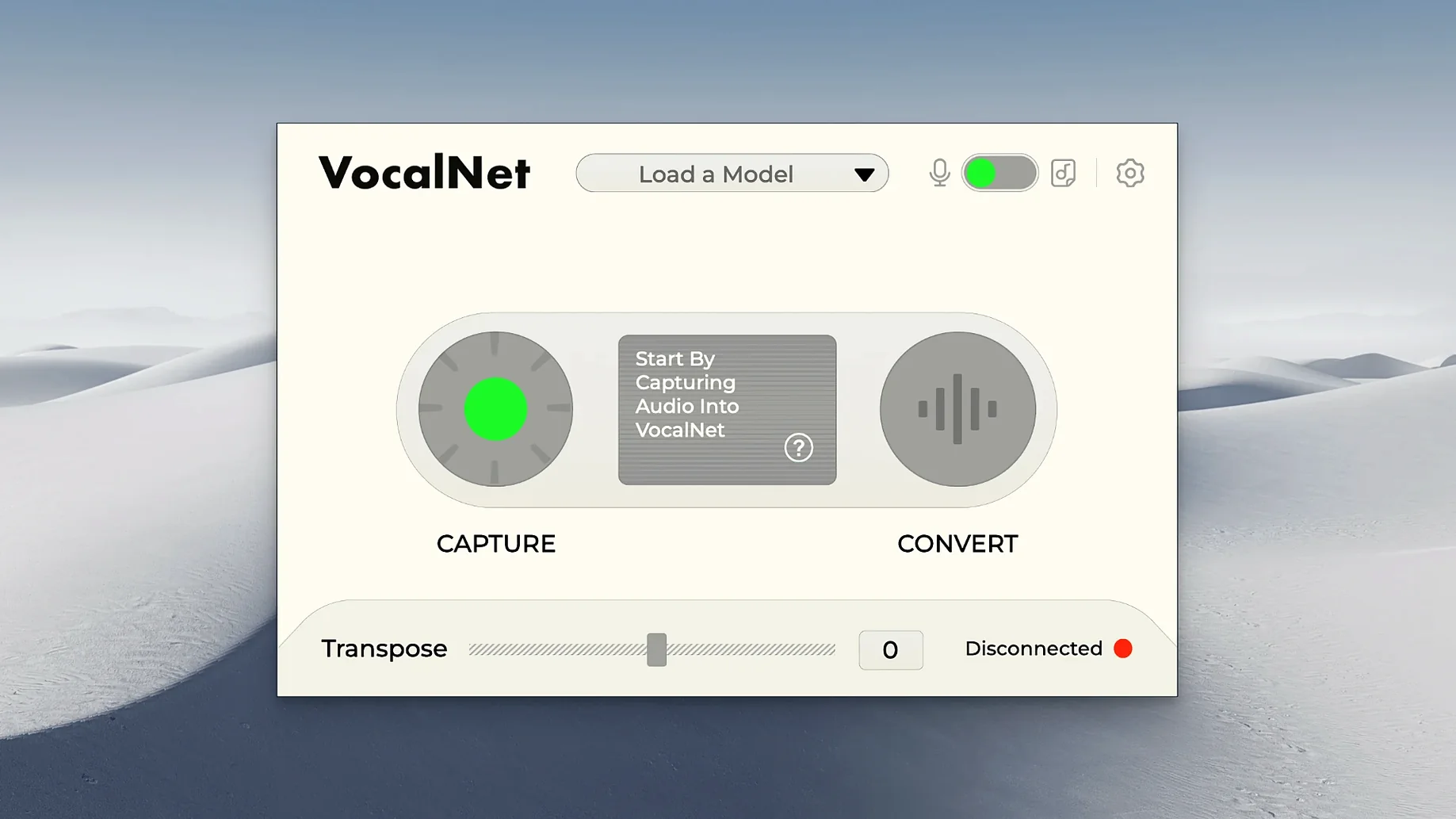
VocalNet is an AI voice transformation plugin that builds a new vocal timbre by analyzing uploaded voice samples. It runs as a VST on macOS and Windows, processing audio in real time while you sing or speak.
Controls and workflow
The core workflow is sample-based. You load one or more voice recordings, and VocalNet creates a timbre from them. With several samples loaded, you can blend them or glide smoothly between them to produce hybrid sounds. That crossfade control is where most of the interesting results come from—it turns a single vocal take into something between two distinct voices.
The plugin is built for quick experimentation. Instead of booking another singer for a color, you load a sample, adjust the blend, and hear the change immediately. It is a practical way to add layered textures to a mix without extra performers.
First days with VocalNet
After installing, spend the first session loading a single vocal sample and moving the blend control from end to end. This will show you how the timbre changes react to a continuous voice—speech versus singing can give very different results. A second tip: start with a dry vocal track (no reverb, no compression). The AI timbre shift is clearer when the source is clean, and you can hear exactly what the plugin is adding or removing.
It is worth organizing your sample library before building a project. Short recordings—two to four seconds of a held vowel or a spoken phrase—work best for creating a consistent new voice. Avoid recordings with background noise or heavy effects; the plugin transfers those artifacts into the result. If you plan to blend voices, name each sample by its source (male/female, breathy, bright) so you can find the combination quickly during a session.
Opening a plain vocal track with VocalNet inserted
I open my DAW, load a vocal track I recorded earlier in the week—a verse with a plain, mid-range tone. I insert VocalNet as a VST3 on the track. The plugin window shows the sample area and the blend slider. I drag a sample of a fuller, chest-voice recording into the slot, then another sample of a thin, airy whisper. The blend slider is in the center by default.
I play the track. The verse now sounds like two singers layered into one, but it is still the same take. I nudge the slider toward the whisper sample. The verse gets lighter, almost distant. I move it back toward the chest-voice sample; the verse gains weight. I automate the slider in my DAW so the first half of the verse stays in the chest range and the second half slides toward the whisper. The transition takes about two bars, and it sounds like a single voice changing character mid-phrase.
Next, I load a third sample—a breathy female recording—and blend all three. The plugin lets me move between them smoothly, so I create a slow drift from breathy to chest to airy over the chorus. I render the track, and the entire arrangement uses only my original vocal take with no additional performers. The whole process takes about fifteen minutes.
Comparison with similar Mac apps
VocalNet is not the only voice transformation plugin for macOS. It sits alongside tools like Manipulator by Polyverse and Little AlterBoy by Soundtoys. Manipulator focuses on formant shifting and pitch quantization, with a heavy emphasis on robotic or glitchy textures. It does not use sample-based timbre analysis, so the results stay inside the original voice’s character. Little AlterBoy is a classic: it shifts pitch and formants independently, but it works on a single voice source and does not mix multiple samples. Both are good for specific effects, but neither can create a blended hybrid voice from separate recordings.
Another difference is VocalNet's real-time local processing. Some cloud-based voice transformers send audio externally and return processed files, which introduces latency and privacy concerns. VocalNet keeps everything on the computer—no upload, no waiting. That makes it a straightforward choice for quick experiments during a live session where you want to hear the result immediately.
Manipulator and Little AlterBoy are more suited to sound design and aggressive effects. VocalNet is better for subtle vocal shifts, layering, and creating a new timbre that still sounds like a human voice, not a vocoder or a synth. The sample-blending feature gives it an angle that the other two do not have.
Scenario: A podcast producer building a character voice
I produce a fictional podcast with multiple characters, but only two voice actors for seven roles. For an episode, I needed a third character—a soft-spoken older man. My male actor has a young, clear tone. I loaded a vocalnet vst sample of my actor speaking in a low, slow register, then blended it with a recording of an older male voice from a public-domain archive. VocalNet created a new timbre that sat between them. I applied it to the dialogue track, and the result sounded like a different person, not a pitch-shifted version of the same actor. No extra actor hired, no rerecording. The episode went out with that plugin track unchanged—listeners never noticed.
VocalNet 1.0.4 runs on macOS 10.15 and later, with versions for Apple Silicon and Intel 64-bit. The interface is English.
- macOS 10.15 or later
- Apple Silicon or Intel 64-bit
Questions from the notes
Can VocalNet process audio in real time?
Yes, VocalNet processes audio in real time, so you can use it while singing or speaking.
Does VocalNet work on Apple Silicon Macs?
Yes, VocalNet supports both Apple Silicon and Intel 64-bit Macs.
Install procedure
- Open the downloaded disk image.
- Run the standard installation process.
Reports from players
Sign in or create a tester account to file a report.
No reports filed yet.