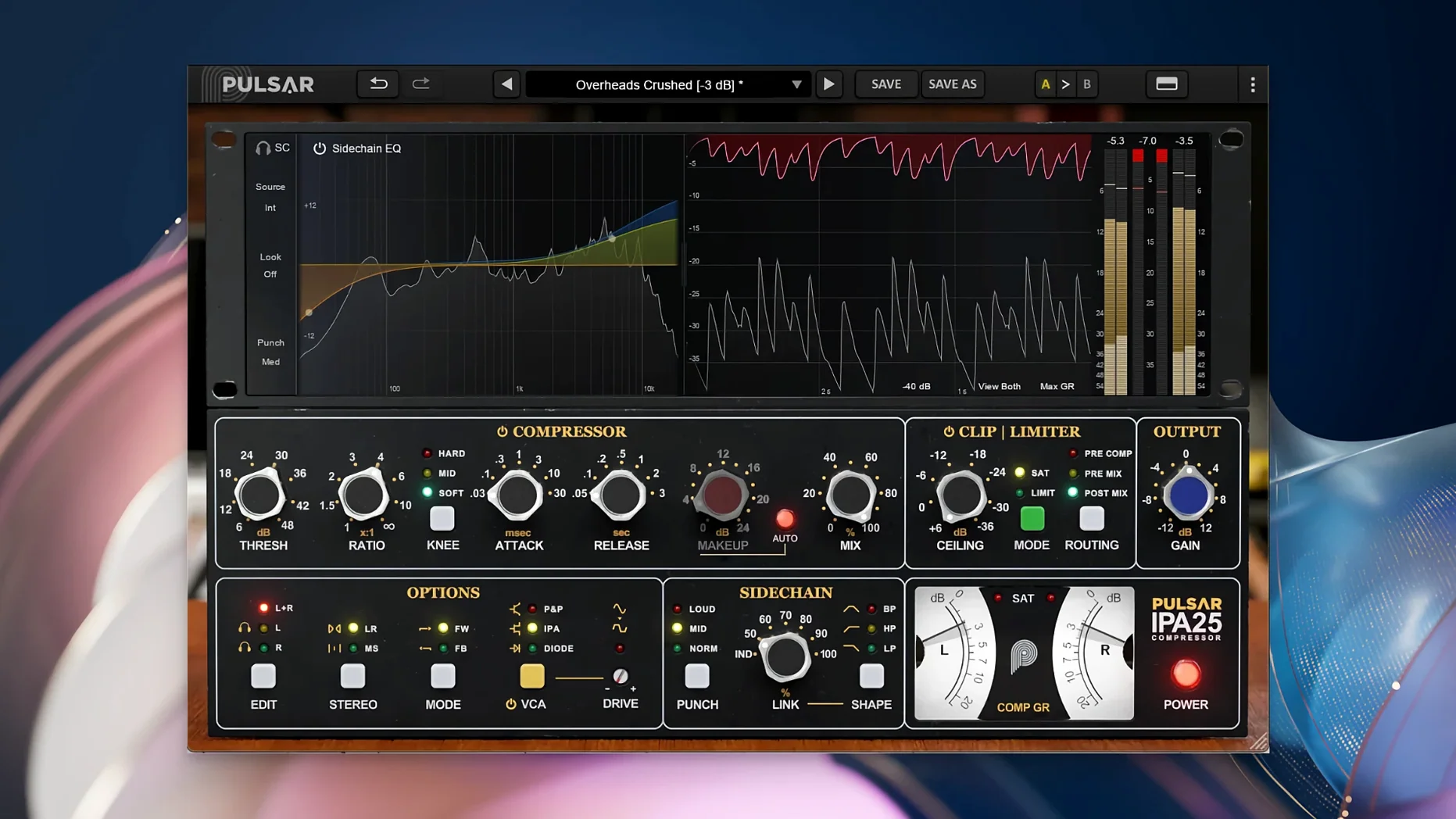
Pulsar IPA is a multi-VCA dynamics processor plugin for macOS, modeled after the classic API 2500 bus compressor.
Formats, Hosts, and Compatibility
IPA runs as a 64-bit Audio Unit, VST, or AAX plugin inside a third-party DAW. It has no standalone version—you'll need a host like Logic Pro, Ableton Live, or Pro Tools. The current version, 1.0.9, requires macOS 11 or later and an Apple Silicon Mac. Intel Macs are not supported. The interface is in English.
The Sound and What It Does
IPA emulates the punchy, gluey behavior of a classic VCA bus compressor, with a modern twist. It adds a visual sidechain EQ so you can shape which frequencies trigger the compression—useful for taming boominess on bass or letting vocals cut through a mix. A built-in clipper and limiter sit after the compressor, giving you loudness control without extra plugins. It handles vocals, drums, bass lines, and full mixes. For a bus compressor, it's flexible: you can go from subtle glue to aggressive pumping, then catch peaks with the limiter.
Switch to VCA mode for faster transient response
When you load IPA on a track for the first time, the default behavior might not match your source material. A few adjustments save time later.
- VCA mode. The plugin defaults to one of the three modes—likely IPA. For drums or a full mix bus, try the P&P/Mu mode first; it adds a thicker, more saturated character. Diode mode is snappier and works well on percussive elements. Cycle through them while the track plays to hear the difference in attack and release behavior.
- Sidechain filter. The visual sidechain EQ is on by default with a flat curve. For a bass-heavy source, pull down the low end on the sidechain EQ so the compressor reacts less to sub frequencies and more to the body of the sound. This prevents pumping that follows the kick drum.
- Mix knob. If you are used to parallel compression workflows, turn the Mix knob to something like 50% right away. This gives you a wet/dry blend and keeps the original transient intact while the compressor works underneath. It is a safer starting point than full compression.
- Clipper threshold. The built-in clipper defaults to an off or very high threshold. Bring it down a few dB after setting your compression ratio and threshold. The clipper catches peaks without distorting, so you can push the output level harder.
A Mix Bus Compression Workflow from Start to Finish
This workflow assumes you have a finished mix routed to a stereo bus in your DAW, and you want IPA to glue the elements together while keeping the mix punchy.
- Insert IPA as the last plugin on your mix bus. Set the VCA mode to P&P/Mu for a classic bus compressor character.
- Set the ratio to 2:1. This is a moderate setting that provides compression without squashing the mix too hard.
- Adjust the threshold so the compressor shows 2–4 dB of gain reduction on the loudest sections of the song. The meter in IPA responds quickly—watch it during a chorus or drop.
- This lets transients through while the release catches up naturally.
- Open the sidechain EQ. Reduce the low frequencies slightly, around 100 Hz, so the compressor is less sensitive to kick drum energy. This keeps the low end tight without overcompressing.
- Enable the limiter and set its threshold so it catches only the occasional peak, perhaps 1–2 dB of limiting during the loudest moments. Leave the clipper off for now.
- This parallel blend preserves some of the original dynamic feel.
- Bounce the mix and compare with the unprocessed version. Adjust the ratio or attack if the glue is too subtle or too aggressive.
Even out an uneven vocal with gentle compression in a rock mix
You open a session for a rock track that has been rough-mixed. The drums and bass are solid but the vocal sits unevenly in the choruses. You are not looking to rebalance levels—you want the compressor to even out the vocal's dynamics without making it lifeless.
You insert IPA on the vocal track. The first listen reveals that the vocal has a lot of low-mid resonance around 300 Hz, which makes the compressor pump unevenly. You open the visual sidechain EQ and cut a narrow band around 300 Hz. The compressor now responds more consistently to the vocal's main energy.
You set the ratio to 3:1 and the attack to a fast setting so the compressor catches the initial bursts of the singer's louder phrases. The release you set to a medium speed so it recovers between phrases without creating a breathing artifact. The gain reduction meter shows about 4 dB on the loudest words, which feels right.
After a few verses, you realize the vocal still has occasional harsh peaks on the letter "S" sounds. Instead of reaching for a separate de-esser, you activate the built-in clipper and set its threshold so it shaves off only those sharp moments. The limiter stays off because you want the compressor to do the heavy lifting.
You leave IPA running while you adjust the track's fader level. The compressor's output stage handles the gain structure well—you do not need an extra trim plugin. By the end of the session, the vocal sits more consistently in the mix without sounding clamped.
Avoid overcompressing the mix bus with ratios higher than 2:1
- Overcompressing the mix bus. A 4:1 ratio with heavy gain reduction on a full mix sounds choked. Start with 2:1 and keep gain reduction under 4 dB. The clipper and limiter can add loudness without the compressor doing all the work.
- Ignoring the sidechain EQ. The visual EQ is a major feature, not a gimmick. Beginners leave it flat and wonder why the compressor reacts oddly to bass-heavy tracks. A small cut in the low end often fixes uneven pumping.
- Using the wrong VCA mode for the source. The IPA mode is clean and fast. Beginners put it on a drum bus and miss the thickness that P&P/Mu would give. Try each mode on the same source for a few seconds before committing.
- Forgetting the Mix knob. Full wet compression can remove punch, especially on percussive material. Using the Mix knob for parallel compression is a simple fix that beginners overlook because they are used to compressors with only a wet setting.
- Stacking it with another compressor unnecessarily. IPA has a clipper, a limiter, and three compression modes. Beginners sometimes chain a separate limiter or clipper after it. Try using IPA's built-in limiter first—it is designed to work with the compressor stage and can replace an extra plugin.
- macOS 11 or later
- Apple Silicon
- 64-bit plugin
- Requires a third-party DAW application
Questions from the notes
Does Pulsar IPA work as a standalone app?
No, it requires a third-party DAW application and has no standalone version.
Which Mac models are supported?
IPA runs on Apple Silicon Macs with macOS 11 or later. Intel Macs are not supported.
Install procedure
- Run the standard installer package.
- Follow the on-screen prompts to complete installation.
Reports from players
Sign in or create a tester account to file a report.
No reports filed yet.