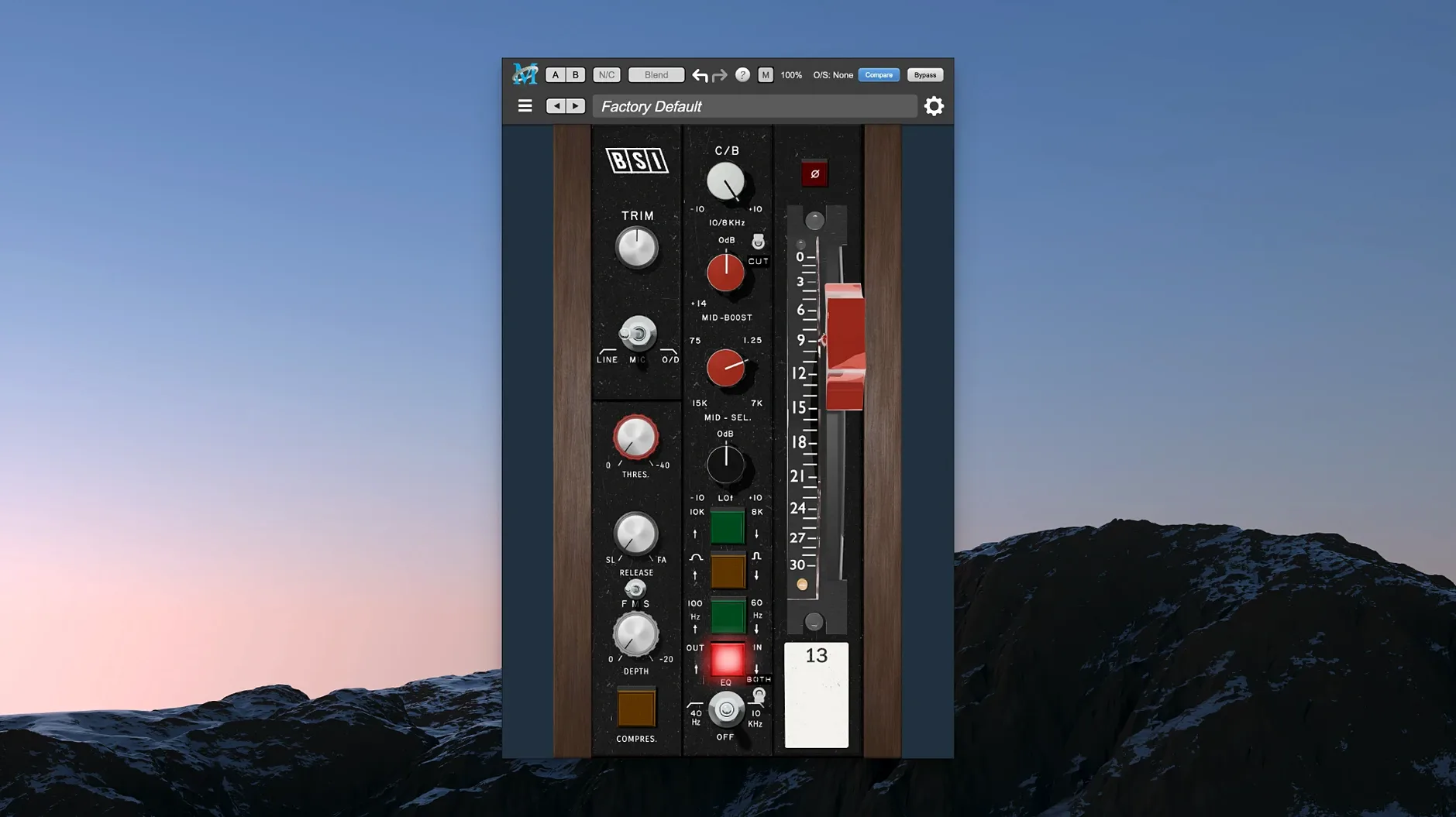
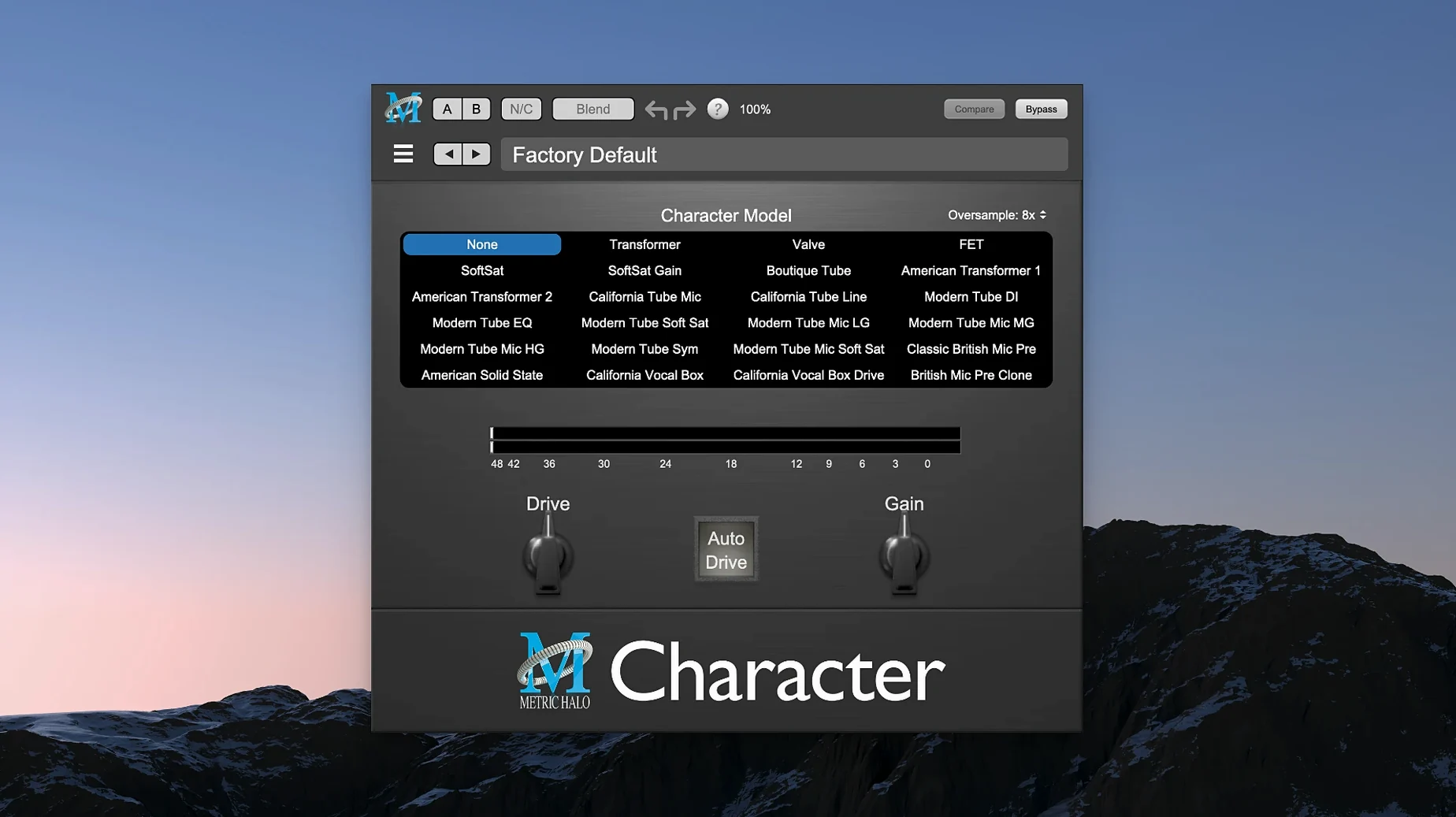
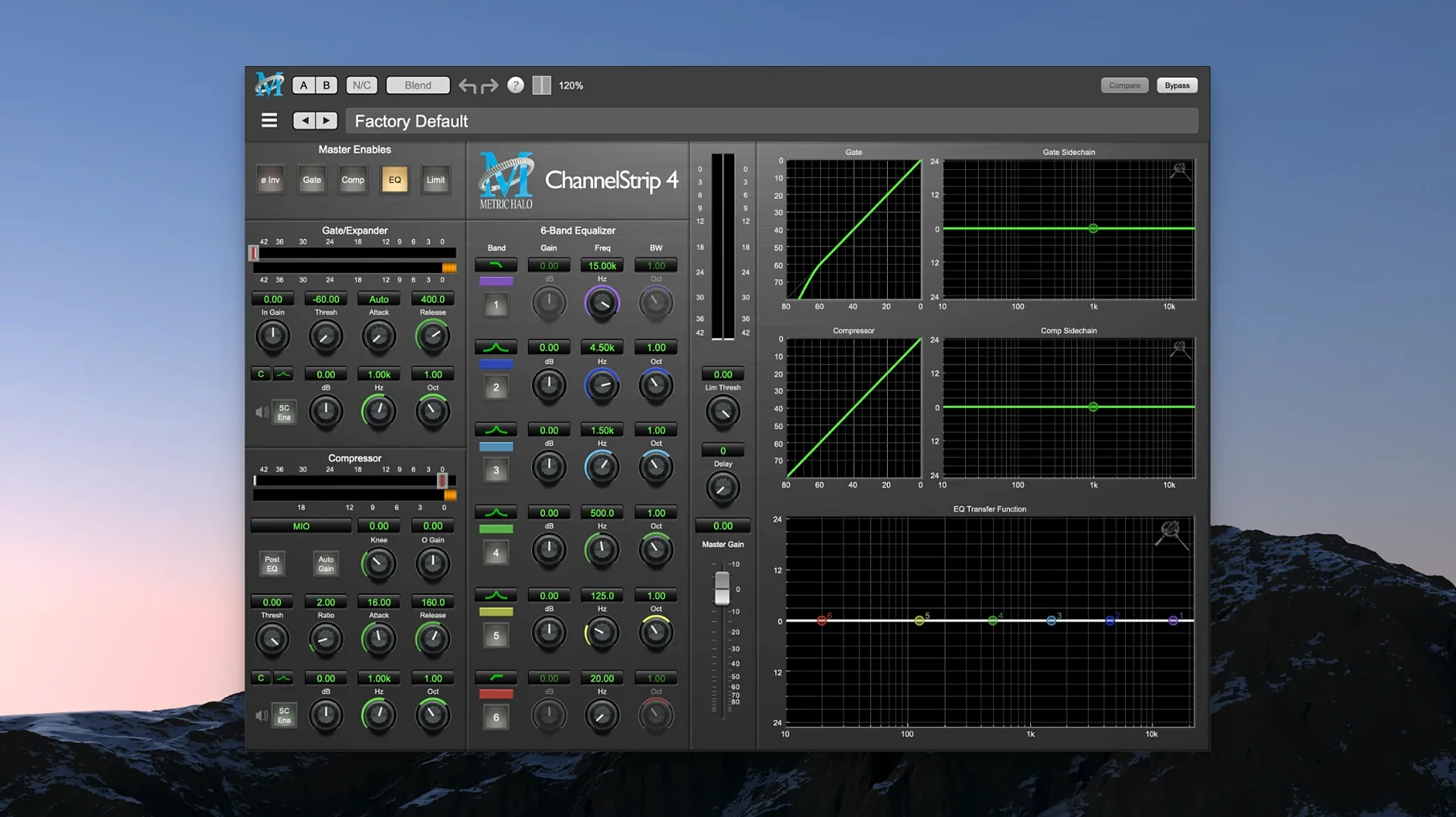
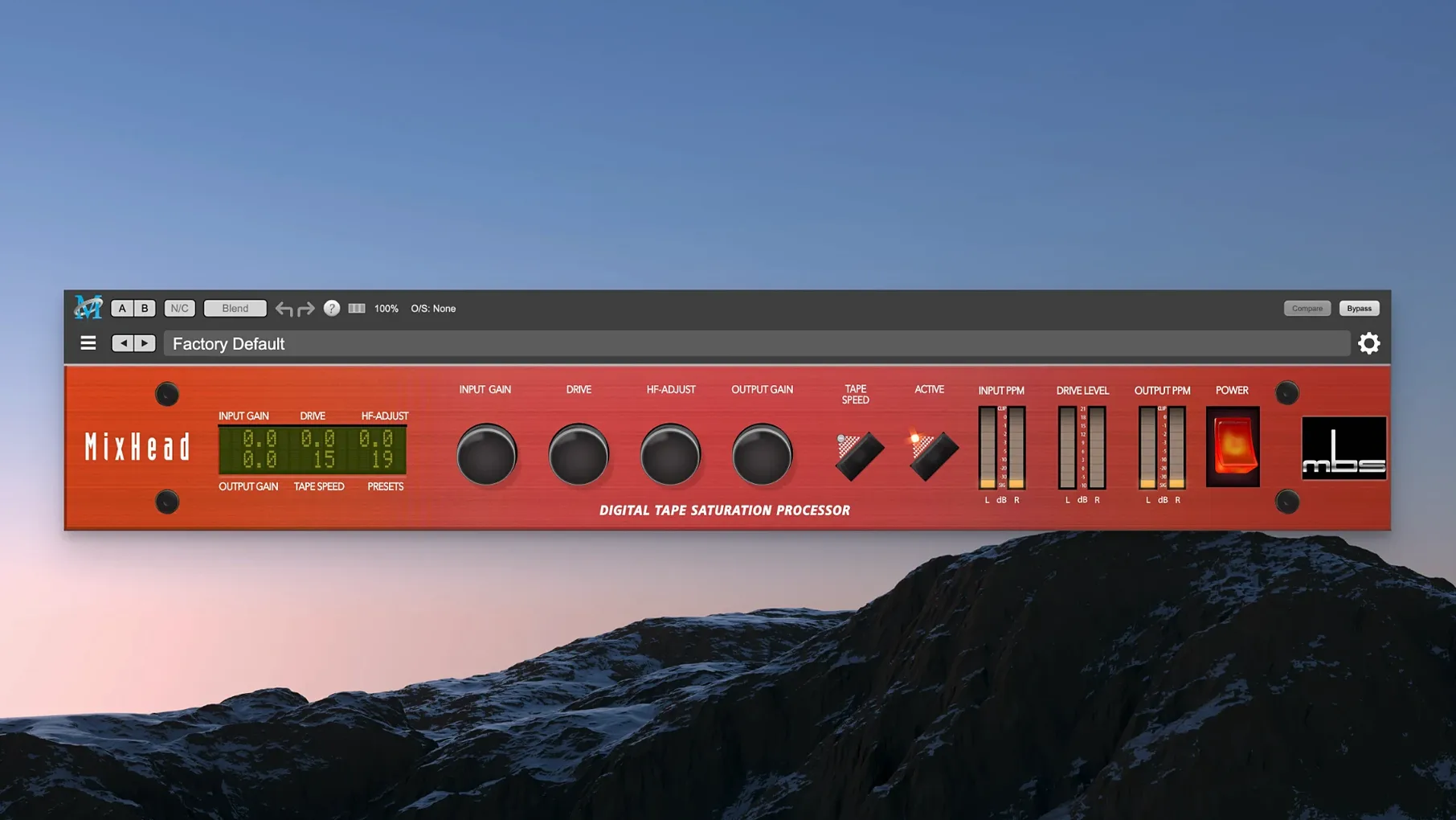
You drop a Metric Halo Production Bundle plugin onto a vocal track in your DAW. The track needs EQ, compression, and a touch of de-essing. ChannelStrip handles all three in one window — its EQ, compressor/limiter, gate/expander, and sidechain are laid out without clutter. For the low end, maybe a bass bus, Thump adds harmonic synthesis to bring out sub frequencies that feel more felt than heard. It’s a targeted tool for thickening without losing clarity.
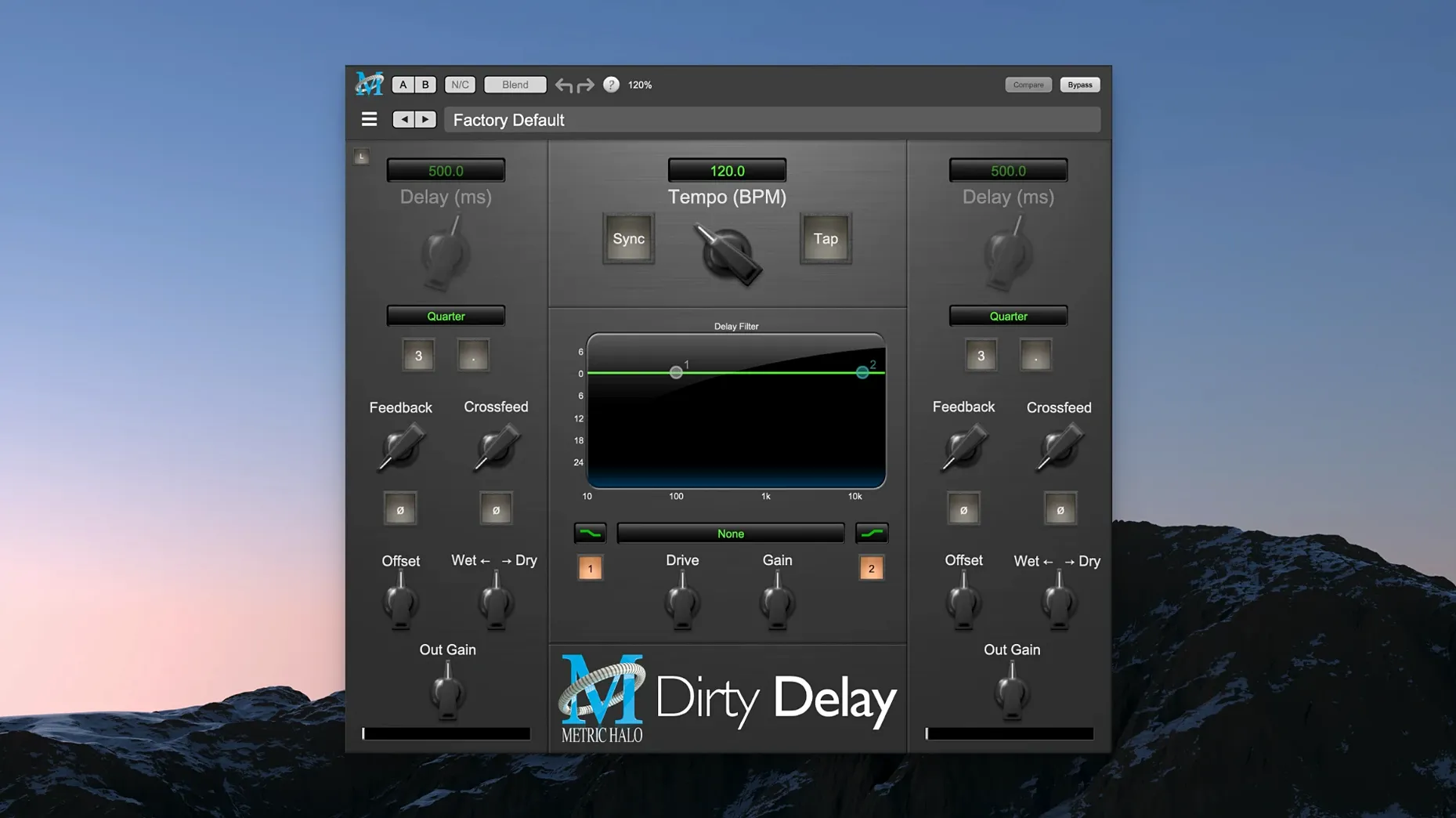
On an aux send, HaloVerb gives you reverb that doesn't eat the mix. It sits where you put it, and the controls are straightforward — decay, predelay, damping, no nested menus to hunt through. For voiceovers or sibilant vocals, Precision De-Esser catches the harshness without dulling the rest. MIOStrip, a lighter version of ChannelStrip, works well on simpler tracks where you need fewer controls but the same basic routing.
The bundle runs native on Apple Silicon under macOS 11 and up. Version 2025.05 (4.0.23.187) includes all these processors in one install. It’s a practical set for tracking, mixing, or mastering sessions where you want predictable behavior across standard jobs: shaping a vocal, tightening a drum bus, or cleaning up a dialogue track.
Avoid over-processing before the mix bus has other elements
New users sometimes load ChannelStrip and start twisting knobs without listening to what the EQ or compressor is actually doing. The plugin’s interface is clean, so it’s easy to over-process a track before the mix bus has any other elements. A vocal might end up too bright or too compressed in solo, then sit poorly in the full mix. The fix is to adjust in context — solo briefly, but make final moves with the whole arrangement playing.
Another common slip is forgetting that Thump works on harmonic synthesis, not just EQ boost. Beginners add it to a bass track, crank the low-end control, and wonder why the meter peaks without the expected weight. Thump generates harmonics below the fundamental, so a little goes a long way. Pushing it too hard creates mud instead of thickness.
De-essing with Precision De-Esser can also go wrong if you set the threshold too aggressively. The plugin targets sibilance, but a tight threshold cuts the "s" and "sh" sounds so hard that the vocal starts to lisp. Beginners sometimes chase every transient instead of leaving natural breath in the performance. A gentler ratio and a wider frequency band usually sound more natural.
Set the sidechain routing to separate compressor and gate inputs
Before you start a session, open ChannelStrip and check the sidechain routing. By default, the compressor and gate both listen to the same input. If you want the compressor to react to a different source — say, a kick ducking a pad — you need to set the sidechain source in your DAW's plugin window. Metric Halo doesn't hide this, but it's not obvious if you're used to plugins that auto-detect.
In HaloVerb, the default decay time is longer than most mixes need. Dial it back to 1.5 or 2 seconds for a general room sound. The predelay default is zero, which can make the reverb feel glued to the source. Adding 20 to 40 milliseconds of predelay pushes the reverb behind the dry signal and gives the mix more depth without extra processing.
Thump's input gain is another setting to adjust first. If your source track is quiet, the plugin may not generate enough harmonics. Raise the input until you see the meter moving in the lower third, then adjust the mix. The plugin works best when the source has some body already — a DI bass or a synth pad, not a thin sample.
Dealing with a lead vocal's room resonance and hard consonants
It's a Tuesday afternoon. You're mixing a rock track that has a lead vocal recorded in a small room. The track has some room resonance and the singer tends to hit hard consonants. You open your DAW, create a new track, and load ChannelStrip. The preset menu appears, but you don't pick one — you start from default.
First, you engage the high-pass filter on the EQ section. The room resonance sits around 150 Hz, so you sweep the frequency until the mud clears without thinning the vocal's body. That takes about ten seconds. Next, you set the compressor to a 3:1 ratio with a medium attack and a fast release. The vocal's peaks are uneven, so you watch the gain reduction meter settle around 4 dB on the loudest phrases. You adjust the threshold until it catches the peaks, not the whole performance.
Precision De-Esser goes next on the same track. You set the frequency to 7 kHz and the threshold so it only grabs the worst sibilance. The vocal stays clear. You bypass the de-esser twice to compare — it's doing its job without killing the top end.
For the bass bus, you insert Thump. The bass is a DI signal with no amp. The kick drum still punches through, but the bass feels bigger. You leave Thump active and move on to the drum bus.
On the drum bus, you want ambience but not a wash. The snare gets a tail that sits behind the beat. The kick stays dry. You mute the reverb return and unmute — the difference is subtle but the drums have space now.
The session ends with a quick check on the mix bus. You add MIOStrip for a light high-shelf boost and a 2 dB compression at 2:1. The whole mix sounds tighter. You export a rough mix, close the session, and the plugins close cleanly with the project.
Metric Halo trades surgical precision for faster loading and standard tools
Compared to the FabFilter Pro bundle, Metric Halo Production Bundle is more focused on standard tools than surgical precision. FabFilter's EQ and compressor offer more visual feedback and curve editing, but Metric Halo's ChannelStrip is faster to load and get a usable sound from. Pro-C 2 has a cleaner UI, but ChannelStrip's gate and sidechain in one panel means fewer plugin windows open.
Against the Waves bundle, the Metric Halo suite feels less experimental. Waves has a huge library of emulations and character processors, but the Metric Halo plugins stay predictable. You don't hunt for a specific compressor model; you get one that works on most material. Waves also requires their own manager for installs and updates, while Metric Halo's bundle is a single installer. For someone on a Mac with only one track of vocals and a drum bus to treat, the bundle covers it without extra clutter.
ValhallaDSP's ValhallaRoom and ValhallaVintageVerb are popular for reverb, and they sound excellent, but they are standalone plugins — no EQ, no compression. Metric Halo's HaloVerb is less celebrated but sits in a bundle that covers the whole signal chain. If you already own Valhalla's reverbs, you might still reach for Metric Halo for the channel strip and Thump. The bundle's strength is that one install gets you a full toolkit, not a single effect.
- macOS 11
- Apple Silicon
Questions from the notes
Does the bundle include a reverb plugin?
Yes, HaloVerb is included in the Metric Halo Production Bundle.
What does Thump do?
Thump is used for harmonic synthesis and adding low frequencies to tracks or buses.
Install procedure
- Open the package and follow the included installation and activation instructions.
Reports from players
Sign in or create a tester account to file a report.
No reports filed yet.