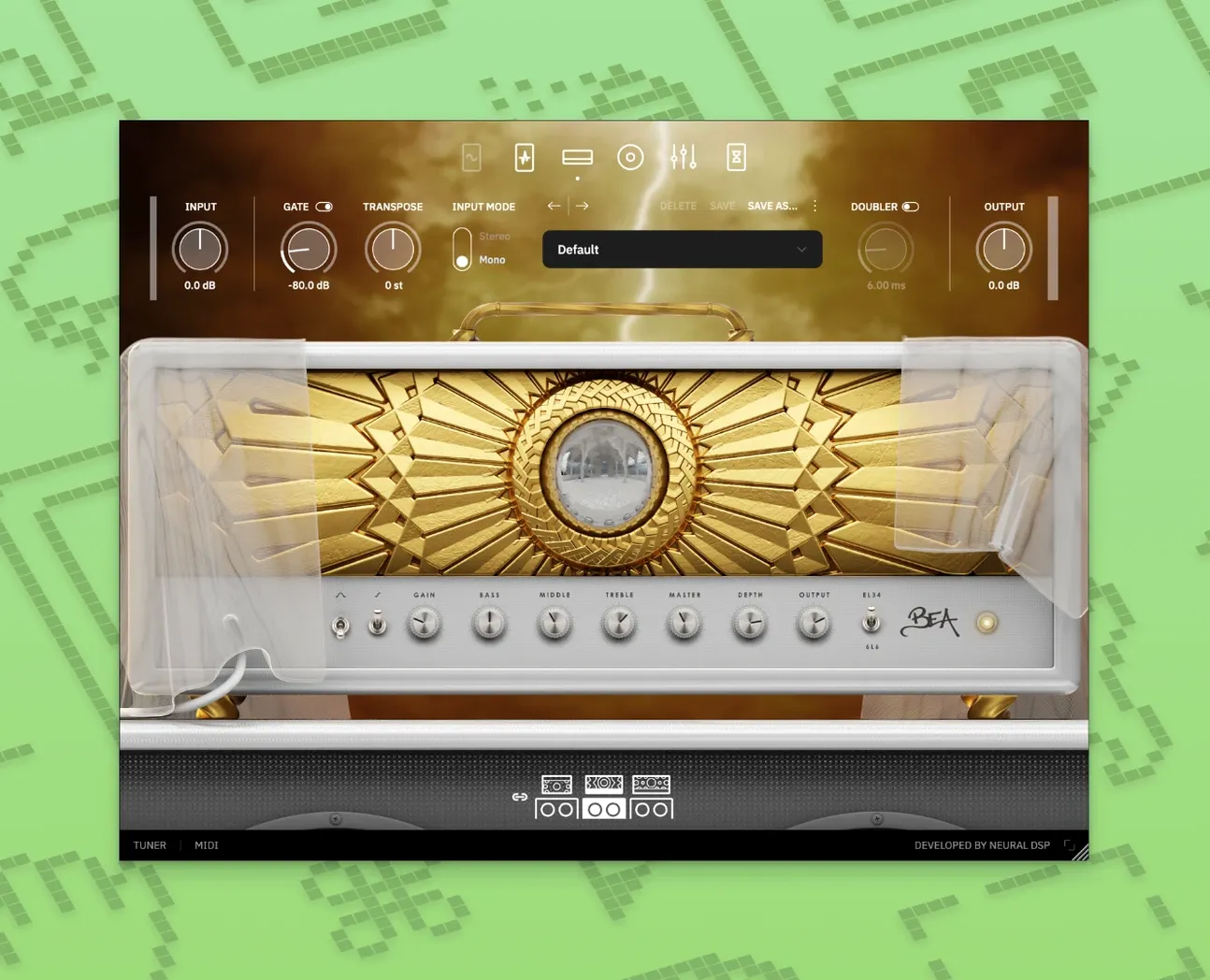
The Overlord monosynth sits inside a guitar plugin, which sounds odd until you realize Rabea Massaad lives in both worlds. Archetype Rabea X pairs three amp models with that dual-oscillator synth, and it runs on both Apple Silicon and Intel Macs in 64-bit form. Formats cover VST2, VST3, AU, AAX, and standalone, so most Mac DAWs will see it without extra wrappers.
Guitarists get amp tones and synth pads in one instance
- Guitarists who want amp tones and synth pads in one instance.
- Tracking in Logic, Ableton, or Pro Tools — AU and AAX are native.
- Playing live with the standalone version, no host required.
Overlord's dual-oscillator routing takes a minute to learn
- Overlord can trigger two oscillators at once per the manual — routing takes a minute to learn.
- It is part of the Archetype series, so the UI and preset system follow that family.
- Requires macOS 10.15 or later; no 32-bit support.
A session with Archetype Rabea X
Say you are tracking a demo on a Tuesday night. The riff needs a heavy low end, but the bridge wants something that cuts — a synth layer underneath, not another guitar track. You load Archetype Rabea X as a VST3 in your DAW. One instance. The amp gives you the distorted body; the Overlord monosynth adds a sub-octave drone that follows the root notes. No second plugin, no routing between two windows. You play through the section twice, adjust the synth mix, and move on.
That is the practical version of what Rabea X is built for. A recording musician who layers amp tones with synth lines gets the most out of it — especially if they write riffs first and arrange later. Live players who use the standalone mode also benefit: one laptop, one interface, no DAW overhead. For a metal or progressive guitarist who records at home, this plugin replaces two separate tools that often fight for CPU.
Treating the synth as a preset box and skipping the oscillator section
New users often treat the synth as a preset box and skip the oscillator section. Overlord can blend two oscillators with independent tuning. A beginner loads a patch, hears a weak tone, and assumes the synth is thin. The fix is simple: open the synth panel and adjust the mix or octave of the second oscillator. The manual mentions two oscillators can trigger at once — that is where the thickness lives.
Another common stumble: running the plugin on an Intel Mac without checking the audio buffer. At default buffer sizes, the synth can feel sluggish under the amp sim load. Bumping the buffer up by one step in the DAW usually clears it. This is not a performance issue, just a standard adjustment for any plugin that runs amp models and a synth together.
Some users also forget that Overlord is monophonic. Playing full chords into it produces a muddy mess. It tracks the lowest or highest note depending on the setting. Knowing that upfront saves five minutes of confusion.
Opening a DI track and dialing the first amp model in standalone mode
You open a project that already has a DI guitar track recorded. You create a new track, load Archetype Rabea X in standalone mode first — no DAW, just the plugin window. You dial in the first amp model with moderate gain. The tone is clear but not scooped. You switch to the second amp for the verse: tighter low end, less compression. You leave the synth off for now.
For the chorus, you want a rising pad underneath. You open Overlord, set oscillator one to a saw wave an octave below, oscillator two to a square wave at the same pitch. The attack is slow, the release long. You play a single-note line on the guitar and hear the synth swell behind it. You record a pass. It sits well under the amp tone without overpowering it.
Back in the DAW, you replace the standalone instance with the VST3 version and route the MIDI from a keyboard controller to the synth section. The amp still tracks the guitar input, the synth follows the keyboard. Two parts from one instance. You export the rough mix, and it already sounds closer to the demo than your last attempt with separate plugins.
- Version 1.0.1 — current release.
- macOS 10.15 or later
- Apple Silicon or Intel
- 64-bit host or standalone
Install procedure
- Mount the downloaded disk image.
- Run the standard installer and follow the prompts.
Reports from players
Sign in or create a tester account to file a report.
No reports filed yet.