Devious Machines Infiltrator 2.5.26 — Mac build
VST Plugins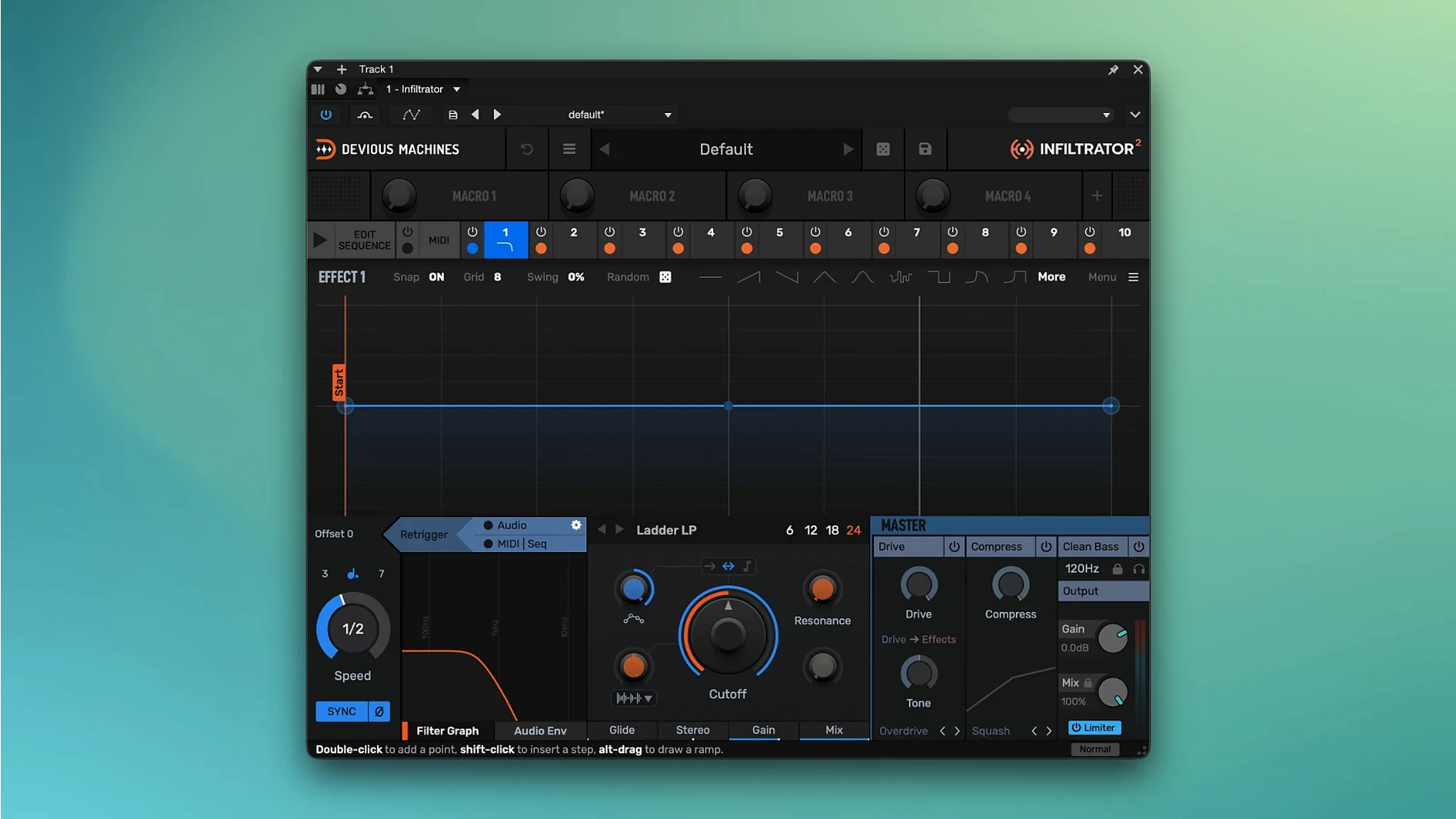
Infiltrator 2 doubles the number of effects, presets, and modulation parameters from the original. It’s a multi-effect processor for stacking, sequencing, and modulating effects.
Controls and what they do
Effect slots — each slot holds one effect from the library. Stack them in any order.
Sequence editor — a step sequencer that turns effects on and off over time. Draw patterns to change the sound rhythmically.
Modulation matrix — assign LFOs, envelopes, or step sequencers to any effect parameter. Multiple modulation sources can target the same destination.
Macro knobs — map several parameters to one control for quick tweaks. Useful for performance or automation.
Output limiter (added in version 2.5) — prevents clipping when layering effects. Sits at the end of the signal chain.
Beat divisions (version 2.5) — custom tempo-based divisions for time-synced effects. Works with the host tempo.
How Infiltrator 2 compares with similar Mac plugins
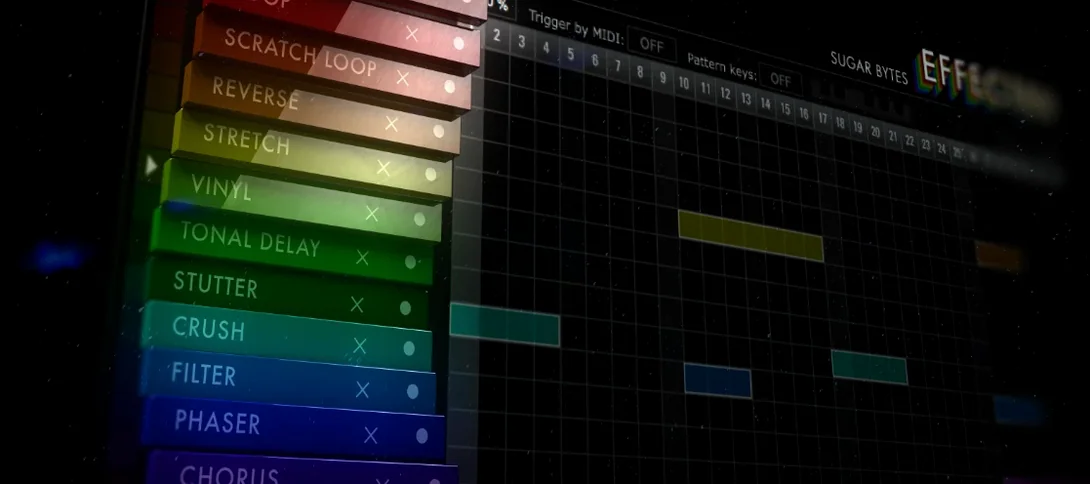
On macOS, multi-effect processors usually fall into two camps: modular patching systems and all-in-one effect units. Infiltrator 2 sits between them. Compared with Effectrix from Sugar Bytes, Infiltrator is less about rhythmic gating and more about continuous modulation. Effectrix excels at stutter, slicer, and glitch effects but its modulation is mostly tied to a single sequencer lane. Infiltrator’s modulation matrix lets multiple LFOs and envelopes target different effect parameters at the same time, which gives it a broader sound-design range.
TR5 from IK Multimedia offers a different trade-off. It covers amp, reverb, delay, and filter modules in one shell but each module is fixed—you can’t reorder them or swap them freely. Infiltrator lets you arrange ten effects in any chain order, insert beat-synced step sequences, and assign custom modulators per slot. For users who want to build a unique signal path per project, Infiltrator is more flexible.
Output from Output is a multi-effect instrument focused on cinematic textures. It works as a standalone instrument rather than a channel insert, so it doesn’t integrate into a standard send/return workflow as directly. Infiltrator loads as a standard AU, VST3, or AAX plugin and can sit on any track or bus in Logic Pro, Ableton Live, or Pro Tools, which makes it a more predictable tool for mixing engineers who want to process external audio without leaving their session.
Works as a standard AU plugin inside any compatible DAW
Infiltrator 2.5.26 registers as a standard AU plugin on macOS, so it works inside any DAW that supports Audio Units—Logic Pro, GarageBand, Digital Performer, Cubase, and others. The VST3 version covers Studio One, Bitwig, Reaper, and FL Studio on Apple Silicon or Intel Macs. On macOS, the plugin appears in the standard plugin browser of each host without extra configuration. The installer places the bundles in the correct system folders, and the included activation instructions walk through the license step.
On a Mac running Mac OS X 10.11 or later, Infiltrator also works with system-level MIDI and audio routing. You can feed it audio from hardware inputs via the DAW’s internal patching, or route its output to other tracks for further processing. The plugin respects the host’s tempo for beat-synced effects, so it stays in sync without manual tap-tempo entry. The output limiter (v2.5) adds protection at the end of the chain, which is useful when chaining multiple effects that might push levels.
A workflow for transforming a single drum loop
- Load the plugin — Insert Infiltrator 2 on a drum loop track in your DAW. Start with the default preset.
- Set up three effect slots — Place a band-pass filter in slot 1, a bitcrusher in slot 2, and a reverb in slot 3.
- Program the sequence editor — Draw a 16-step pattern that mutes slot 1 on steps 5–8 and slot 2 on steps 9–12. The filter sweeps in and out while the bitcrusher appears later.
- Assign an envelope follower to the bitcrusher’s rate parameter so it follows the loop’s transients.
- Adjust beat divisions — Set the sequence editor to 1/16th note divisions. The pattern will lock to the host tempo automatically.
- Tweak the macro knobs — Map the filter cutoff and reverb decay to one macro knob. During playback, move it to transition between a tight, dry sound and a washed-out texture.
- Check the output limiter — Enable the limiter, set the ceiling to –1 dB. The loop’s peaks stay controlled even when all three effects are active.
- Record automation — Automate the macro knob or individual effect parameters in the DAW’s automation lane to create a longer arrangement from the same loop.
This workflow uses about half of Infiltrator’s ten slots. Adding more effects—distortion, delay, chorus—would push the sound further without changing the basic approach.
Sound designers turn a single pad into a moving, evolving sound
Sound designers working on sample libraries, soundtracks, or ambient textures benefit from the modulation matrix and step sequencer. They can turn a single pad or texture into a moving, evolving sound without bouncing audio between plugins.
Electronic music producers who rely on tempo-synced effects will use the beat divisions and sequence editor to create rhythmic filter patterns, gated reverb tails, or stuttering effects that stay locked to the grid.
Mix engineers who need occasional creative processing—a filter sweep on a bridge, a bitcrushed breakdown—can insert Infiltrator on auxiliary tracks and automate it in and out. The macro knobs let them map several parameters to a single fader or knob on a MIDI controller, which speeds up recall during a session.
Live performers using a Mac on stage can pre-configure a set of macro knobs for each song and switch between presets.
Post-production editors in video or game audio can use Infiltrator to apply evolving effects to dialogue or ambience, then bounce the result as a print track. The output limiter ensures the processed audio doesn’t clip the mix bus.
- Added output limiter
- Added custom beat divisions for tempo-based effects
- Current build: version 2.5.26
- macOS 10.11 or later
- Apple Silicon or Intel processor
- Interface language: English
Install procedure
- Follow the included installation instructions.
- Follow the included activation instructions.
Reports from players
Sign in or create a tester account to file a report.
No reports filed yet.