Voxity is aimed at producers who want a single plugin to get vocals sitting right in a mix without chaining half a dozen processors. It is a vocal-processing plugin from Cymatics, and the current version is 1.0.0. It runs on macOS 10.14 and later, both Intel and Apple Silicon, as a 64-bit plugin. The interface is in English.
What formats and hosts does it support?
Voxity installs as a standard plugin and works in any host that supports the common Mac plugin formats. It is a VST plugin, so it will load in most DAWs on Mac, including Logic, Ableton Live, and Cubase.
What does it actually do to the vocal?
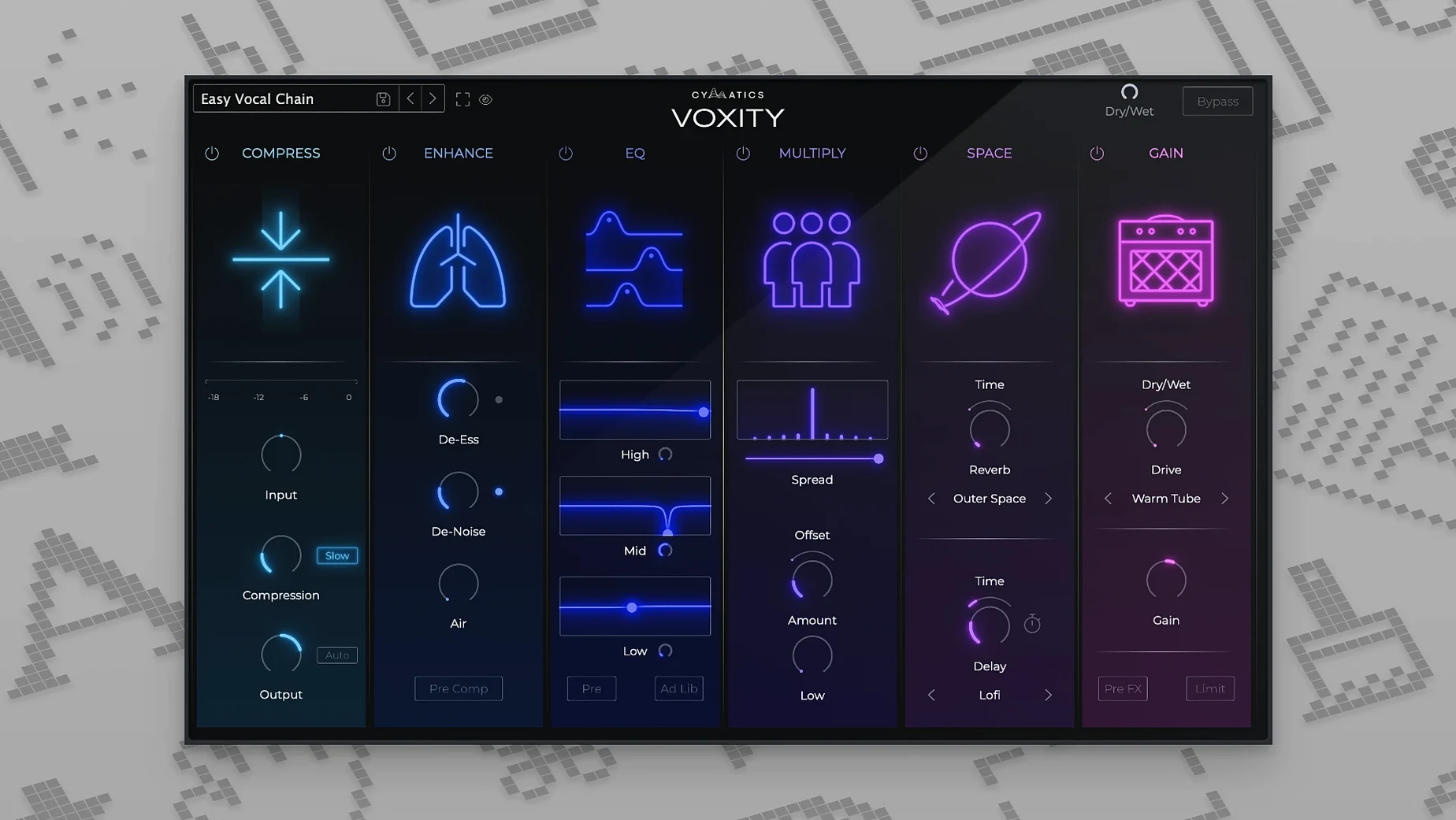
The plugin handles the usual cleanup tasks: it reduces harsh frequencies and breathing noise, and it includes volume leveling to even out the performance. It also widens the stereo image and adds echo and reverb, so you can shape the space around the vocal without extra plugins.
How fast is it to set up?
The official product page says it is built to provide studio-ready vocals quickly. In practice, the controls are laid out so you can go from raw track to a polished sound in a few minutes, adjusting the amount of processing to taste.
Leveling a vocal and reducing breath noise
You load a vocal take into your DAW, a verse-and-chorus recording you just tracked. The performance is fine, but the level jumps between phrases, and there is a bit of breath noise before the first word of each line. You drop Voxity on the track's first insert slot. The plugin opens with a default preset—something neutral, probably labeled "Clean" or "Natural." You click play.
First thing you do is engage the volume leveling section. You want the verse whispers and the chorus belt to sit closer together without touching the clip gain. You turn the leveling knob up until you see the loudest parts pull back and the quiet phrases come forward. It takes about two passes through the chorus to find the right amount. Then you hit the breath control. The default reduction catches most of the audible inhales on the verse lines. You nudge it up a little more because the vocalist had a cold and the intakes were loud.
Next, you scroll through the built-in presets. It also introduces some width. The vocal widens in the stereo image and takes up more space in the mix without sounding hollow. You keep this preset as a starting point and fine-tune the reverb send that came with it, lowering the mix so the tail does not smear the consonants.
By the third pass, you are done. You bypass the plugin to hear the dry signal, then unbypass. The difference is clear: the raw track had fickle dynamics and room noise; the processed one sits consistently loud and clean. You bounce a rough mix and send it to the client.
De-essing a phone voice memo without a dedicated plugin
You get a voice memo recorded on a phone. The sibilance on every "s" and "t" is piercing, and there is constant breath rumble between phrases. You have no dedicated de-esser or noise gate handy. Here is how you handle it with Voxity alone.
- Insert Voxity on the vocal track. Set the preset to "Default" or bypass any style preset so you start flat.
- Listen to the loudest "s" in the chorus. Go to the harsh-reduction control. Turn it up until the sibilance drops to a level that does not hurt the ears. The plugin is designed to reduce harsh frequencies, so this is the correct section for that job. Back it off by a hair so the vocal does not sound dull.
- Go to the breathing-noise reduction. Increase it until the breath sounds between phrases are barely audible. You do not want to silence them completely—that would sound unnatural—but you want them quiet enough that they do not distract.
- Use the volume leveling to smooth out the verse-to-chorus jump. The phone recording probably had uneven levels. Turn up the leveling until the loudest and softest parts feel closer.
- Add a small amount of brightness to restore the top end that the harsh reduction may have pulled down. The plugin includes controls for brightness and depth.
- Toggle the plugin on and off to check. The vocal should sound clean, with no piercing "s" sounds and no audible breath noise stealing the quiet moments.
It runs on macOS 10.14+, Intel and Apple Silicon
Voxity runs on macOS 10.14 and later. It works on Intel (x86) and Apple Silicon (ARM) machines in 64-bit mode. The plugin loads as a VST inside your DAW. You will not need a separate installer for each architecture—the disk image contains a single standard installation that handles both. The plugin itself is a one-window interface in English. It does not require additional library files or an iLok. The activation is handled by the K'ed release, so you install it and it works without an online check.
The plugin's processing is designed to be fast enough for real-time monitoring, but the actual CPU usage will depend on your session size and buffer setting. That alone reduces the plugin count per track, which helps on older machines.
If you are on an Intel Mac from 2015 or later, the plugin will run fine under Mojave or newer. On Apple Silicon, it runs natively—no Rosetta translation needed. The install steps are straightforward: mount the disk image and run the installer.
A podcast editor tackles plosives and room rumble at home
A podcast editor who also records solo segments. The editor records at home in a room with no acoustic treatment. The raw audio has plosives, room rumble, and inconsistent volume because the editor moves away from the mic when gesturing. The editor opens the session in their DAW, applies Voxity to each voice track, and uses the volume leveling to bring the quiet sections up. The breath reduction handles the mouth clicks between sentences. The harsh reduction tames the sibilance that the condenser mic picks up. The editor saves the adjusted preset for the next episode. The entire vocal chain is now one plugin per track instead of three or four. The episode sounds consistent across segments recorded on different days.
Why maxing out breath reduction chokes your vocal
One common mistake is overusing the breath reduction. The control can pull out all air between words, but if you turn it too high, the vocal sounds choked and unnatural. Beginners often max it out because they hate hearing any breath, then wonder why the vocal sounds tight and small. The right amount is where the breaths are still present but quiet.
Another is ignoring the volume leveling and instead reaching for a compressor after Voxity. The leveling in the plugin is designed for vocal dynamics. If you add an external compressor on top without first figuring out what the leveling already did, you risk overcompressing the track. Let the leveling do its job first, then audition whether you need anything else.
Some users load the plugin and expect instant results without scrolling through presets. The presets are there for different styles—pop, lo-fi, cinematic, and others. Starting from "Default" and then hunting for the right sound manually is fine, but the presets give you a quick reference for the kind of vocal you are aiming at. Beginners sometimes skip that step entirely.
Finally, not checking the mix in context. Beginners solo the vocal track, dial in a big reverb and wide stereo effect inside Voxity, and then listen in the full mix only to find the vocal is too wet and pushes everything else back. It is better to adjust the reverb and width while the rest of the instruments are playing, so the vocal sits in the mix rather than on top of it.
- macOS 10.14 or later
- 64-bit
- Intel or Apple Silicon
- Interface: English
Questions from the notes
Does Voxity work on Apple Silicon Macs?
Yes, it supports both Intel and Apple Silicon Macs, running as a 64-bit plugin on macOS 10.14 or later.
What does the volume leveling do?
It evens out the loudness of the vocal performance, reducing the need for manual compression or automation.
Install procedure
- Open the downloaded disk image.
- Run the standard installation.
Reports from players
Sign in or create a tester account to file a report.
No reports filed yet.