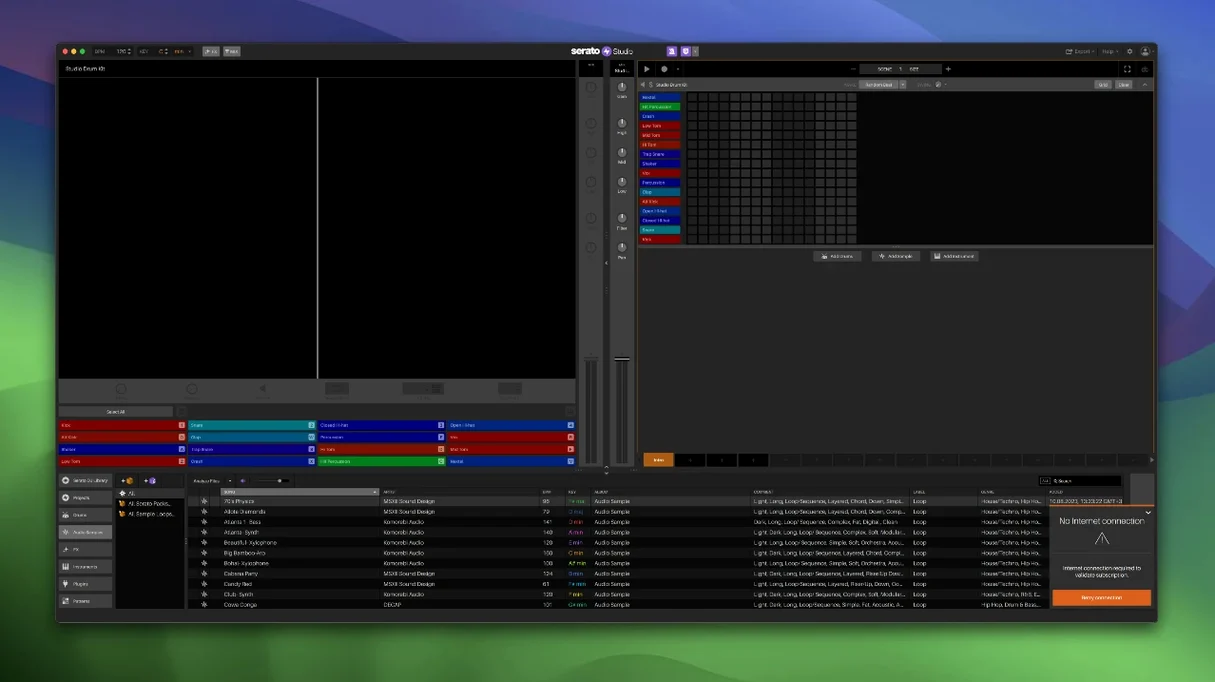
Serato Studio is a music production app from the team behind the Serato DJ software. If you already use Serato for DJing, this is their take on beat-making, built around a fast workflow and production tools.
Does it work for making beats quickly?
Yes. The software includes built-in drum kits, instruments, loops, and samples. You get an Auto Chord mode for quick harmony, and a Feel control that makes programmed parts sound less rigid — closer to a live keyboard player.
What about exporting stems?
Stem export is supported. Individual stem levels can be automated in Sample Decks within Scene View, and you can toggle Stems On/Off per scene.
What hardware and setup does it need?
Serato Studio 2.5.0 runs on macOS 10.14 and up, on both Intel and Apple Silicon Macs. The interface is English only. Installation is a two-step process: run the main installer package, then apply the patch installer.
Reverse the pad order to match your hardware
A few preferences make a real difference once you start working. The setup screen has a Reverse Pad Order option — if you come from a hardware controller or another DAW where pads run top-left to bottom-right, switching this saves a lot of re-learning. The default can feel backwards if you are used to most drum machines.
Auto Chord mode is off by default. If you work with harmony often, turn it on early and set the project key. It generates chords that stay in key, so you can focus on rhythm and arrangement instead of checking intervals. The Feel control is worth adjusting per project, not just leaving at the default. It adds slight timing variations — more useful than you might think for making a four-on-the-floor loop sound less robotic.
Build a track from a vinyl rip in Sample Decks
Consider someone who builds tracks from vinyl rips and old funk breaks. They open Serato Studio and load a short drum loop into a Sample Deck. The color-coded waveform shows the transient clearly. They slice it manually, map the hits across the pads, and start laying down a new kick pattern on top using a built-in drum kit.
They pull in a bass sample from the library, trigger Auto Chord to find a complementary harmony, and use the Feel control to loosen the timing on the hi-hats. The Serato DJ library integration means they can browse their existing crates without re-scanning anything. When the arrangement feels close to done, they export individual stems — acapella, melody, bassline, drums — to mix in a separate DAW later. That workflow takes a few minutes, not hours, because the tools are right there.
Start a scene, sync BPM, and layer drum loops
Start by opening the library and creating a new scene. Drag a drum loop from your Serato crates onto a Sample Deck. The BPM syncs automatically, so you do not need to match tempos manually. Add a second Sample Deck with a melodic sample — the waveform helps you find a good loop point by sight.
Switch to Scene View. Here you can arrange the two decks across bars, turn Stems On/Off per scene, and adjust individual stem levels for each sample. If the bassline in the melodic sample is too loud, pull it down directly in the Sample Deck mixer, not in a separate plugin window. Automation lanes let you fade stems in and out over time.
Move to the keyboard section. Activate Auto Chord, pick a progression, and record it over the loop. The Feel control adds slight groove to the chords. Tweak the drum pattern by swapping individual hits from the built-in drum kits. Listen back, adjust levels in the mixer channel, and export the stems when the arrangement feels balanced.
Don’t ignore your Serato DJ crate integration
The most common one is ignoring the Serato library integration. If you already have Serato DJ with organized crates and ratings, you can use Track Rating and Favorite Crates directly in Studio. Importing audio files from elsewhere every time wastes that structure.
Another mistake is treating Sample Decks like simple audio players. Each deck can have its own stem level automation and on/off triggers in Scene View. Beginners drop a loop and leave it playing unchanged for the whole track. Using stem automation to drop the bassline out for a bar or two adds movement without extra editing.
People also forget the Reverse Pad Order setting until they are deep into a project. Changing it mid-session reassigns pad mappings, which can break muscle memory if you have already built patterns around the default layout. Set it once at the start.
Finally, newcomers often ignore the Feel control because they think quantized timing sounds clean enough. For certain genres — lo-fi, hip-hop, house with swing — a little Feel goes a long way toward making programmed beats sound played, not painted in by grid lines.
- macOS 10.14 or later
- Intel or Apple Silicon processor
Install procedure
- Open the downloaded disk image.
- Run the standard installer package named
Serato Studio 2.5.0 Without Core Pack.pkg. - Run the patch installer named
Serato Studio 2.5.0 patch.
Reports from players
Sign in or create a tester account to file a report.
No reports filed yet.