Version 4.6.0 of Audio Hijack, released August 27, 2026, adds support for macOS 27 (Golden Gate). The built-in Transcribe block now includes a Recommended transcription model, and the Whisper.cpp backend was updated from 1.7.4 to 1.9.2.
Setting up a recording session
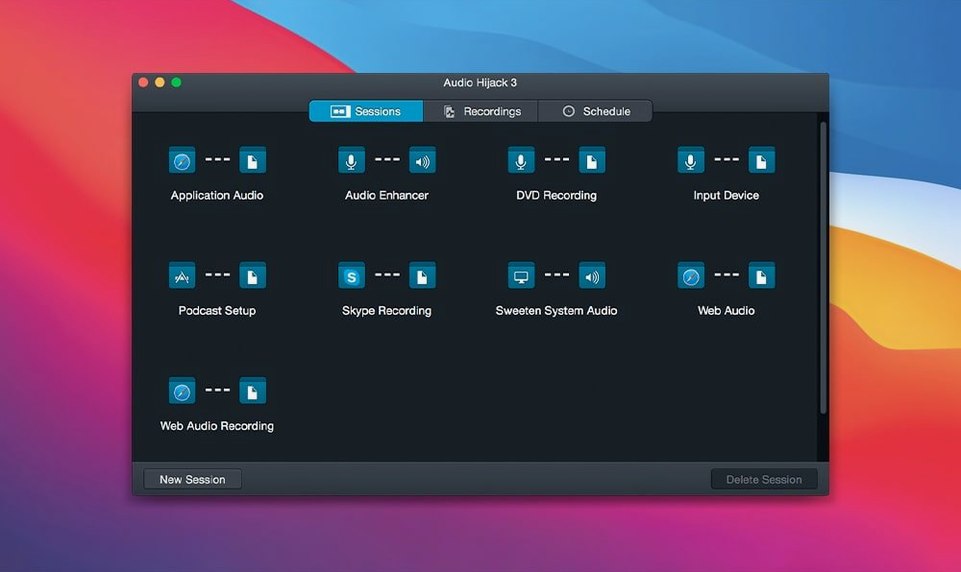
- Pick a template or start from scratch. Templates cover common setups like digitizing analog tapes or recording VoIP calls.
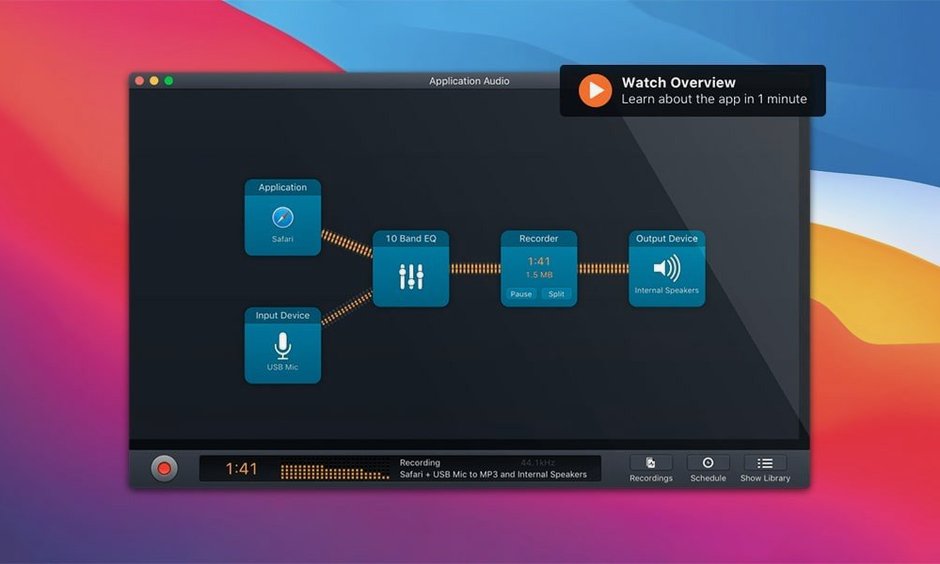
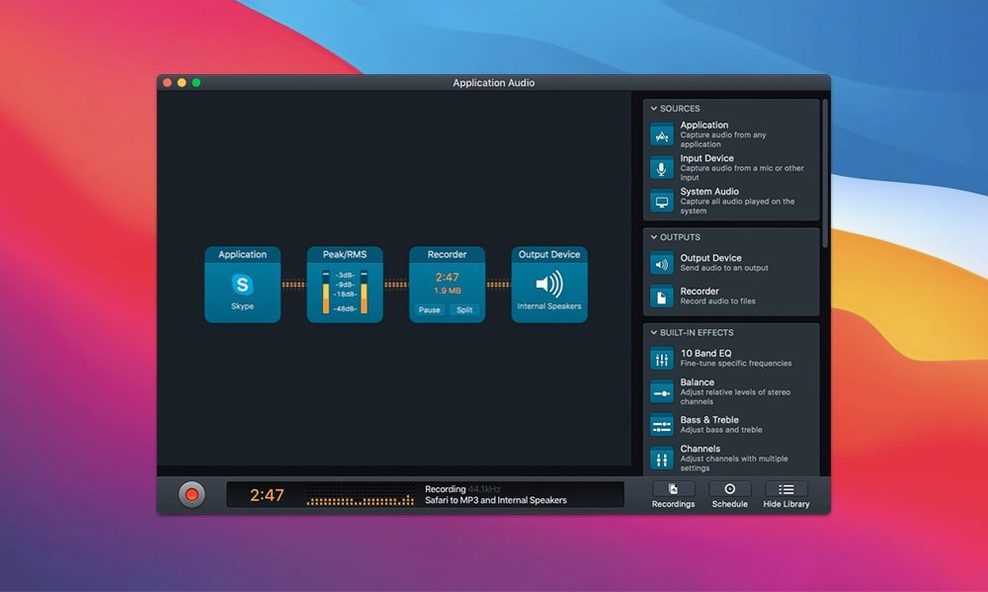
- Choose your audio source — an application, a DVD player, an internet stream, a microphone, or an analog input.
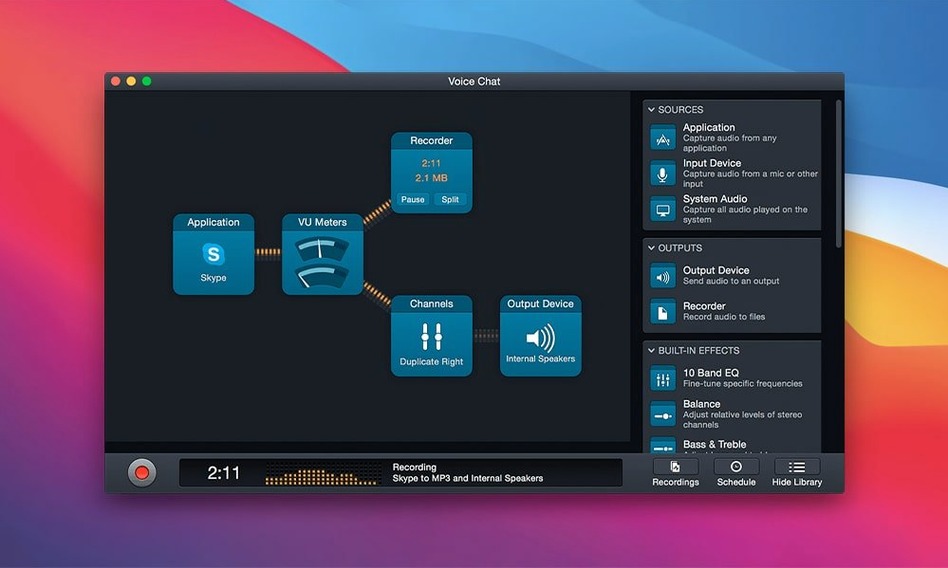
- Route multiple sound sources into one session if needed.
- Hit record. Post-processing tools let you trim, normalize, or apply effects without leaving the app.
Audio Hijack records from any audio source on your Mac and includes built-in tools for cleaning up the output. Whether you’re digitizing old records or capturing a streaming show, the workflow stays the same: pick a source, configure, record.
Workflow: digitizing a vinyl record from start to finish
Connect your turntable’s output to your Mac’s line-in or USB audio interface. Open Audio Hijack and select the template labeled “Digitize Analog Tapes & Records.” This pre-loads the block-based interface with the common chain: input source, optional noise filters, and an output block set to FLAC. Check that the input block points to your interface’s line-in channel, not the built-in microphone. Start playback on the turntable, watch the meters in Audio Hijack to confirm signal is present, then press record. When the side ends, stop the recording. Use the trim block to cut the silent lead-in and lead-out, then apply the Denoise filter if the original pressing has surface noise. Export as FLAC.
Fix a missing signal by cycling input sources
- No signal showing in the meters: The input source is likely set to the wrong channel. Open the input block and cycle through available sources until you see activity. If you’re using an external interface, make sure macOS sees it in System Preferences > Sound.
- Audio crackles or drops out: This usually means the buffer size is too small. Raise it in Audio Hijack’s preferences if the option is available, or switch to a higher-latency setting in your interface’s control panel.
- Recorded file is silent: The source might be muted in macOS volume mixer. Check that the application or input you’re recording from has its volume up and is not routed to a different output.
- Transcription comes back inaccurate: The old Whisper.cpp model may not match your audio’s language or quality. In the Transcribe block, switch the model to the new Recommended model added in 4.6.0.
- Gatekeeper blocks the install: Mount the disk image, run Open Gatekeeper friendly, then press Enter in Terminal to bypass. Drag the app to Applications and open it.
Runs on macOS 14.4 through 27 and records from apps to FLAC
Audio Hijack 4.6.0 runs on macOS 14.4 through macOS 27 Golden Gate, on both ARM and x86 64-bit hardware. The app records from applications, DVD players, internet streams, VoIP services, microphones, and analog sources. It supports FLAC output and includes Denoise, Declick, and Dehum filters. The Transcribe block now offers a Recommended model on top of the updated Whisper.cpp 1.9.2 backend. No other macOS minimums, version numbers, or hardware requirements are specified. The interface is English-only.
Avoid recording from a microphone when you mean to capture a web stream
- Recording from a microphone when the intended source is a web stream. Check the input block before starting.
- Forgetting to apply noise filters before export. Apply Denoise or Declick in the block chain while the recording is still open — you cannot add them later to the flattened file.
- Using the default template without adjusting source routing. If you need multiple sound sources in one session, add them in the block interface manually; the templates cover only single-source setups.
- Exporting to a compressed format and losing quality. FLAC is lossless and supported natively, so use it for archiving.
- Assuming the Transcribe block works out of the box. It requires an internet connection for downloading models on first use, and the Recommended model may need a few seconds to load.
Capture a FaceTime interview with the Record VoIP Calls template
You want to record a friend’s interview over FaceTime. Open Audio Hijack and pick the “Record VoIP Calls” template. The block interface appears with an input block pre-set to capture FaceTime audio. You add a second input block for your own microphone — the template does not include it. Route both blocks into a single track so the conversation stays in sync. Start the FaceTime call, then press record. Halfway through, your friend’s audio drops out. You pause the recording, switch the input block to “System Audio” to catch the stream from FaceTime’s output, then resume. After the call, you trim the silent gap at the start, apply the Dehum filter to remove a low-frequency hum from the room, and export the final file as FLAC. The session takes about ten minutes of setup and cleanup for a forty-minute call. You close Audio Hijack without saving the session — the raw blocks are disposable once the export is done.
- Adds support for macOS 27 (Golden Gate).
- Updates the built-in Transcribe block with a Recommended transcription model.
- Updates the Whisper.cpp backend from 1.7.4 to 1.9.2.
- macOS 14.4 or later
- Intel or Apple Silicon
Questions from the notes
Does Audio Hijack 4.6.0 work on macOS 27?
Yes, version 4.6.0 adds official support for macOS 27 (Golden Gate).
Can I record from multiple applications at once?
Yes, Audio Hijack supports multiple sound sources in a single session.
Install procedure
- Mount the disk image and run Open Gatekeeper friendly.
- Press Enter in Terminal to bypass Gatekeeper.
- Drag the app to the Applications folder.
- Open the app when installation is complete.
Reports from players
Sign in or create a tester account to file a report.
No reports filed yet.