
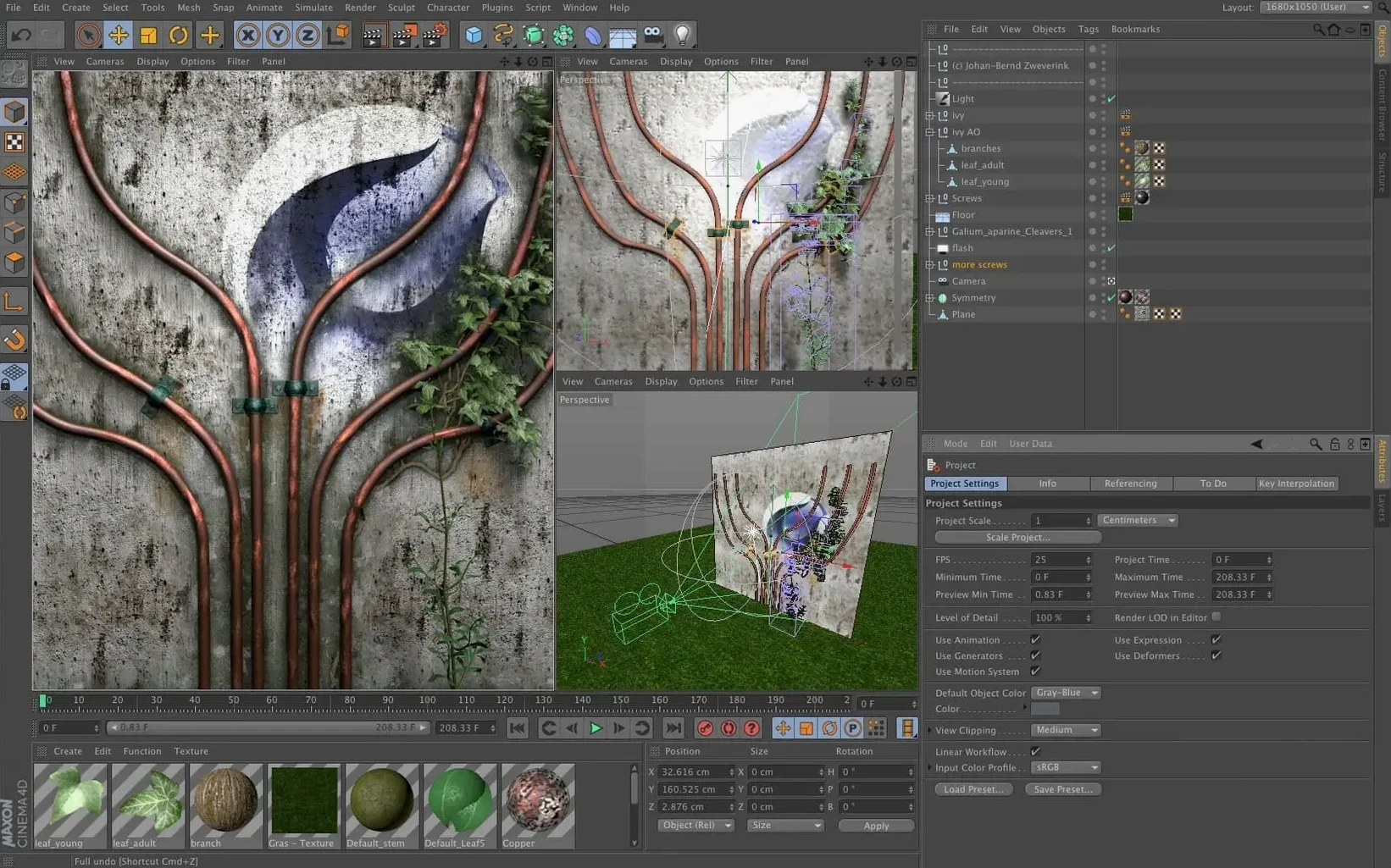
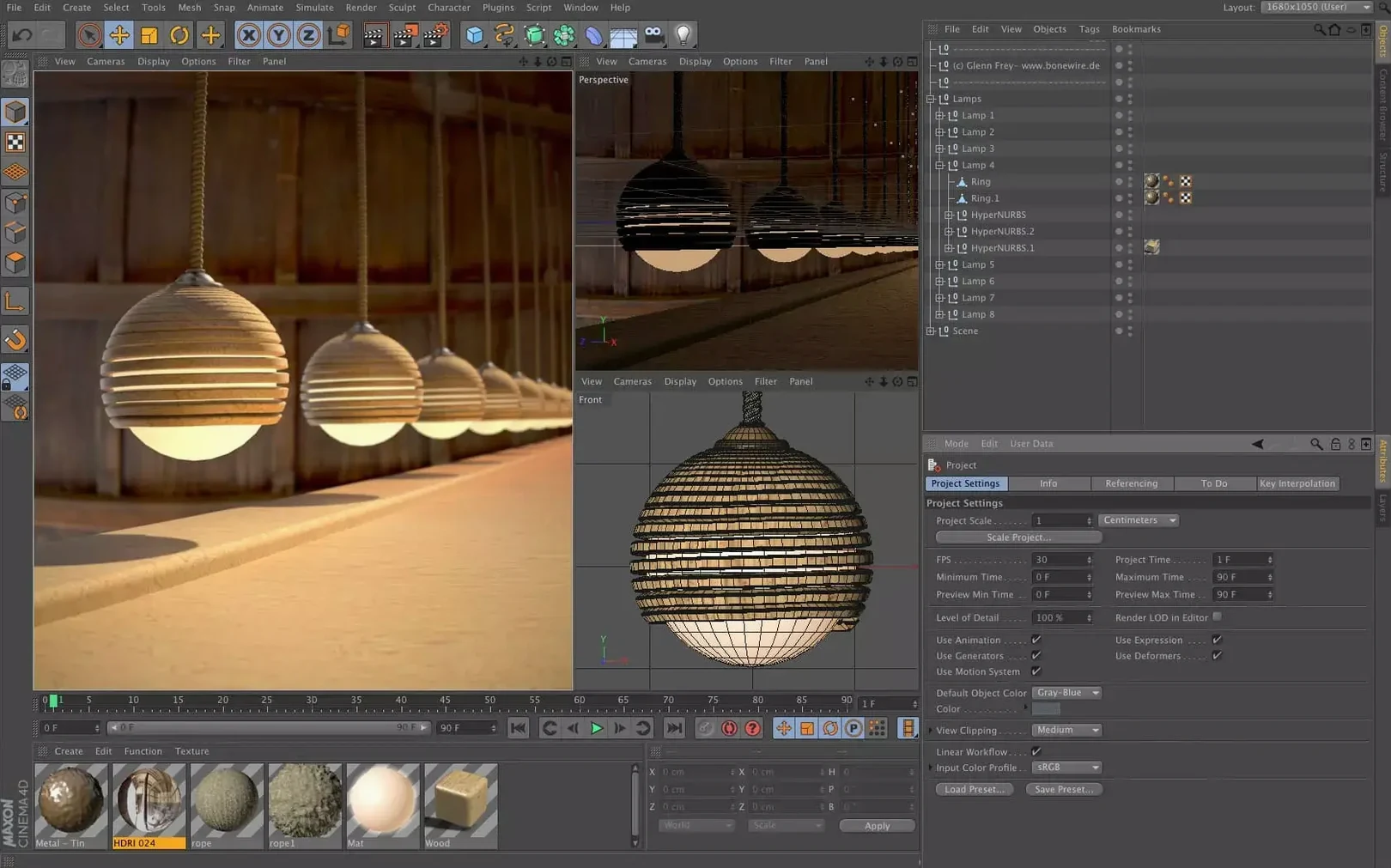
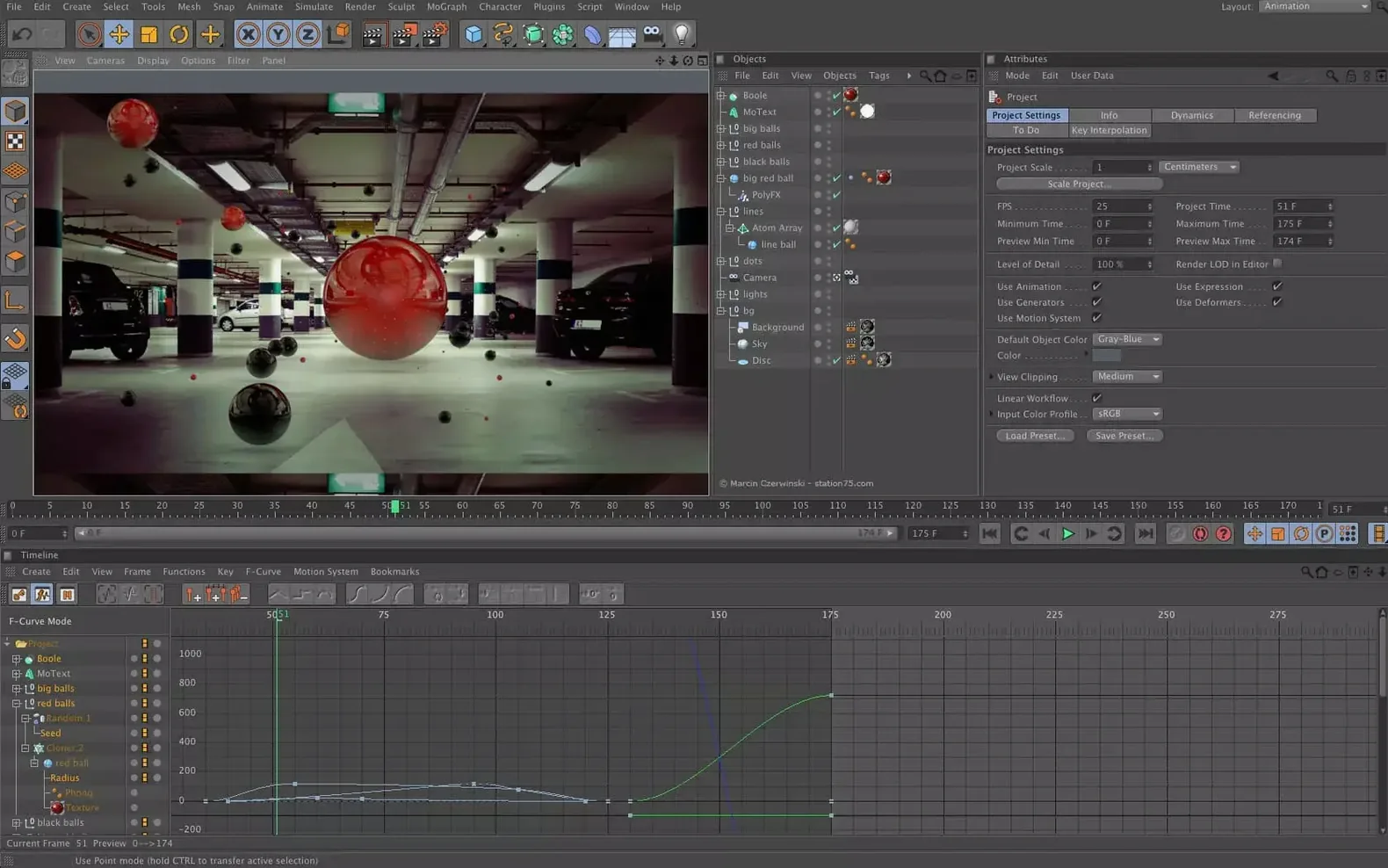
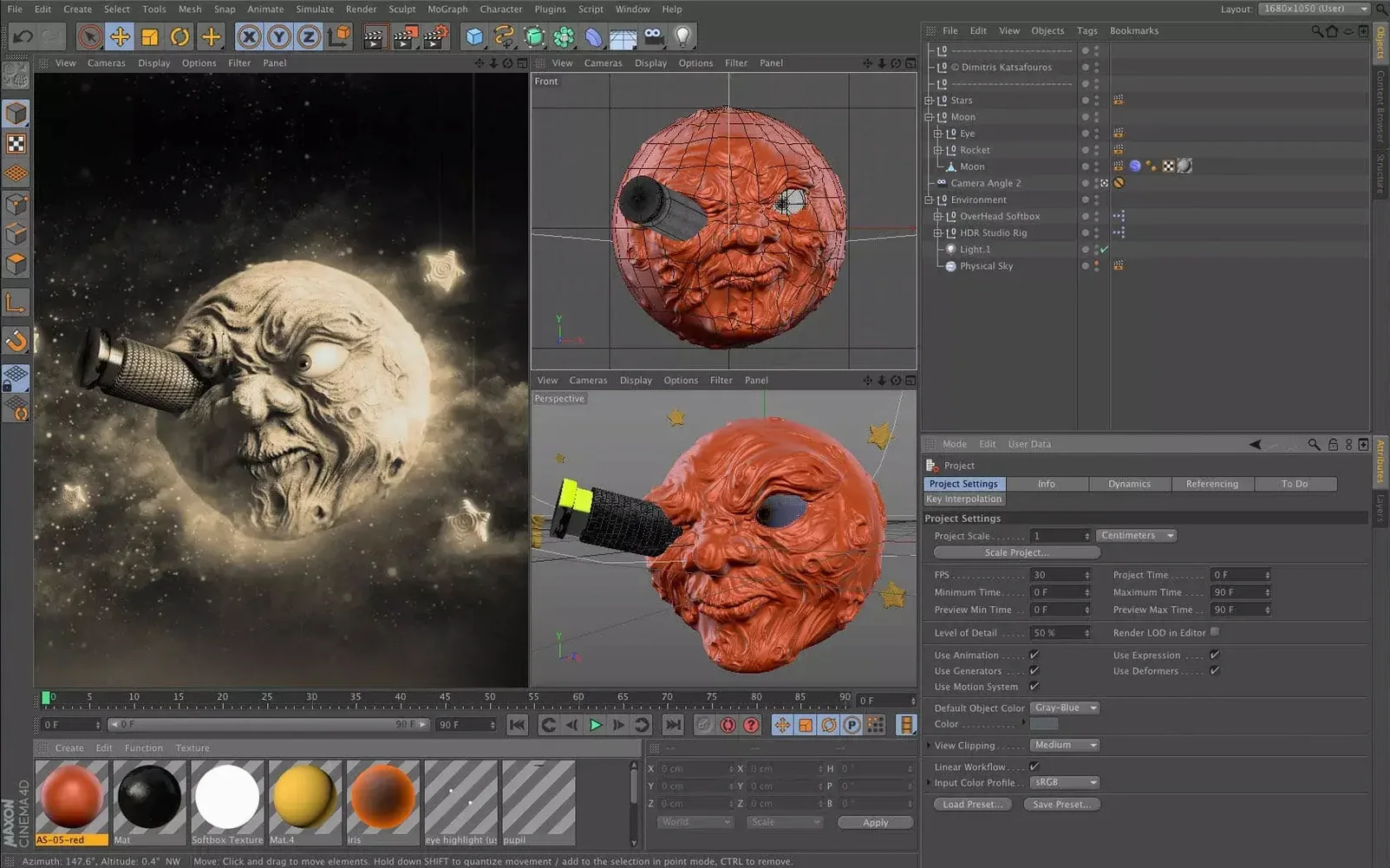
Cinema 4D 2024.2 runs on any Mac with macOS 11 or later, and it works on both Intel and Apple Silicon. That covers most Macs from the last several years, so the main question is whether your machine has enough RAM and GPU for the scenes you plan to build.
Check the requirements
If your Mac meets the OS version, you're set for installation. The interface comes in eleven languages, including English, German, French, Japanese, and Simplified Chinese.
Model and animate
Modeling, animation, and simulation are the core tasks. The 2024.2 update focuses on workflow: a modern interface, updated UIs, and preset-based workflow optimization. Data import and spline work happen through scene nodes, the Scene Manager, and Capsules.
Render with Redshift
Rendering is handled by Redshift Render, listed as separately available through Monter Group. So while Cinema 4D itself runs fine on Mac, check the Redshift option separately if that's your primary renderer.
Confirm your hardware handles the default scene
Once Cinema 4D 2024.2 is installed and activated, the first day is about confirming your hardware handles the default scene. Open the application and load one of the preset templates from the start screen. If the interface responds without lag and the viewport rotates smoothly, your system is in the expected range. Spend the next hour creating a simple primitive — a cube or sphere — and applying a basic material to it. Render a single frame at preview resolution. This confirms the Redshift connection is working on your Mac without committing to a long render.
Turn on Capsules in the Object Manager preferences
Before diving into a real project, adjust a few defaults. Turn on the Capsules feature in the Object Manager preferences — this lets you access scene node system features while keeping the classic manager layout, which is useful if you are migrating from an older version. Under the interface settings, switch the UI layout to one of the updated presets if the default feels crowded. The preset-based workflow optimization in 2024.2 is designed to reduce clutter, so find a layout that puts the tools you use most on the surface. Enable data import splines through the Scene Manager if you work with vector files or CAD data regularly.
Blender covers more ground but Cinema 4D is more specialized
Cinema 4D sits alongside a few other 3D tools on Mac, each with a different focus. Blender is the obvious free alternative. It covers modeling, animation, and rendering, and its feature set is broader — it includes a built-in video editor and a game engine. But Blender's interface and workflow are more general-purpose. Cinema 4D's preset-based workflow and Capsules system are designed to speed up motion graphics and visualization tasks, which can save time if that is your primary use. Blender also lacks the same Redshift renderer integration, so if you rely on Redshift for final output, Cinema 4D is the more direct route.
Another comparable app is Maya, which targets game and film production pipelines. Maya is heavier on animation tools and has a steeper learning curve. Its Mac support has improved, but it requires a more powerful machine and a different renderer setup. Cinema 4D is more approachable for motion graphics artists who need a clean interface and quick render previews without building a full pipeline.
For motion graphics specifically, some users come from After Effects. After Effects is a compositing and 2.5D animation tool, not a full 3D modeler. Cinema 4D fills the gap when you need real 3D geometry, lighting, and physics simulation. The two apps often work together — Cinema 4D exports scenes that After Effects imports — but Cinema 4D handles the 3D work natively on Mac without relying on cloud rendering or emulation.
Cleaner panels and preset-based workflow optimization
The 2024.2 release from December 2023 is a focused update. The interface was modernized, so returning users will notice cleaner panels and reorganized menus. The preset-based workflow optimization means you spend less time arranging palettes for each new project type — the new presets load a sensible set of tools for modeling, animation, or rendering from the start. Capsules, the feature that brings scene node functionality into the classic Object Manager, removes the need to switch between two entirely different interface modes. For daily work, this means less friction when you are moving between older project files and new scene node workflows. Data import and spline tools were also improved through scene nodes, so importing reference geometry or vector paths feels faster in the interface, though actual import speed depends on your file size and hardware.
- Released 2023-12-11.
- Updated user interfaces for several tools.
- Preset-based workflow optimization.
- macOS 11 or later
- Intel or Apple Silicon
Questions from the notes
Does Cinema 4D 2024.2 run on Apple Silicon Macs?
Yes, the app supports both Intel and Apple Silicon architectures, as long as you have macOS 11 or later.
What macOS versions are supported?
Cinema 4D 2024.2 requires macOS 11 or later, which covers Big Sur and all newer versions.
Which interface languages are available?
The interface is available in English, German, Arabic, Spanish, Italian, Simplified Chinese, Korean, Polish, French, Czech, and Japanese.
Install procedure
- Open the package and run the installer.
- Follow the included installation and activation guide.
Reports from players
Sign in or create a tester account to file a report.
No reports filed yet.