
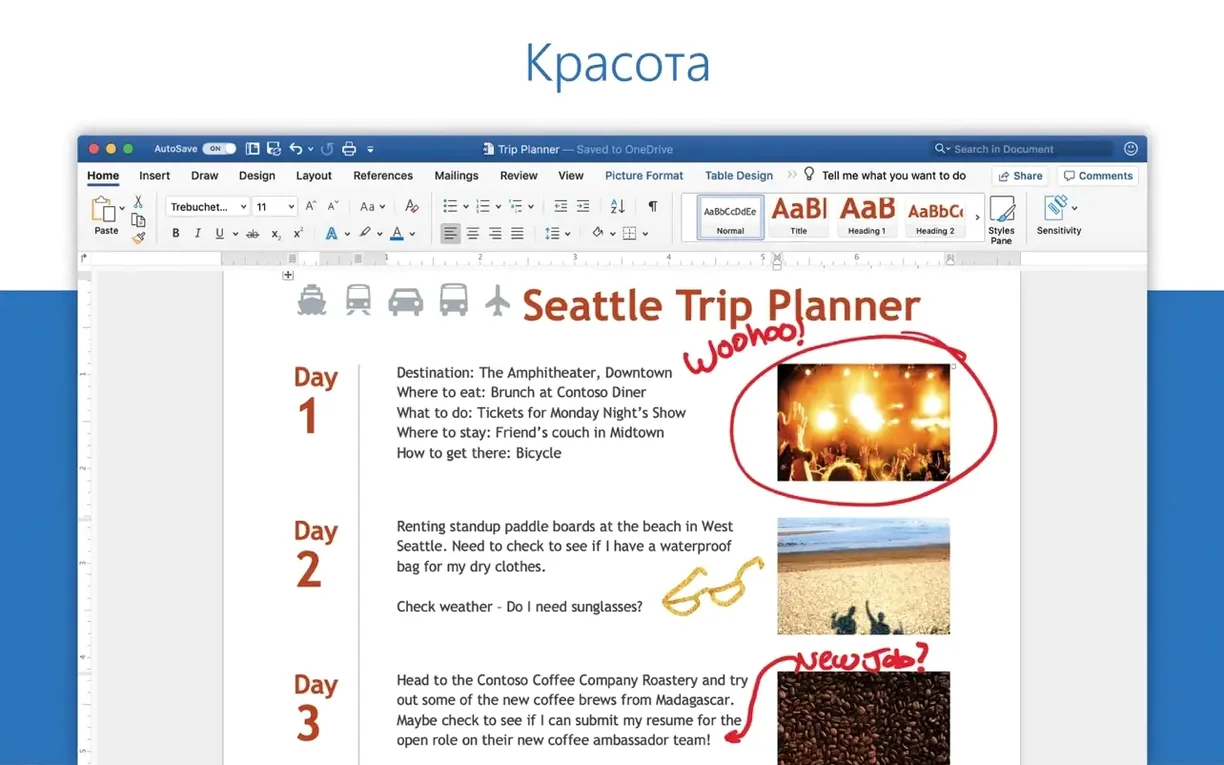
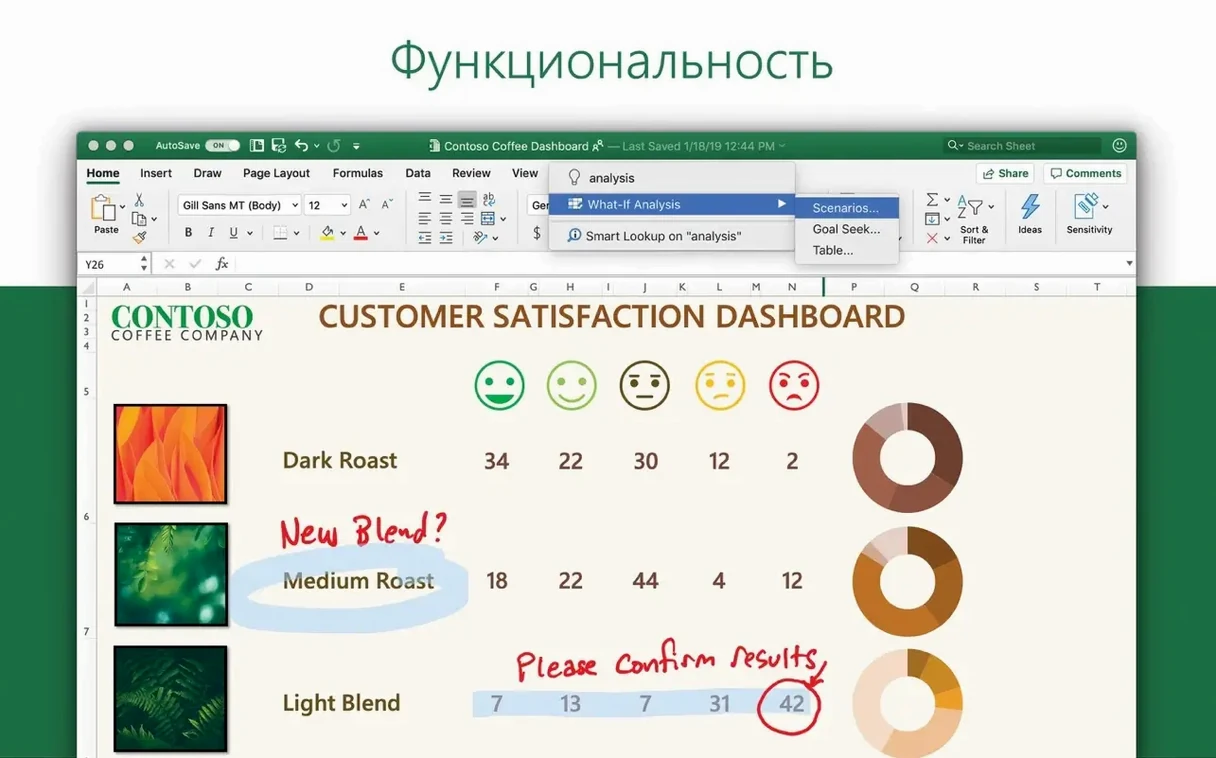

If you already work with Microsoft Office on your Mac, Excel is the spreadsheet component that handles creating, viewing, editing, and sharing workbook files. The current version 16.93 runs on macOS 13 and supports both ARM and 64-bit x86 architectures, so it works on Apple Silicon and Intel Macs alike.
Standard spreadsheet tools for accounting and finance
Excel for Mac includes standard spreadsheet tools for accounting, audit, and finance work. Interface languages cover 21 options including English, French, German, Spanish, Japanese, and Russian. The 16.93 release adds new chart types and an Ideas feature for visualizing data and trends.
New chart types and an Ideas feature for data visualization
Version 16.93 introduces two additions that change how you work with data. The new chart types expand the options available in the Insert menu. Exactly which chart types were added isn't spelled out, but the effect is that you can present data in more ways than before. The Ideas feature is the other addition: it analyzes your selected data and suggests visualizations based on what it finds. Instead of manually picking a chart type and adjusting it, you let Ideas propose a few options and pick one that fits.
These changes affect everyday use mostly during the presentation or reporting stage. For data entry, formula work, and pivot tables, the workflow stays the same as earlier versions.
How Excel fits with other macOS tools
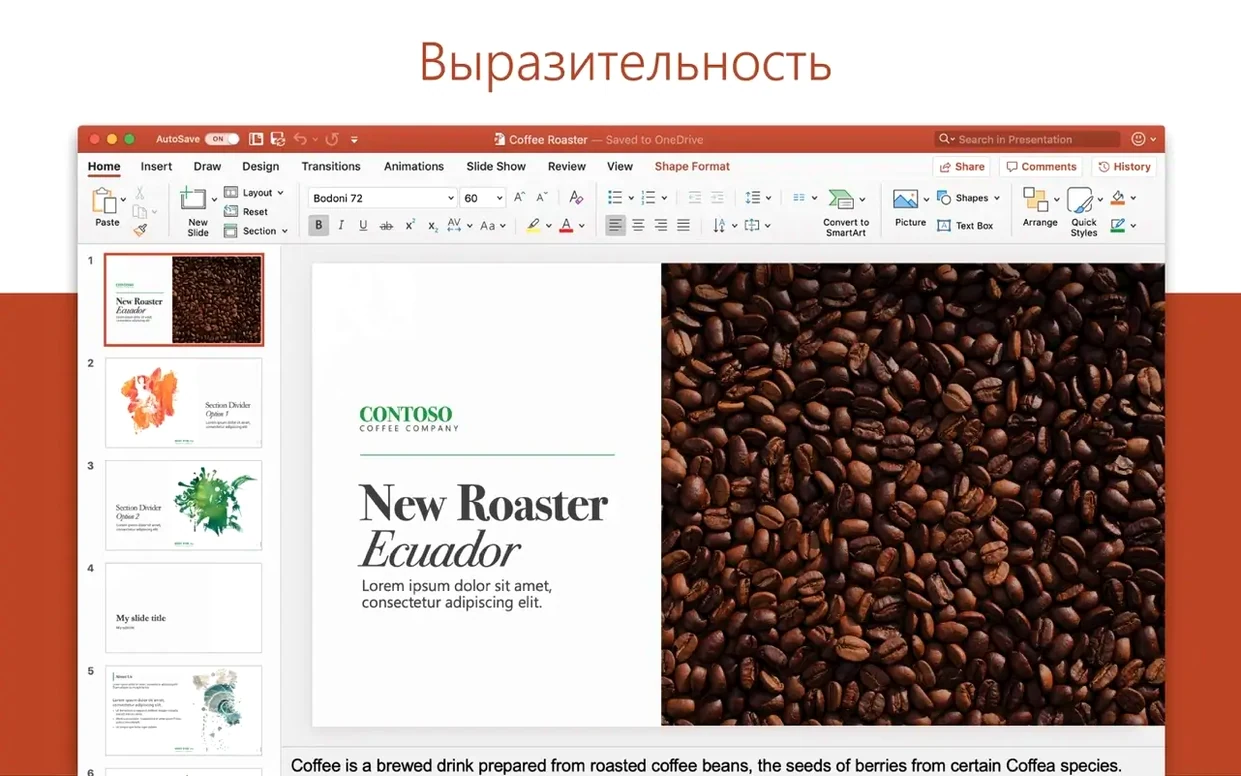
Excel on macOS works alongside the other Office apps included in Office LTSC Standard for Mac 2024. You copy data from Word tables, paste into Excel, and save the result back to a report in Word. PowerPoint imports Excel charts directly for presentations. Outlook attachments that are .xlsx files open in Excel without conversion steps.
System-level macOS features also apply. You can use macOS file management to organize workbooks in folders, rename files in Finder, and use Quick Look (select a file and press Space) to preview workbook contents without opening the app. If you use macOS window tiling, Excel resizes predictably to split-screen layouts.
Apple's built-in dictation and keyboard accessibility settings work within Excel cells. The app respects macOS language settings: switch the system language to French, for example, and Excel uses its French interface, provided that language is in the 21 supported.
Beginners and common mistakes
New Excel users on a Mac tend to make a few recurring errors. The most frequent is treating Excel like a text editor and typing data across multiple cells without considering that a spreadsheet expects one logical data point per cell. Another common mistake is ignoring the difference between a formula and a value: typing "100 + 50" into a cell instead of "=100+50" means Excel treats it as text and never calculates.
People also forget that Excel for Mac uses a different default file format than older Windows versions. If you share a workbook with someone on an older Windows setup, you may need to save as .xls rather than .xlsx. The app handles both, but the user has to choose the right format before sending.
A third mistake beginners make is not using the Ideas feature. It is not a gimmick: for someone who does not know which chart type best fits their data, Ideas removes the guesswork.
How Excel compares to other Mac spreadsheet apps
Excel sits alongside a few other spreadsheet applications available for macOS. The comparison is worth making if you are deciding which one to use for your work.
Apple Numbers
Numbers is Apple's built-in spreadsheet app. It opens .xlsx files without conversion and offers a cleaner interface for simple budgets, lists, and personal tracking. Where Numbers falls short is in advanced formula support, macro capabilities, and compatibility with complex financial models. Excel's Ideas feature and the new chart types in 16.93 are features Numbers does not directly match. For an accountant or auditor who receives .xlsx files from clients, Numbers can open them but may lose formatting or break formulas. Excel preserves the file as intended.
LibreOffice Calc
Calc is the free, open-source spreadsheet included in the LibreOffice suite. It reads and writes .xlsx files, handles most standard formulas, and runs on both ARM and Intel Macs. For users who need basic spreadsheet functions and no cost, Calc is a workable alternative. The gap shows in performance with large workbooks, in chart variety, and in the Ideas feature. Calc also lacks the full Office ecosystem integration: no direct link to Outlook or OneNote, and no collaboration features built into the workflow.
Google Sheets (in browser)
Google Sheets runs in a web browser on any Mac. It supports real-time collaboration, cloud storage, and basic formulas. For teams that do all their work inside Google's ecosystem, Sheets is enough. For users who need offline access, complex charts, or Excel's specific calculation engine, Sheets is limited. Version 16.93's new chart types and Ideas are not available in Sheets. Also, Sheets treats .xlsx files as imports, not native files, so compatibility can break with advanced formatting and macros.
Excel for Mac remains the standard for professionals who handle accounting, audit, or finance files. The other apps serve different user groups: Numbers for personal use, Calc for cost-sensitive environments, and Sheets for collaborative teams. Version 16.93's additions reinforce Excel's position for data visualization.
Working with Excel on a day-to-day basis
Opening Excel 16.93 on macOS 13 presents a familiar layout. The ribbon interface, formula bar, and sheet tabs are in the same positions as previous releases. For someone who used Excel 16.0 or 16.5, the transition requires no relearning of navigation. The main changes are in the Insert and Data tabs, where the new chart types and Ideas button appear.
The Ideas feature works by selecting a range of data and clicking the Ideas button. It then displays a set of chart thumbnails. You click one to insert it into the sheet. This is a two-click process compared to the manual method of selecting a chart type, choosing a subtype, and then adjusting data ranges. For routine reporting, the time saved per chart adds up across a dozen sheets.
New chart types behave like existing ones. You can resize them, change colors, and apply preset styles from the Chart Design tab. They update automatically when the source data changes. No extra settings are needed.
What version 16.93 changed compared to earlier builds
Before 16.93, Excel for Mac had a standard set of chart types that had not changed significantly for several releases. Users who needed specific visualizations sometimes had to copy data into another tool or build custom charts by hand. The new chart types in 16.93 close that gap for some common scenarios.
Ideas is entirely new to this version. It did not exist in 16.0 or earlier 16.x builds. For users who create charts rarely, Ideas reduces the time spent figuring out which chart type fits. For frequent users, it offers a faster alternative to the manual workflow.
No changes were made to the formula engine, pivot table behavior, or file format support. If you rely on Excel for calculations, macros, or VBA, version 16.93 does not introduce new behaviors there.
The excel mac torrent distribution for this version follows the same activation and update process as earlier Office LTSC builds. The excel torrent files for 16.93 include the same package structure as previous releases.
The requirement is macOS 13. Both Apple Silicon and Intel-based Macs are supported. No additional hardware restrictions apply.
- New chart types added.
- Ideas feature included for visualizing data and trends.
- macOS 13
- ARM or 64-bit x86 architecture
Questions from the notes
What macOS version does Microsoft Excel 16.93 require?
It requires macOS 13. Both ARM and 64-bit x86 architectures are supported.
Install procedure
- Install Microsoft Office 2024 using the standard installation procedure.
- Alternatively, download the required package from the provided links for Word, Excel, PowerPoint, Outlook, and OneNote.
- Packages are downloaded from Microsoft servers and require activation.
- To activate, install Microsoft Office LTSC 2024 VL Serializer.
- To receive updates, install Microsoft AutoUpdate (MAU).
- After MAU is installed, update Office normally.
- If activation fails, do a full removal using the linked instructions, then reinstall.
Reports from players
Sign in or create a tester account to file a report.
No reports filed yet.