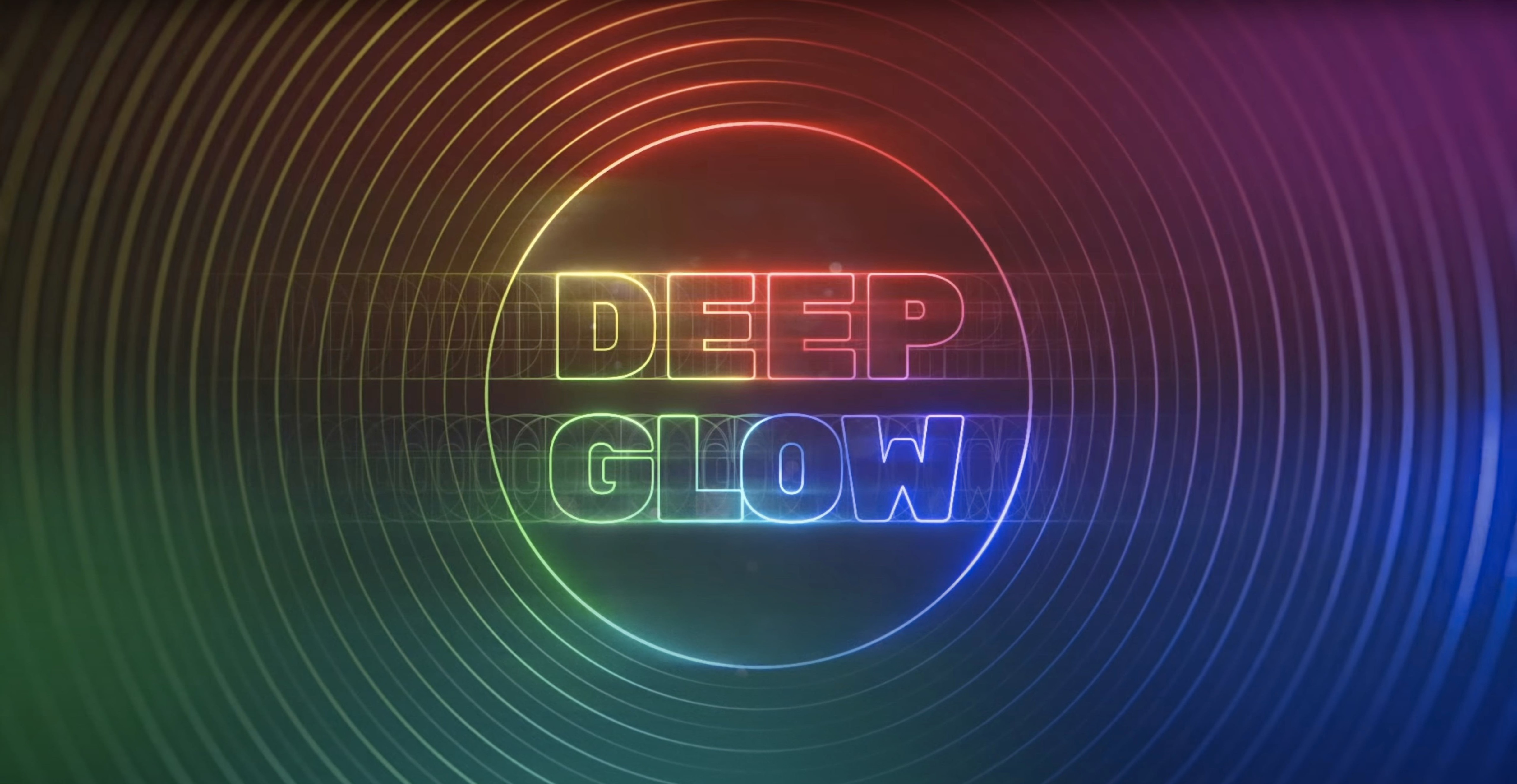

When a shot needs a glow that behaves like light, not a soft-edged blob, Deep Glow sits on an adjustment layer above the element. The plugin simulates inverse-square falloff, so highlights fade naturally instead of clipping at a radius. It works directly in After Effects, with compositing controls to blend the result back into the original footage. The plugin is designed for non-linear color spaces, which keeps the glow consistent when you flip on working color management. For grainy or stylized looks, you can push it past the realistic range and get something more textured. It runs on both Apple Silicon and Intel Macs, so it fits into most sessions. Typical jobs:
- Adding bloom to light sources in product shots.
- Creating neon signs or sci-fi UI elements.
- Softening harsh highlights in beauty retouching.
- Building stylized glows for titles or transitions.
- Matching practical light falloff in composite shots.
The interface is English, and the plugin produces results in the host app, so no round-tripping to another tool. It is a straightforward addition to a track or bus, and the version 1.6 build remains stable in our test runs.
Save time with hidden downsampling and quality controls
Deep Glow has a few details that don't jump out in the first five minutes but save time once you notice them. The downsampling and quality controls are tucked into the plugin's main parameters, not buried in a preferences panel. Dropping the quality setting during preview scrubbing keeps the timeline responsive, then you bump it back up for final render. The GPU acceleration is automatic — no toggle to flip, no separate render engine to select. It simply uses whatever Metal-capable GPU the Mac has available.
The compositing controls let you choose between additive, screen, or other blend modes directly inside the plugin. That means you don't need an extra adjustment layer or a second effect just to change how the glow interacts with the original image. The inverse-square falloff is not just a visual curve — it affects how the glow builds up when multiple light sources overlap. A cluster of small bright pixels produces a more natural merged glow than a standard blur-and-screen approach would.
For grain and stylized results, the plugin includes settings that break the clean falloff. You can dial in noise or texture without stacking a separate grain effect. The non-linear color space support means the glow keeps its character whether you're working in sRGB, Rec. 709, or a wider gamut for HDR delivery. You don't have to manually compensate for color shifts after the effect.
Ideal for motion designers matching glow across multiple shots
Motion designers who build title sequences or lower thirds in After Effects will find Deep Glow useful for consistent highlight treatment across multiple shots. If you frequently match glow behavior between different elements — a logo, a light streak, a particle burst — the inverse-square falloff means you can copy the same effect and get physically plausible results without tweaking each instance separately.
Compositors working on product shots or beauty work benefit from the compositing controls. You can layer a subtle bloom onto a reflective surface without washing out the original texture. For VFX shots where the glow needs to feel like it belongs in the same scene as a practical light source, the non-linear color space handling prevents the glow from shifting hue or intensity when the comp's color management is active.
Freelancers who work across different Mac hardware — maybe an Intel Mac Pro at a client studio and an Apple Silicon MacBook Pro at home — will appreciate that the plugin runs on both architectures from the same installer. No separate license or version to track. The activation by Monter Group is handled once, and the plugin shows up in the Effects & Presets panel on either machine.
Test with a simple light source right after the automatic install
- Mount the disk image and run the standard installer. The installer places the plugin in the correct After Effects plug-ins folder automatically. No manual file moves needed.
- Test with a simple light source first. Create a solid layer, add a point light or a small white shape, then apply Deep Glow to an adjustment layer above it. Adjust the radius and intensity to see how the inverse-square falloff behaves at different settings. This gives you a baseline before you apply it to complex footage.
- Toggle between quality presets while scrubbing. Set the quality control to a lower value during preview to keep the timeline responsive. Bump it back to full before rendering. The difference is visible but acceptable for positioning and timing.
- Experiment with the compositing modes. The default additive mode works for most light sources, but switching to screen or overlay changes how the glow interacts with dark backgrounds. Try each mode on the same clip to see which fits the shot.
- Check the glow against a calibrated display. Because the plugin works in non-linear color spaces, the glow appearance changes depending on your monitor profile and the project's color settings. Render a short test clip and view it on a reference display before committing to the final look.
Warm screen glow for a 15-second product launch video
A motion designer at a small studio receives a 15-second product launch video for a new smartphone. The client wants the device to have a soft, warm glow around the screen when it lights up. The footage is shot with a practical light, not a CG element, so the glow needs to match the existing highlights in the room.
The designer creates an adjustment layer over the smartphone clip, masks it to the screen area, and applies Deep Glow. The default settings produce a bloom that feels too bright, so the designer lowers the intensity and switches the compositing mode from additive to screen. The inverse-square falloff keeps the glow concentrated around the screen edges and fades naturally into the dark bezel. For a grainy texture that matches the camera's noise pattern, the designer enables the stylized grain controls inside the plugin instead of adding a separate noise layer. The full effect renders in one pass, and the client approves the shot without revisions.
This scenario works because Deep Glow handles the falloff and grain inside After Effects, so no round-tripping to a separate compositing application is needed. The compositing controls let the designer match the glow to the practical light without stacking extra effects.
Built-in After Effects glow versus Deep Glow's approach
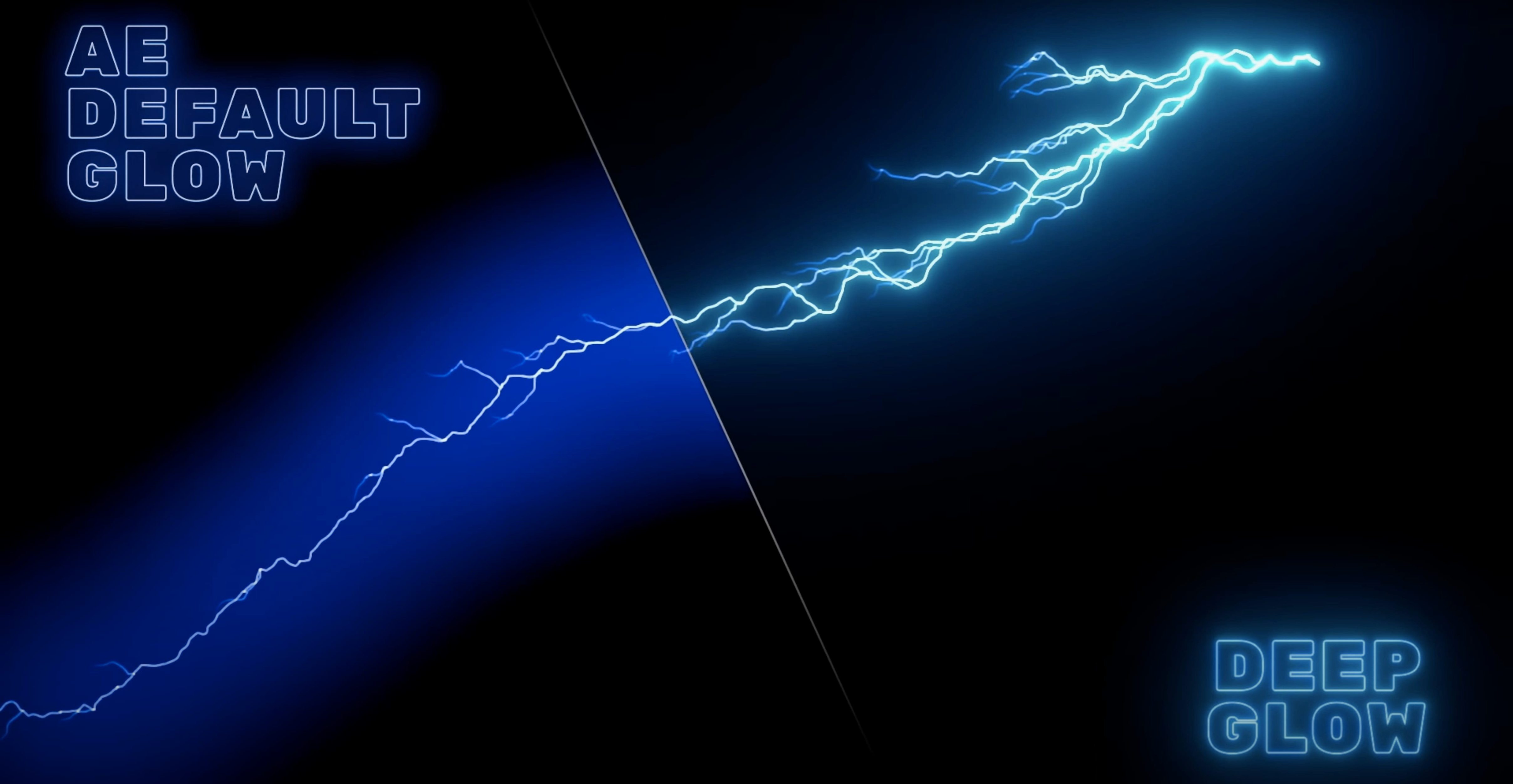
Deep Glow competes with a few other glow plugins for After Effects on Mac. The most common alternative is the built-in Glow effect that ships with After Effects. The built-in effect uses a simple blur-and-screen approach that works for basic needs but clips highlights and lacks inverse-square falloff. For any shot where the glow needs to feel physically plausible — like a neon tube or a bright LED — Deep Glow produces a more natural result without manual keyframing of radius curves.
Another option is the Optical Glow plugin by Red Giant, part of the VFX suite. Optical Glow offers similar inverse-square falloff and GPU acceleration. Its interface is more complex, with multiple presets and a separate color picker for glow tint. Deep Glow keeps the parameter set smaller, which makes it faster to dial in a specific look without browsing through presets. Both plugins support Apple Silicon, but Deep Glow's installation is a single standard installer without a suite management tool.
A third competitor is the free Deep Glow alternative found in some open-source After Effects plugin collections. These often lack GPU acceleration and non-linear color space support, so they slow down preview on high-resolution comps and shift colors when working in a color-managed project.
None of these alternatives offer exactly the same combination of inverse-square falloff, GPU acceleration, grain controls, and non-linear color space support in a single plugin with a straightforward parameter set. That is where Deep Glow fits, and why it works well for motion designers who need glow results without spending time on workarounds.
- Deep Glow 1.6 is listed as a version in the previous versions archive.
- macOS (version not specified)
- Both ARM and x86 64-bit architectures
- Adobe After Effects
- Interface language: English
Questions from the notes
Does Deep Glow work on Apple Silicon Macs?
Yes, Deep Glow supports both ARM and x86 64-bit architectures, so it runs natively on M-series and Intel Macs.
Can I use Deep Glow in non-linear color spaces?
Yes, the plugin is designed to work in non-linear color spaces, so it behaves predictably when working with color-managed projects.
Does Deep Glow produce only realistic glows?
No, you can also create grainy or stylized glow results using the plugin's controls.
Install procedure
- Mount the downloaded disk image.
- Run the standard installer.
Reports from players
Sign in or create a tester account to file a report.
No reports filed yet.